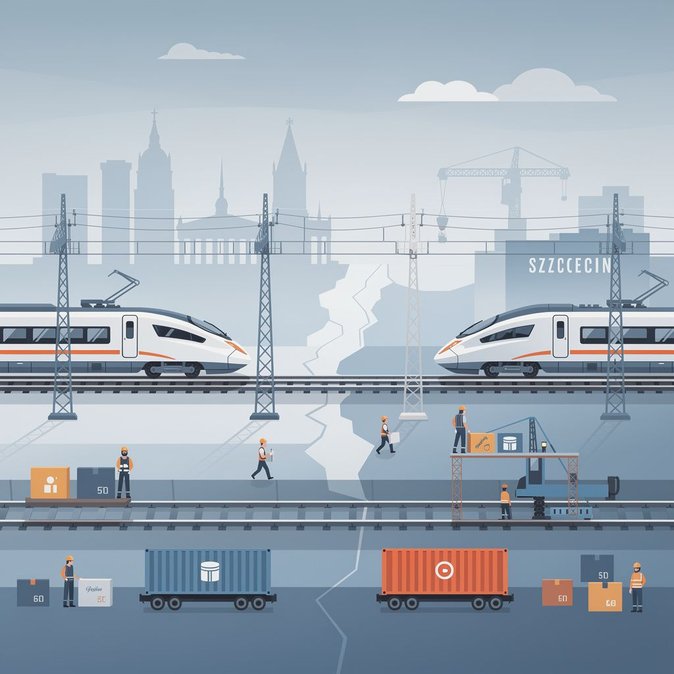
Deutsche Bahn has broken ground on the second construction phase of the 30-kilometre stretch between Passow (Brandenburg) and Szczecin in north-western Poland. The €800-million project will electrify the section, add a second track and raise the top speed to 160 km/h, cutting journey times on the Berlin–Szczecin axis by up to 20 minutes when the full line enters service at the end of 2027. The upgrade is part of the EU’s Trans-European Transport Network and is co-financed by Germany, Poland and Brussels. Cross-border traffic on the corridor has nearly doubled since remote workers and life-science companies began clustering around Szczecin’s port free-trade zone. Rail freight operators also rely on the route to move components between Brandenburg’s automotive suppliers and Polish assembly plants. DB admits the works are two years behind schedule, blaming labour shortages in the construction sector and additional environmental impact studies. During the 18-month build window passengers will face bus substitutions north of Passow on selected weekends; international freight trains will be re-routed via Frankfurt (Oder), adding up to three hours. Business implications: faster, electrified service will allow commuter patterns similar to today’s Berlin-Leipzig market and should open realistic day-return schedules for sales teams on both sides of the border. Shippers anticipate savings by switching bulky goods from road to the faster double-track line once it is operational. Companies planning assignments in the Szczecin region should monitor temporary timetable changes and build in extra transit time for site visits through 2027.
Source: Tagesschau / rbb