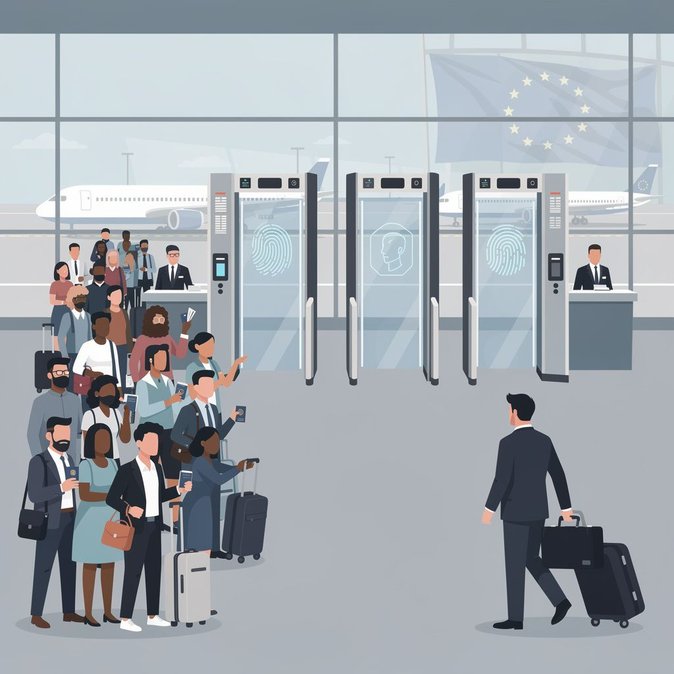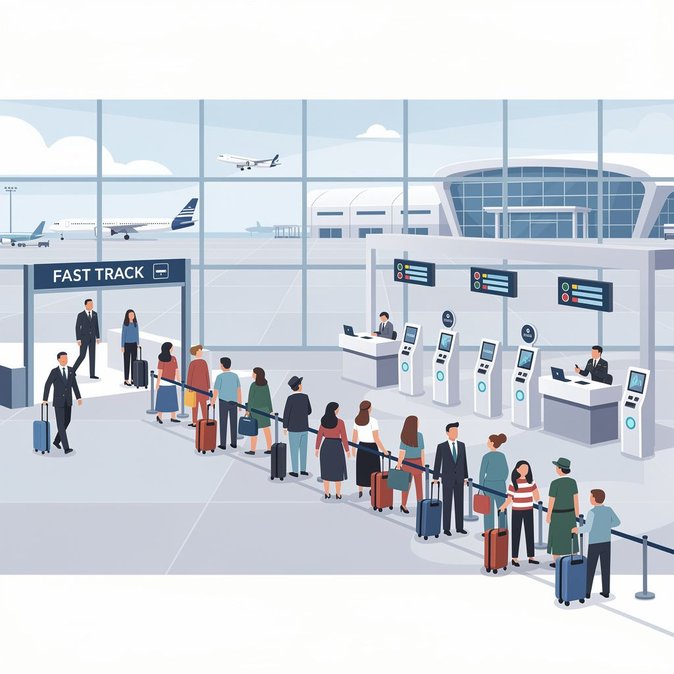
Travel and Tour World reported on 2 July that Frankfurt Airport has joined Paris Charles de Gaulle, Rome Fiumicino and Milan Malpensa on a growing list of European hubs suffering severe backlogs since the April launch of the Entry/Exit System. Industry insiders quoted in the piece say Frankfurt recorded isolated delays of up to five hours last weekend when four long-haul arrivals landed almost simultaneously. Airlines including British Airways, Ryanair and easyJet have written to German air-navigation agency DFS requesting priority sequencing for flights with high proportions of non-EU passengers, arguing that staggered arrivals could reduce pressure on immigration halls. Lufthansa, by contrast, has asked the Federal Police to establish a fast-track lane for business-class and connecting passengers to protect the hub’s transfer model. The airport is accelerating installation of 120 additional biometric kiosks ordered last December, but supply-chain issues mean only 40 will arrive before August. To avoid operational standstills, Fraport plans to reopen parts of decommissioned Terminal 2 as a holding area for overflow queues—a move last seen during the pandemic testing regime. For corporates, Frankfurt’s turbulence matters far beyond Germany. The airport is Europe’s top freight gateway and a primary connector for US-to-Asia routings; any sustained disruption could cascade into missed crew rotations and cargo delays, affecting just-in-time supply chains. Mobility teams scheduling assignee rotations through Frankfurt are therefore advised to consider alternative hubs or to book longer layovers (minimum 3.5 hours) for non-EU employees. German travel management company FCM says clients are already rerouting via Zurich and Vienna despite higher fares, calculating that predictable transfers outweigh added ticket cost. Whether Frankfurt can stabilise operations before the 26 July start of Bavaria’s holidays will be a crucial litmus test for the EES roll-out.
Source: Travel and Tour World