Spain issues urgent heat-wave travel alert as temperatures set to hit 42 °C
Government lawyers fight EU court referral over Spain’s mass migrant regularization
Government lawyers resist Supreme Court move to refer migrant amnesty to EU judges
Latest News
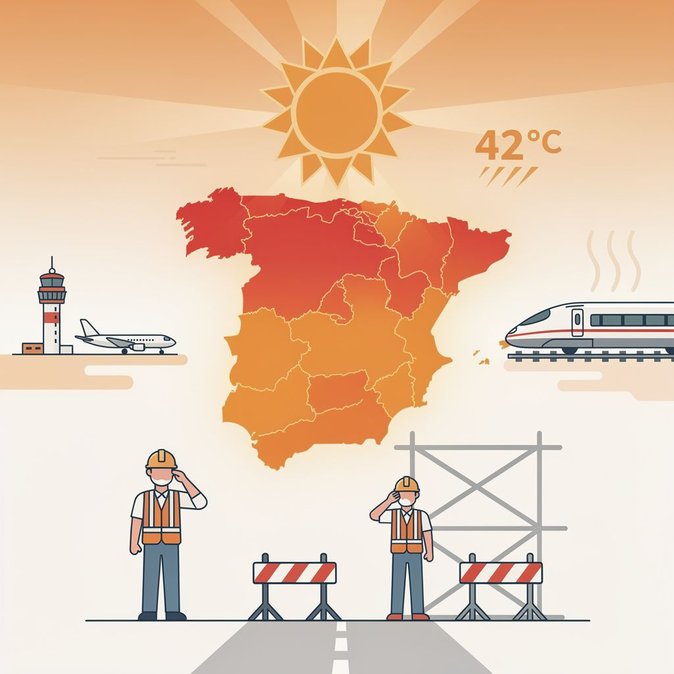
Spain issues orange heatwave alert: 42 °C forecast threatens travel and outdoor work
AEMET has placed nine Spanish regions under orange alert as temperatures are set to exceed 42 °C from 5 July. Airports, rail operators and event organisers are activating heat protocols that could slow passenger processing and freight schedules. Firms should review duty-of-care measures and prepare for possible transport delays or outdoor-work bans.

First ‘operación salida’ of the summer puts 4.8 million extra vehicles on Spanish roads
DGT’s summer mobility plan swung into action this weekend, managing nearly five million extra road trips plus record flight and rail schedules. New safety technology is being enforced and public-transport capacity has been boosted, but unions are warning of strikes later in the month.
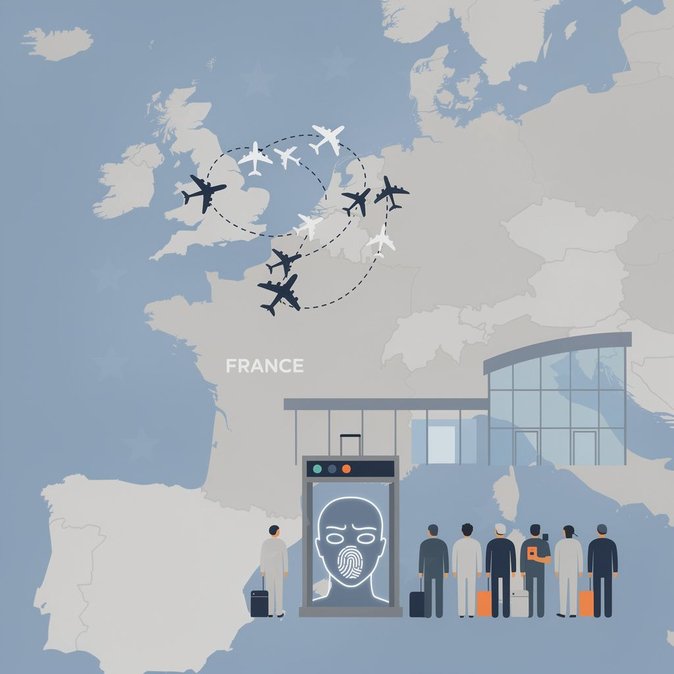
French air-traffic woes and biometric border bottlenecks threaten record summer for Spain’s airlines
A Cinco Días analysis argues that French ATC delays and teething troubles with the EU’s new biometric border system could wipe out the reliability gains Spanish airlines hoped to bank this summer. Mobility planners should brace for higher disruption risk and cost.

Castilla y León’s appeal against migrant-regularisation decree admitted by Supreme Court
The Supreme Court has accepted Castilla y León’s challenge to Spain’s migrant-amnesty decree, adding another layer of legal scrutiny. Businesses employing workers under the scheme should watch for possible interim suspensions.

‘Operación Salida’ begins: 4.8 million holiday trips strain Spain’s roads, rails and airports
Spain’s first big summer-holiday getaway of 2026 projects 4.8 million road trips and record flight volumes during the 3–5 July weekend. Extra police controls, new V-16 safety beacons and reinforced rail capacity aim to keep traffic flowing, but employers should expect longer transit times and monitor a mid-July rail strike threat.

Spain’s Extraordinary Regularisation Drive Closes With 1.2 Million Applications
The Spanish government confirmed on 3 July that its extraordinary amnesty attracted 1.17 million applications, two-thirds from Latin America. All applicants receive a temporary work permit while files are processed, giving employers immediate access to new labour at the start of the peak tourist season. The move could ease Spain’s structural labour shortages but has sparked political controversy.

Spain Issues 600,000 Temporary Work Permits as Regularisation Applications Hit Processing Stage
Officials confirmed that more than 600,000 applicants to Spain’s extraordinary amnesty already hold temporary work permits, allowing immediate formal employment. Businesses in tourism, construction and healthcare are fast-tracking recruitment, while authorities promise extra labour-inspection capacity to prevent abuse.
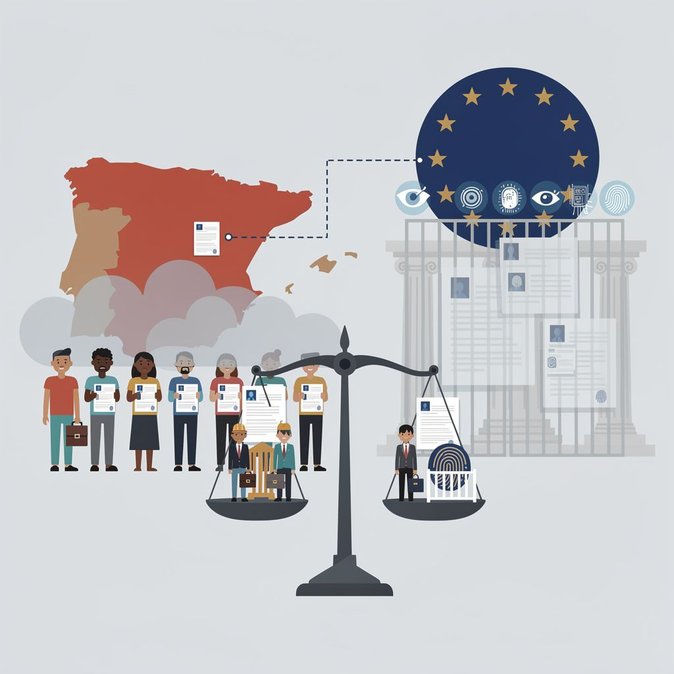
Spain’s Supreme Court questions new migrant amnesty after EU border-control law enters force
Spain’s Supreme Court has referred the country’s 2026 migrant-amnesty decree to the EU Court of Justice, arguing it may conflict with the new European Pact on Migration and Asylum, which tightens biometric screening and detention rules at external borders. The move places more than a million regularisation cases—and thousands of employers planning to hire beneficiaries—under a cloud of legal uncertainty, illustrating the friction between EU border control and national labour-market needs.

Five-Hour Queues at Tenerife, Palma and Málaga: Spain’s Airports Buckle Under EU Biometric Border System
Travel and Tour World reported on 3 July that biometric Entry/Exit System (EES) checks are causing queues of up to five hours at Spanish tourist airports. Airlines and ACI Europe want the rollout paused for the summer peak, warning of missed flights and operational chaos. Travellers should allow significantly more time at border control.

Over 600,000 applicants gain immediate work rights in Spain’s 2026 regularisation campaign
Spain’s government revealed that 609,737 migrants applied during the 2026 regularisation drive and that all applicants gain an interim work permit while cases are processed. The fast-track authorisation is already easing labour shortages but leaves companies reliant on a timely three-month approval cycle.

Spain issues Level-3 travel advisory for Barcelona amid anti-tourism protests
Citing escalating anti-tourism protests that have blocked roads and disrupted airport access, Spain’s Foreign Ministry on 3 July raised its Barcelona-region advisory to Level 3 (“reconsider travel”). The move has already triggered hotel cancellations and poses logistical headaches for summer business travellers; firms are urged to add travel-time buffers and monitor local alerts.
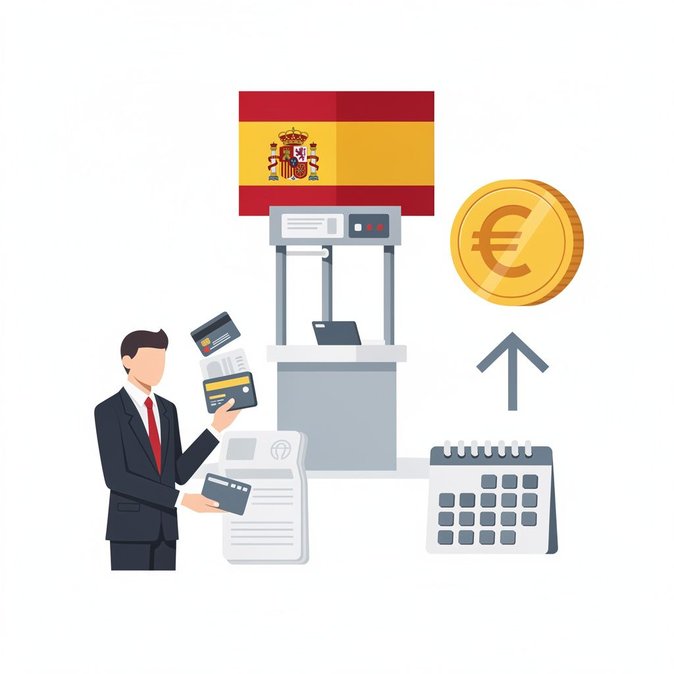
Rise in Spain’s minimum wage pushes proof-of-funds threshold for short-stay visitors above €1,098
Because Spain links the ‘sufficient means’ requirement for visa-free entrants to the minimum wage, February’s salary hike means border officers can now demand proof of at least €1,098.90—even for trips shorter than 10 days. Business travellers should carry fresh bank or credit-card statements to avoid refused entry.
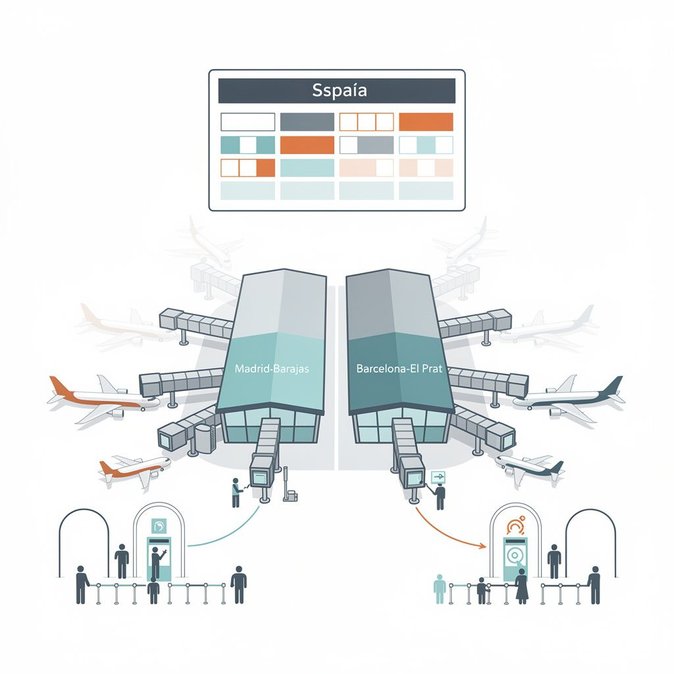
Aena to cap peak-hour slots at Madrid and Barcelona airports from 2027; airlines alerted
On 3 July Aena said it will introduce terminal-specific passenger caps at Madrid-Barajas and Barcelona-El Prat from summer 2027, instructing airlines that new slot requests must fit within those limits. The move seeks to manage immigration and security bottlenecks ahead of mass biometric border checks and could shift future flight schedules.
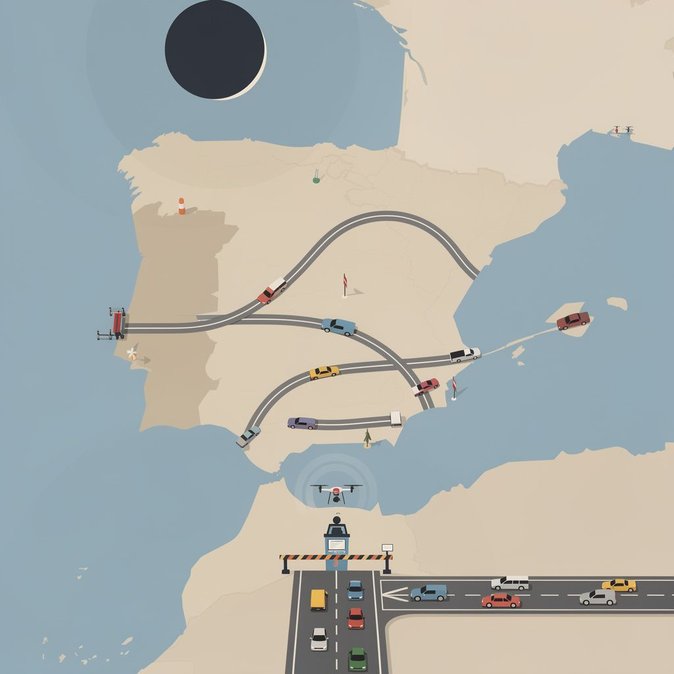
‘Operación Verano’ Begins: Spain Plans for 104 Million Road Trips and Mass Crossings to Africa and Portugal
Spain’s DGT kicked off ‘Operación Verano’ on 3 July, forecasting 104 million road trips, including mass flows to Morocco and Portugal. The plan adds drones, pop-up controls and a special eclipse contingency, signalling possible delays for corporate fleets and cross-border travellers.

Proof-of-Funds Threshold for Tourists Rises to €1,098.90 After Spain’s 2026 Minimum-Wage Hike
Because Spain links its tourist-funds requirement to the minimum wage, this year’s salary increase lifts the minimum cash or bank-balance proof to €1,098.90 for visits under ten days, Hespress reported on 3 July. Companies should adjust invitation letters and traveller briefings to avoid border issues.