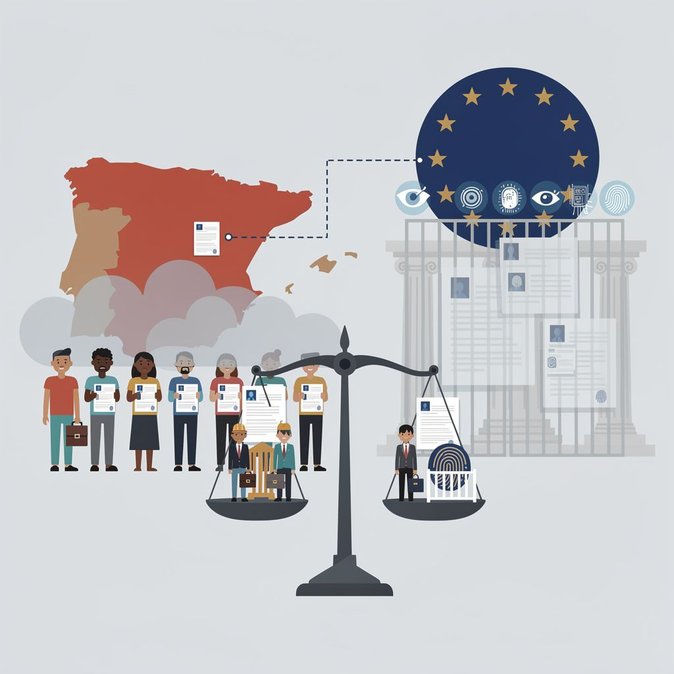
In a separate briefing on 3 July, Secretary of State for Migration Pilar Cancela revealed that 609,737 of the newly regularised migrants have already received provisional work authorisations. Roughly 160,000 are now in formal employment, with construction, tourism, transport and healthcare the biggest recruiters. The one-year, renewable permits give holders the same labour rights as other foreign workers. For many, this marks the first step towards long-term residence and, eventually, Spanish nationality. Employers eager to stabilise seasonal head-counts are coordinating with public-employment services to match candidates to vacancies, while payroll providers rush to update onboarding workflows for the surge in new Social Security numbers. The government is banking on faster labour-market integration to boost tax revenues and reduce the informal economy, which the Bank of Spain estimates still accounts for 17 % of GDP. Critics counter that an oversupply of low-skilled labour could depress wages at the bottom end. To address that fear, the Ministry of Labour has pledged additional workplace-inspection resources, targeting underpayment and bogus self-employment. Corporate mobility managers should note that regularised workers may travel within the Schengen Area for up to 90 days in any 180 after they receive their residence cards, but they cannot transfer to another EU country for work without a new permit. HR teams should therefore update travel-policy guidance to reflect the new status of employees coming through the scheme.
Source: Africa Eye