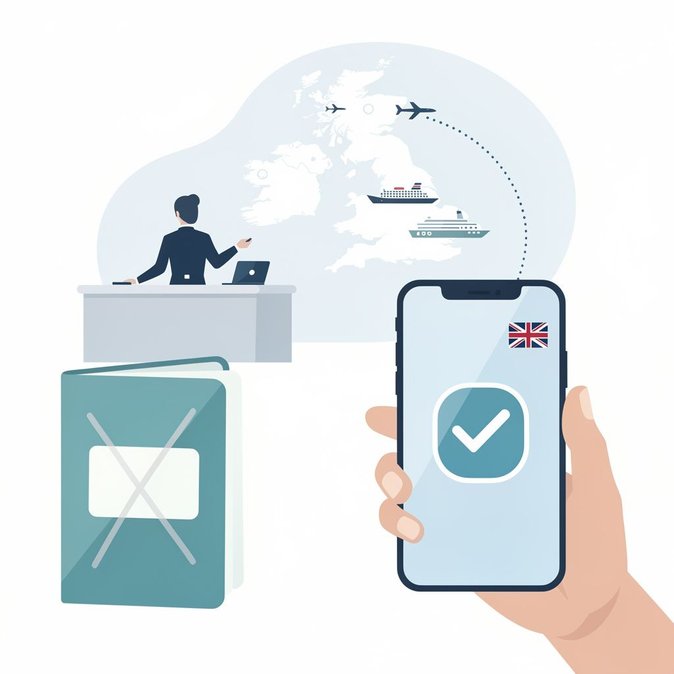
From 1 July 2026 the UK Home Office no longer issues physical stickers (vignettes) in passports: successful applicants receive a digital immigration status known as an eVisa instead. The change applies to all entry categories, including Skilled Worker, Student and Family visas, and forms part of London’s plan to digitise the border by 2027. For Ireland-based corporates this matters because the Common Travel Area allows Irish residents—irrespective of nationality—to move freely to Britain, but only if they already hold the correct UK permission. Non-EEA staff who pick up their visas in Dublin or Belfast will now have to create a UKVI account, upload a facial scan via smartphone and receive clearance electronically before travelling. At the airport, carriers will verify the permission through the "Permission to Travel" system rather than inspecting a vignette. HR teams must therefore update onboarding packs to include screenshots of the digital grant notice and advise employees to carry the same passport they used for the online application. The switch should, in theory, eliminate the courier delays that plagued vignette collection during the peak of the Covid-19 recovery, when DHL backlogs in Ireland averaged nine days. It also reduces the risk of denied boarding caused by peeling stickers. However, lawyers warn that system outages or misplaced log-in credentials could leave travellers stranded without proof of status. Organisations are encouraged to use the Employer Checking Service when in doubt and to remind employees visiting Northern Ireland that local airline staff may still ask to see a BRP card until training is complete. Mobile-talent providers expect faster turnaround on short-notice assignments: a software company in Cork recently received a Senior or Specialist Worker eVisa for a U.S. engineer in 48 hours—previously impossible due to vignette printing lead-times. Meanwhile, universities are revising orientation materials to ensure incoming students snap and store their digital status before landing at London Heathrow en route to connecting flights to Dublin. Looking ahead, the UK plans to introduce an Electronic Travel Authorisation (ETA) requirement for all non-Irish, non-British nationals transiting the CTA from 25 February 2026. The fully digital visa ecosystem is therefore converging with the EU’s EES and ETIAS, meaning Irish mobility managers must juggle three separate biometric platforms on either side of the Irish Sea.
Source: Bindmans LLP news update