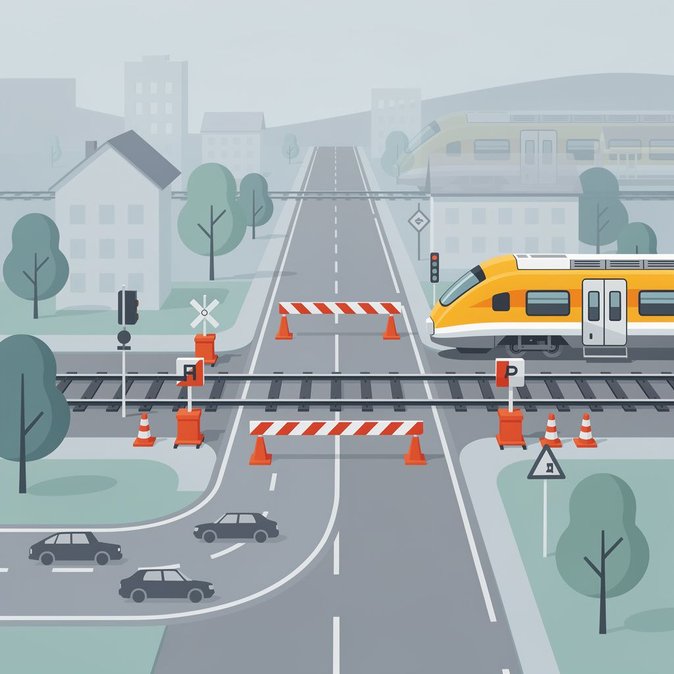
Local authorities in Częstochowa have announced the temporary closure of two key rail-road crossings on the Koluszki–Częstochowa mainline as of Monday, 6 July. The Kiedrzyńska Street crossing will be shut until 12 July, while the Karłowicza Street crossing will stay closed until 17 July. The works form part of PKP Polskie Linie Kolejowe’s PLN 2 billion upgrade of Line 1, which feeds freight and passenger traffic into the Silesian industrial belt. Detours for cars and delivery vans have been sign-posted; urban bus route 25 will follow a modified loop, with updated timetables to be published on the city website.
If you’re an overseas engineer, project manager, or supply-chain specialist heading to Częstochowa during the works, VisaHQ can streamline the Polish visa process, provide real-time entry requirements, and secure any supporting documents—often entirely online. Visit their Poland portal (https://www.visahq.com/poland/) for quick application tools that keep business travel on schedule despite local detours.
While the closures are short, they coincide with peak holiday departures, amplifying their effect on regional mobility. Corporate shuttles servicing local manufacturing plants – including several Tier-1 automotive suppliers – should recalculate journey times. Logistics teams moving time-critical parts through the area may want to re-route via the DK-1 expressway or schedule night-time runs to avoid daytime bottlenecks. The modernisation itself is positive for long-term mobility: the line will be equipped with European Train Control System (ETCS) Level 2, allowing 160 km/h passenger operations and heavier freight axle-loads by 2028. HR departments overseeing relocations to Częstochowa can therefore expect faster Warsaw links once the project is complete.
If you’re an overseas engineer, project manager, or supply-chain specialist heading to Częstochowa during the works, VisaHQ can streamline the Polish visa process, provide real-time entry requirements, and secure any supporting documents—often entirely online. Visit their Poland portal (https://www.visahq.com/poland/) for quick application tools that keep business travel on schedule despite local detours.
While the closures are short, they coincide with peak holiday departures, amplifying their effect on regional mobility. Corporate shuttles servicing local manufacturing plants – including several Tier-1 automotive suppliers – should recalculate journey times. Logistics teams moving time-critical parts through the area may want to re-route via the DK-1 expressway or schedule night-time runs to avoid daytime bottlenecks. The modernisation itself is positive for long-term mobility: the line will be equipped with European Train Control System (ETCS) Level 2, allowing 160 km/h passenger operations and heavier freight axle-loads by 2028. HR departments overseeing relocations to Częstochowa can therefore expect faster Warsaw links once the project is complete.