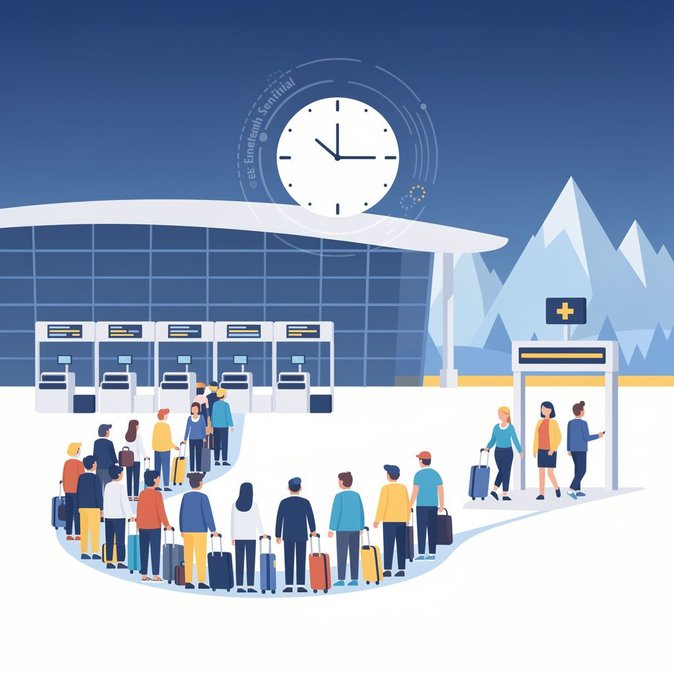
Travellers to Switzerland and the wider Schengen Area will not need to apply for the much-discussed ETIAS travel authorisation until sometime in 2027, after the European Commission quietly pushed the start date back by at least nine months. The decision, first reported by the Financial Times and confirmed by Commission sources on 7 July, follows weeks of complaints about massive queues created by the new biometric Entry/Exit System (EES) at European airports—including Zurich and Geneva. ETIAS was slated to go live in the last quarter of 2026, requiring visa-exempt nationals such as Britons, Americans and Australians to obtain a €20 online permit before boarding a flight, train or coach into the Schengen zone. Airlines for Europe (A4E), ACI Europe and IATA warned Brussels in an open letter on 1 July that airports were already experiencing waits of up to five hours for non-EU passengers as border police struggled with fingerprint and facial-capture kiosks. Zurich Airport reported that EES processing times for first-time arrivals averaged 3 minutes versus 45 seconds under the old stamp-and-go system. The deferral is a relief for Swiss tourism bodies and multinational employers who had feared a “double whammy” of two unfamiliar systems launching during the same winter timetable. Swiss-based human-resources teams can shelve plans to roll out ETIAS awareness campaigns for assignees from Canada, the US and Asia, and travel managers can postpone IT integrations with the ETIAS carrier-check API. Nevertheless, companies are advised not to stand down entirely. The Commission insists ETIAS remains a legal requirement and will provide a new date “once EES performance is stabilised”. As soon as ETIAS is live, carriers will face fines for transporting passengers without valid travel authorisations, making advance compliance critical. Mobility teams should use the reprieve to audit traveller-data accuracy (particularly passport validity and place of birth) and to brief staff on biometric capture procedures to avoid bottlenecks. For Switzerland—which, although not an EU member, applies Schengen rules—the delay also buys time for the Federal Office of Information Technology (FOITT) to finish integrating Swiss carrier and travel-agency systems with the EU’s central ETIAS platform. Officials in Bern privately concede that testing had fallen behind schedule.
Source: Berliner Zeitung