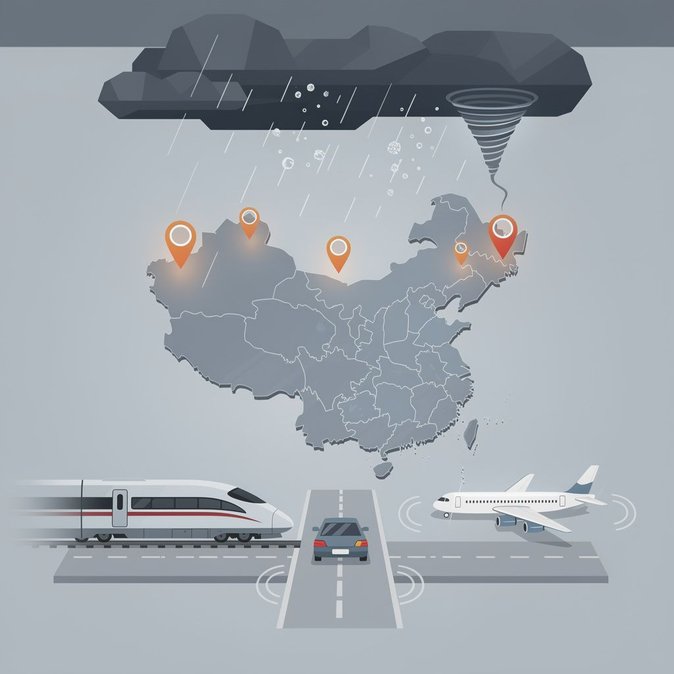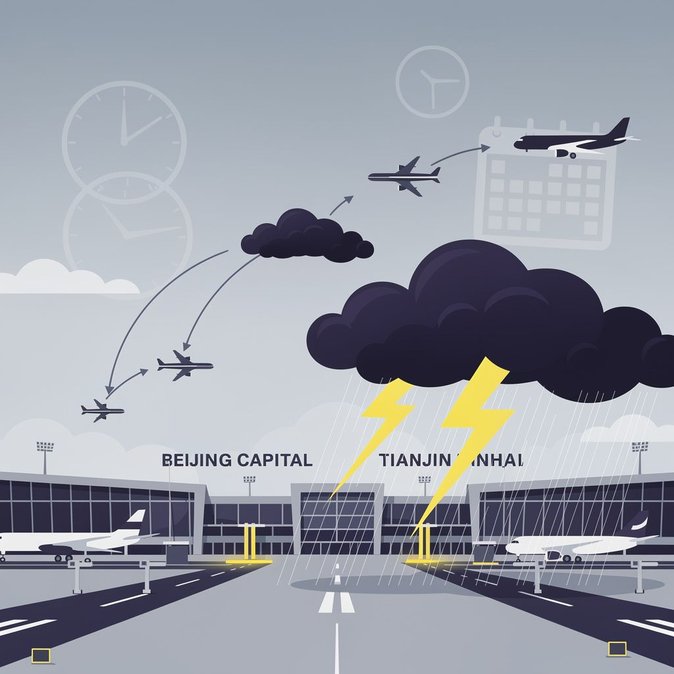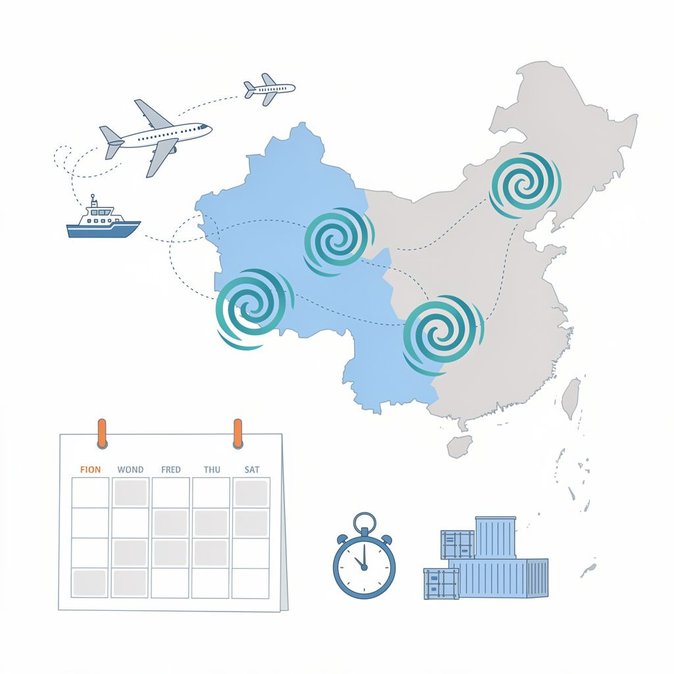
China’s National Climate Center (NCC) has issued a rare mid-season forecast predicting four to six tropical cyclones forming in the north-west Pacific and South China Sea during July—well above the long-term monthly average of 1.8. Two to three systems are “highly likely” to make landfall or otherwise disrupt the mainland’s coastal provinces, the NCC said at a briefing carried by Xinhua on 7 July. The heightened activity is tied to a persistent La Niña-like cooling in the equatorial Pacific, which tends to shift cyclone genesis westward toward China’s near-shore waters. Meteorologists singled out Super Typhoon Bavi, now tracking west-north-west toward Taiwan, as the most immediate threat, with landfall on the eastern seaboard possible after 9 July. They also cautioned that stronger storms may penetrate unusually far inland, reaching the middle and lower Yangtze valley. Airlines and cruise operators have already begun contingency planning. China Southern said it will waive change fees for flights to Hainan, Fujian and Zhejiang for tickets issued before 8 July, while Costa Cruises is reviewing itineraries originating from Shanghai’s Wusongkou terminal. Logistics firms moving time-sensitive electronic components out of Shenzhen and Xiamen have been advised to advance shipments or switch to rail freight via the Jiangxi corridor. For employers, the forecast translates into elevated travel-disruption risk for at least the next three weeks. Firms with expatriates on coastal projects should verify that staff are registered with local emergency notification platforms and that accommodation providers have adequate backup power and water supplies. Business-traveller insurance policies should be reviewed to confirm coverage for weather-related trip curtailment and additional accommodation.
Source: Xinhua