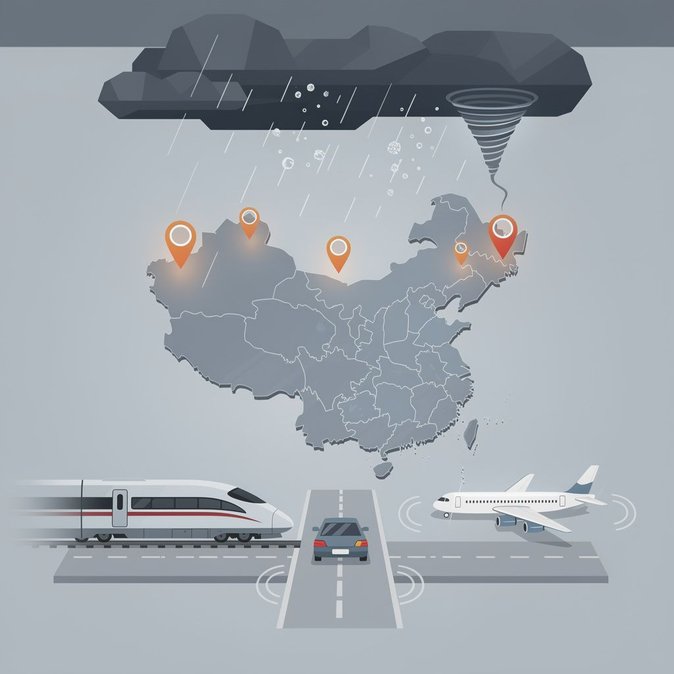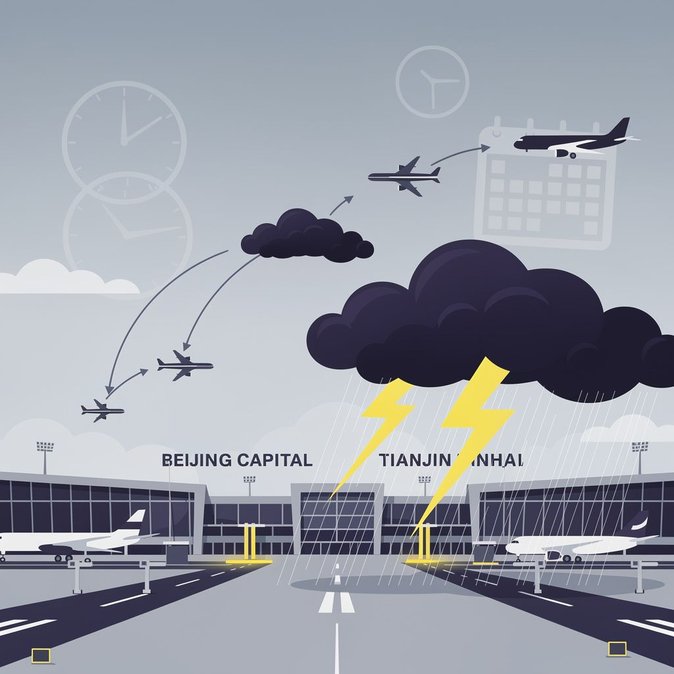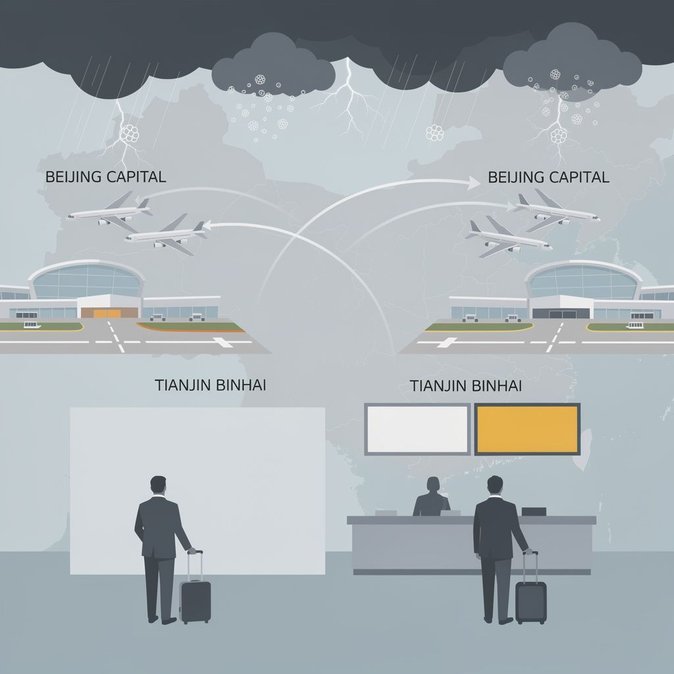
Business travellers heading through North China on 7 July found themselves caught in an afternoon of aviation grid-lock. According to flight-tracking platform VariFlight, intense thunderstorms, hail and micro-bursts developed over the capital’s main air corridors shortly after 15:00 local time. Beijing Capital International Airport (PEK) immediately convened its Operations Coordination Committee and escalated to first-level response, halting departures and slowing approaches. By 17:00, at least 11 inbound flights had diverted to nearby Shijiazhuang and Hohhot, while an even larger wave of aircraft entered holding patterns over the North China Plain. The situation was mirrored 120 kilometres away at Tianjin Binhai International Airport (TSN). With convective cells building along the Bohai Gulf, TSN logged 15 diversions and dozens of cancellations. Ground handling teams reported apron closures of up to 40 minutes at a time as visibility dropped below regulatory minima. China’s Northern Air Traffic Management Bureau imposed flow-control measures on eight en-route sectors, creating a domino effect that reached as far south as Wuhan. Corporate travel managers told ITIJ they were forced to re-book executives onto late-night high-speed rail services after evening departures were scrubbed. International carriers Air France-KLM and All Nippon Airways issued same-day change waivers for tickets touching PEK or TSN on 7–8 July. While weather-related disruption is common during China’s summer storm season, analysts noted that the concentration of two mega-hubs in close proximity amplifies operational risk for multinationals whose North China itineraries often bundle Beijing meetings with Tianjin factory visits. Companies are advised to build at least six hours of buffer on intra-China connections during July–August and to monitor Civil Aviation Administration of China (CAAC) NOTAMs for pop-up ground stops.
Source: 界面新闻 / Sina Finance