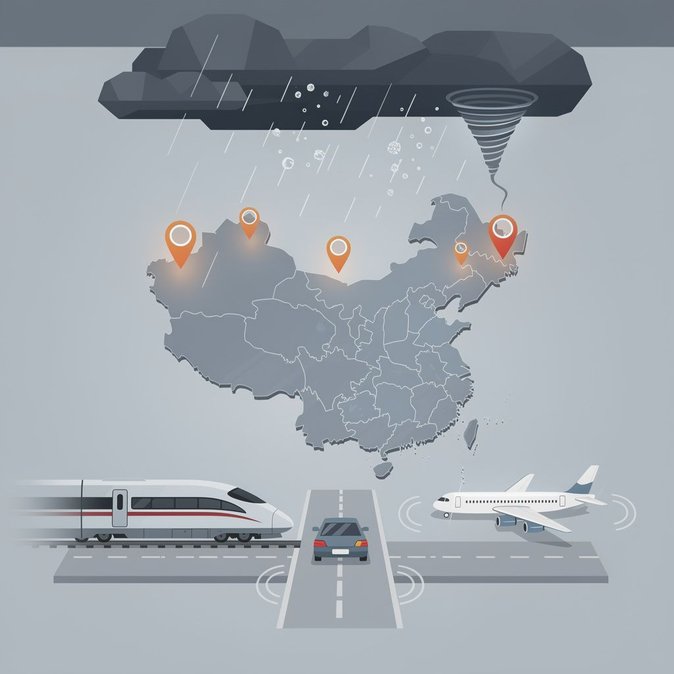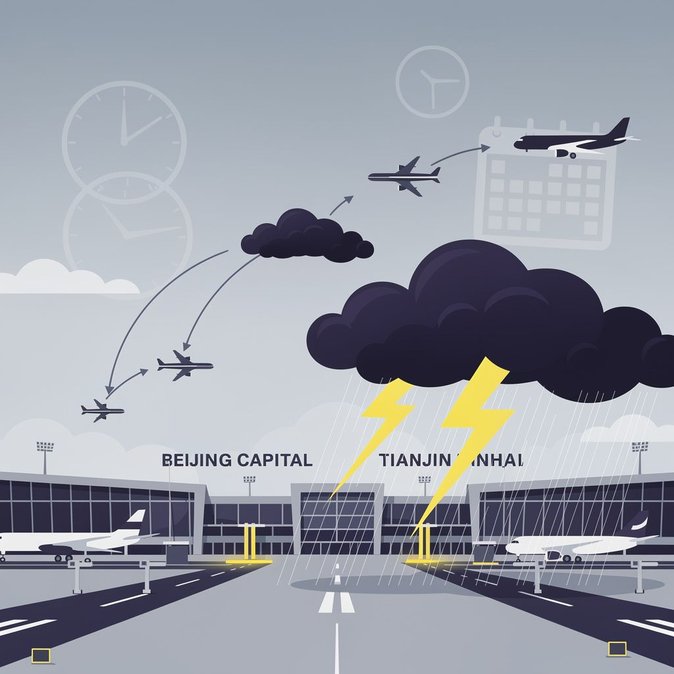
Afternoon thunderstorms swept across north-eastern China on 7 July, triggering the first-level collaborative response at Beijing Capital International Airport (PEK) and widespread disruption at nearby Tianjin Binhai (TSN). Real-time data from VariFlight showed that by 17:00 local time, more than 11 inbound flights bound for PEK had already been diverted—mainly to Shijiazhuang, while another 15 jets destined for Tianjin were rerouted to Beijing Daxing and other alternates. Operators reported pockets of hail and intense downbursts, conditions that exceed the performance limits of both A- and B-category autoland systems.
Amid such uncertainties, travelers scrambling to adjust itineraries may also discover they need to amend or secure visas at short notice. VisaHQ’s China portal can fast-track Chinese visas, renewals, or extensions online and coordinate courier pickup even when airport operations are disrupted—helping corporate teams keep projects on schedule despite weather setbacks.
The North China Air Traffic Management Bureau instituted flow-control measures, reducing arrival rates to 12-14 aircraft per hour—about one-third of normal peak capacity. Airlines subsequently advised passengers to postpone non-essential travel and offered free re-booking for tickets dated 7-8 July. For mobility planners the immediate impact is logistical: crew duty-time limits, aircraft positioning imbalances and the knock-on effect on cargo bellyhold capacity into the capital region. Corporate travellers with tight connection windows should expect rolling delays into the evening of 8 July as crews and equipment are repositioned. Rail options between Beijing and Tianjin remain operational and may offer faster ground-transfer times for short-haul meetings. Longer term, the event is a reminder that North China’s convective storm season peaks in July-August; companies should factor in buffer days when scheduling regional roadshows. Travel risk managers are advised to maintain close contact with ground handlers and to ensure that expatriate staff have WeChat emergency alert subscriptions enabled for real-time airport status updates.
Amid such uncertainties, travelers scrambling to adjust itineraries may also discover they need to amend or secure visas at short notice. VisaHQ’s China portal can fast-track Chinese visas, renewals, or extensions online and coordinate courier pickup even when airport operations are disrupted—helping corporate teams keep projects on schedule despite weather setbacks.
The North China Air Traffic Management Bureau instituted flow-control measures, reducing arrival rates to 12-14 aircraft per hour—about one-third of normal peak capacity. Airlines subsequently advised passengers to postpone non-essential travel and offered free re-booking for tickets dated 7-8 July. For mobility planners the immediate impact is logistical: crew duty-time limits, aircraft positioning imbalances and the knock-on effect on cargo bellyhold capacity into the capital region. Corporate travellers with tight connection windows should expect rolling delays into the evening of 8 July as crews and equipment are repositioned. Rail options between Beijing and Tianjin remain operational and may offer faster ground-transfer times for short-haul meetings. Longer term, the event is a reminder that North China’s convective storm season peaks in July-August; companies should factor in buffer days when scheduling regional roadshows. Travel risk managers are advised to maintain close contact with ground handlers and to ensure that expatriate staff have WeChat emergency alert subscriptions enabled for real-time airport status updates.