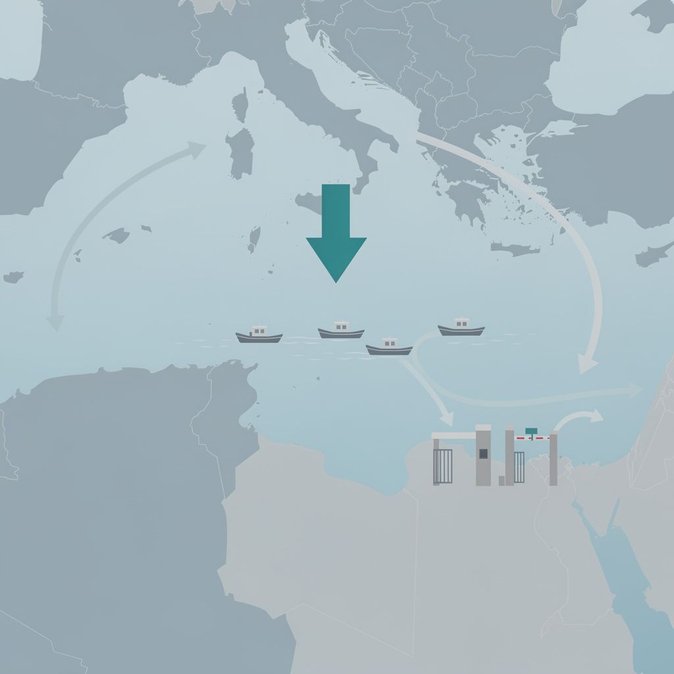
Presenting half-year data on 7 July, Interior Minister Matteo Piantedosi announced that only 14 566 irregular migrants reached Italian shores between January and June 2026, down from 31 113 in the same period of 2025 – a 54 % decrease. The largest groups came from Bangladesh, Somalia, Sudan and Pakistan, while unaccompanied minors fell to 2 815 from 5 587 year-on-year.
For employers and individual travellers trying to keep pace with these shifting entry dynamics, VisaHQ offers a one-stop solution for Italian visas and residence documents. Its platform provides real-time policy alerts, step-by-step application assistance and courier handling, helping mobility teams avoid delays that often surface when political pressure tightens document scrutiny.
Forced returns also decreased (3 006 versus 3 856), although assisted voluntary returns rose to 619. Piantedosi credited increased sea patrols, fast-track asylum screening at new facilities and the forthcoming ‘Albania model’, under which two offshore reception centres financed by Rome will become fully operational by year-end. He urged the EU to replicate the scheme, despite pending legal challenges, arguing that relocating processing outside Schengen waters deters smugglers. For global-mobility teams the numbers matter because lower boat arrivals ease political pressure that can spill into tighter document checks at border crossings and slower work-permit issuance. However, NGOs warn that the decline may stem from riskier central-Mediterranean routes shifting west towards Spain. Corporations placing staff on projects in North Africa and the Balkans should monitor the externalities: some previously ‘safe’ corridors may see sudden policing spikes. The interior ministry will release full quarter-three statistics in October; mobility providers should watch whether summer sea conditions reverse the trend. A resurgence could revive debate over Italy’s quota-based hiring schemes just as firms prepare for the 2026 ‘click-day’ visa window.
For employers and individual travellers trying to keep pace with these shifting entry dynamics, VisaHQ offers a one-stop solution for Italian visas and residence documents. Its platform provides real-time policy alerts, step-by-step application assistance and courier handling, helping mobility teams avoid delays that often surface when political pressure tightens document scrutiny.
Forced returns also decreased (3 006 versus 3 856), although assisted voluntary returns rose to 619. Piantedosi credited increased sea patrols, fast-track asylum screening at new facilities and the forthcoming ‘Albania model’, under which two offshore reception centres financed by Rome will become fully operational by year-end. He urged the EU to replicate the scheme, despite pending legal challenges, arguing that relocating processing outside Schengen waters deters smugglers. For global-mobility teams the numbers matter because lower boat arrivals ease political pressure that can spill into tighter document checks at border crossings and slower work-permit issuance. However, NGOs warn that the decline may stem from riskier central-Mediterranean routes shifting west towards Spain. Corporations placing staff on projects in North Africa and the Balkans should monitor the externalities: some previously ‘safe’ corridors may see sudden policing spikes. The interior ministry will release full quarter-three statistics in October; mobility providers should watch whether summer sea conditions reverse the trend. A resurgence could revive debate over Italy’s quota-based hiring schemes just as firms prepare for the 2026 ‘click-day’ visa window.