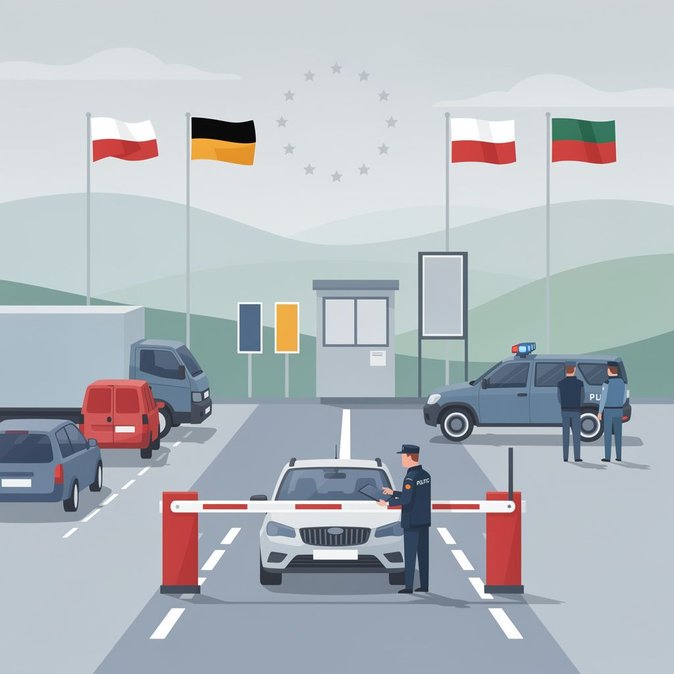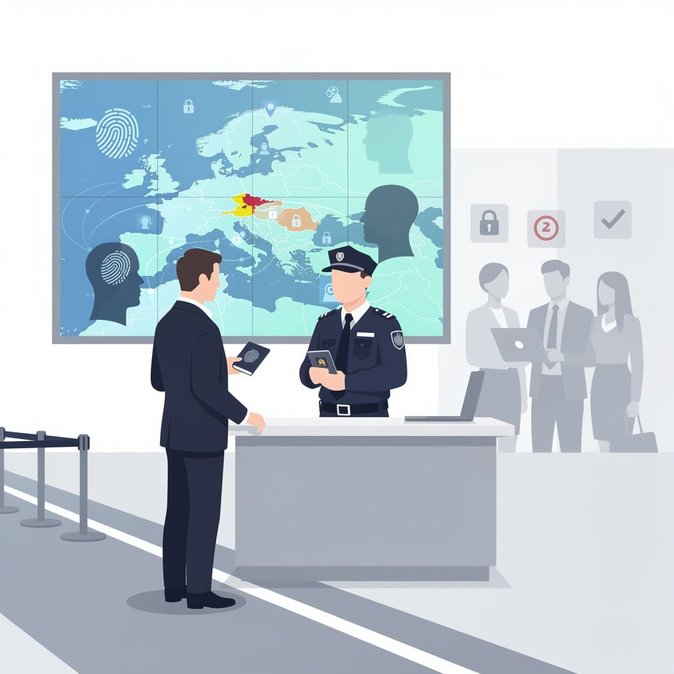
Poland’s Border Guard (Straż Graniczna) has revealed that officers at the busy Medyka road checkpoint on the Polish-Ukrainian frontier stopped a 40-year-old Moldovan national who tried to leave Poland on 2 July by presenting documents with deliberately changed personal details. Biometric checks of the man’s fingerprints showed that he was in fact the same person to whom the Belgian authorities had issued a Schengen-wide entry ban valid until the end of 2028. The case, publicised on 7 July, is the latest illustration of the sophisticated tactics used by some travellers to defeat Schengen security databases.
Businesses and individual travellers who want to avoid similar pitfalls can turn to VisaHQ for end-to-end support with Schengen and Polish visa formalities. The company’s online platform offers up-to-date compliance guidance, document validation and concierge filing services that help ensure travellers do not inadvertently trigger SIS-II alerts or run afoul of biometric requirements.
According to the Border Guard, the man hoped that an outward journey to Ukraine would go unquestioned and allow him to re-enter the EU later under a new identity. Instead, he now faces up to three years in prison under Article 264 §2 of Poland’s Criminal Code for attempting to cross the border by deceit. For employers that regularly rotate non-EU staff through Poland, the incident is a reminder that entry bans imposed anywhere in the Schengen Area are immediately visible at Polish checkpoints thanks to the shared SIS-II alert system and the country’s upgraded biometric infrastructure. Companies should therefore refresh their mobility compliance checks to ensure that assignees or business visitors have not accumulated overstays or penalties elsewhere in the bloc that could trigger alerts. The Medyka episode also shows how Poland is already operating in a mindset geared toward the new EU Entry/Exit System (EES) that will make biometric verification mandatory for all third-country nationals as of April 2026. Firms that rely on short-term travel should prepare staff for longer processing times at land borders while officers adapt to the new hardware and software.
Businesses and individual travellers who want to avoid similar pitfalls can turn to VisaHQ for end-to-end support with Schengen and Polish visa formalities. The company’s online platform offers up-to-date compliance guidance, document validation and concierge filing services that help ensure travellers do not inadvertently trigger SIS-II alerts or run afoul of biometric requirements.
According to the Border Guard, the man hoped that an outward journey to Ukraine would go unquestioned and allow him to re-enter the EU later under a new identity. Instead, he now faces up to three years in prison under Article 264 §2 of Poland’s Criminal Code for attempting to cross the border by deceit. For employers that regularly rotate non-EU staff through Poland, the incident is a reminder that entry bans imposed anywhere in the Schengen Area are immediately visible at Polish checkpoints thanks to the shared SIS-II alert system and the country’s upgraded biometric infrastructure. Companies should therefore refresh their mobility compliance checks to ensure that assignees or business visitors have not accumulated overstays or penalties elsewhere in the bloc that could trigger alerts. The Medyka episode also shows how Poland is already operating in a mindset geared toward the new EU Entry/Exit System (EES) that will make biometric verification mandatory for all third-country nationals as of April 2026. Firms that rely on short-term travel should prepare staff for longer processing times at land borders while officers adapt to the new hardware and software.