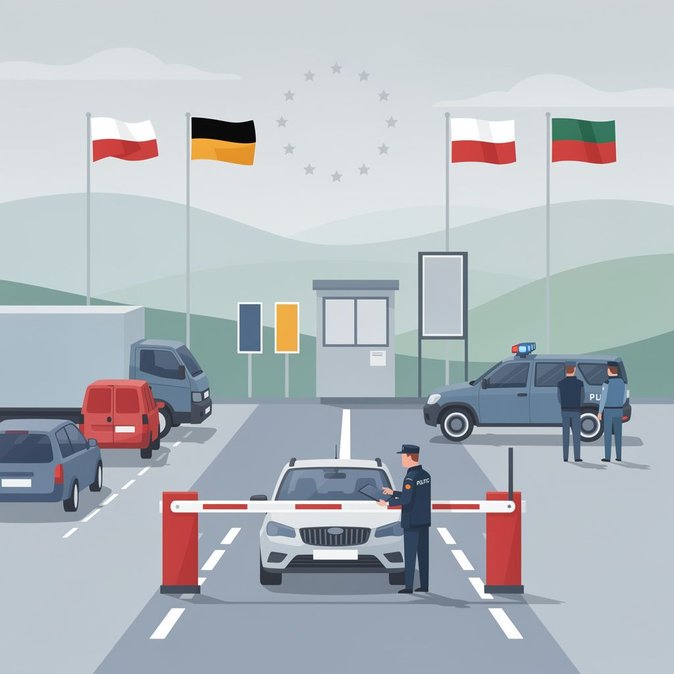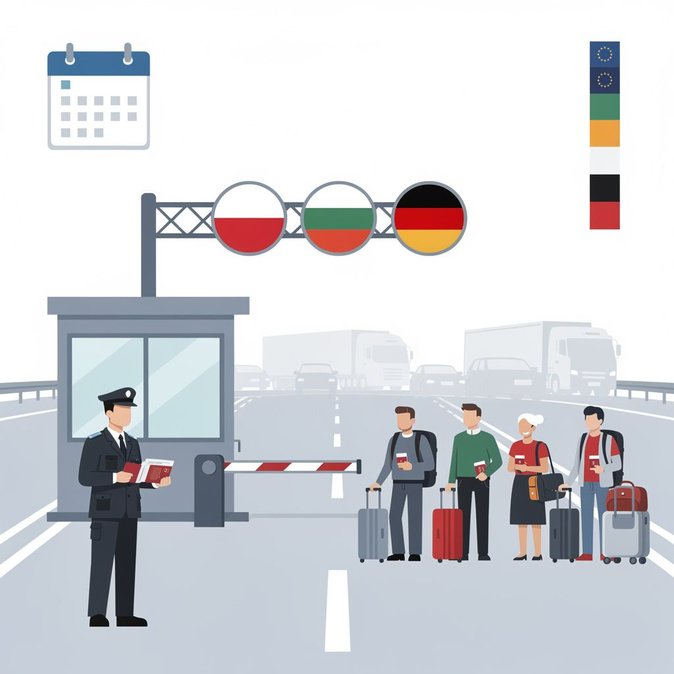
Exactly twelve months after Poland reinstated Schengen controls on its borders with Lithuania and Germany, officials in the north-eastern Podlaskie region have released a detailed progress report. Speaking to Polskie Radio Białystok on 7 July, Border Guard representatives said they had inspected more than 1.7 million travellers and 930,000 vehicles on the Lithuanian frontier alone over the past year, refusing entry to some 1,060 individuals. The statistics suggest the policy is biting: attempted illegal crossings have shifted eastward toward Belarus, and smuggling networks are being disrupted. A dramatic example came only days earlier, when officers at Budzisko discovered 54 migrants hidden in a Romanian-registered lorry. The driver now faces up to eight years in prison. Business groups initially feared the 2025 decision would hamper road freight, but many now concede that formalised controls provide more predictability than random spot checks deeper inside the EU. Nevertheless, haulage firms still complain of paperwork hurdles—particularly when drivers forget passports, forcing costly turn-backs. The Interior Ministry is piloting a digital ‘pre-clear’ app that could allow frequent commercial drivers to submit manifests in advance; a beta version is slated for release in September. For mobility managers, the anniversary serves as a checkpoint: staff travelling by road or rail between Vilnius, Kaunas, Berlin and Warsaw should continue to carry travel documents and allow extra transit time—especially around holiday weekends when controls are intensified. With the measures now extended to 1 October 2026 and likely to be prolonged further, companies should treat the internal border as semi-permanent for the foreseeable future. Integration of entry-exit data into HR travel-tracking systems will help ensure compliance with the 90/180-day Schengen rule for non-EU employees based in Poland.
Source: Polskie Radio Białystok