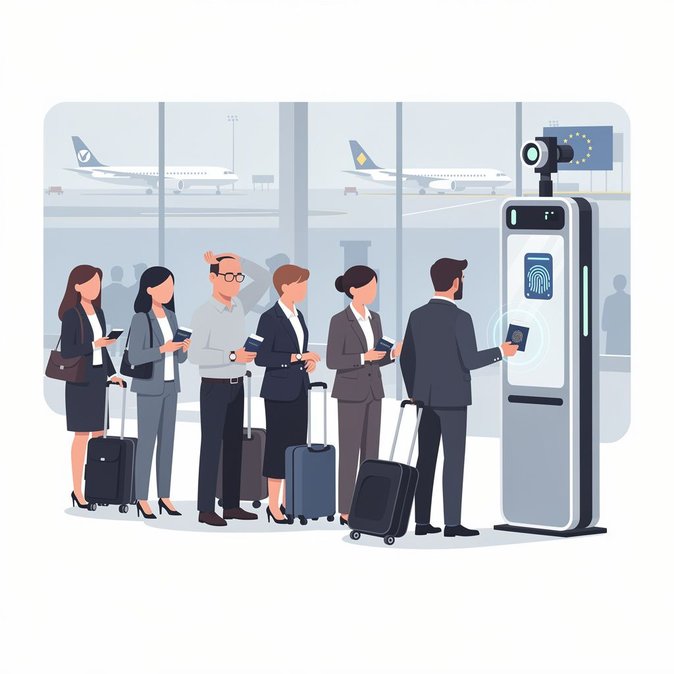
On 7 July 2026, the European Commission dismissed pleas from major airlines and airport groups—including ACI Europe, Airlines for Europe and IATA—to suspend the new EU Entry/Exit System (EES) during the busy summer season. Industry leaders had warned that the biometric border-control platform, fully operational since 10 April, is generating long queues at hubs such as Madrid-Barajas, Barcelona-El Prat and Málaga-Costa del Sol, jeopardising flight punctuality and passenger satisfaction. Commission officials told reporters ahead of a stakeholder meeting in Brussels that a blanket suspension is “impossible” because it would create legal and security gaps in tracking non-EU travellers’ stays. They noted that member states already have limited leeway to pause biometric capture at peak times and that no country—including Spain—has formally requested an extended waiver beyond the end of September. The EES replaces passport stamps with a digital register of entry and exit dates plus facial or fingerprint data, enabling automatic calculation of permitted stay periods. Spain, one of the early adopters, has installed more than 800 self-service kiosks and e-gates but still faces staffing shortages at manual counters. Airlines argue that 90-second processing times per traveller will cascade into missed connections; Brussels counters that the solution lies in greater industry investment and passenger pre-registration via the forthcoming EES app. For corporate travel managers and relocation teams, the message is clear: EES checks are here to stay through the summer peak. Companies should advise employees and assignees flying into Spain to arrive at airports earlier—especially if they hold third-country passports—and to use any available pre-enrolment tools. Carriers operating crew changes should build extra buffer time into rosters, while event organisers might stagger arrival slots for large groups. Longer-term, Spanish airports plan to add dedicated business-traveller lanes and integrate EES with mobile-ID wallets. However, until those upgrades materialise, mobility stakeholders should monitor daily queue times and keep travellers informed of best-gate practices.
Source: Europa Press