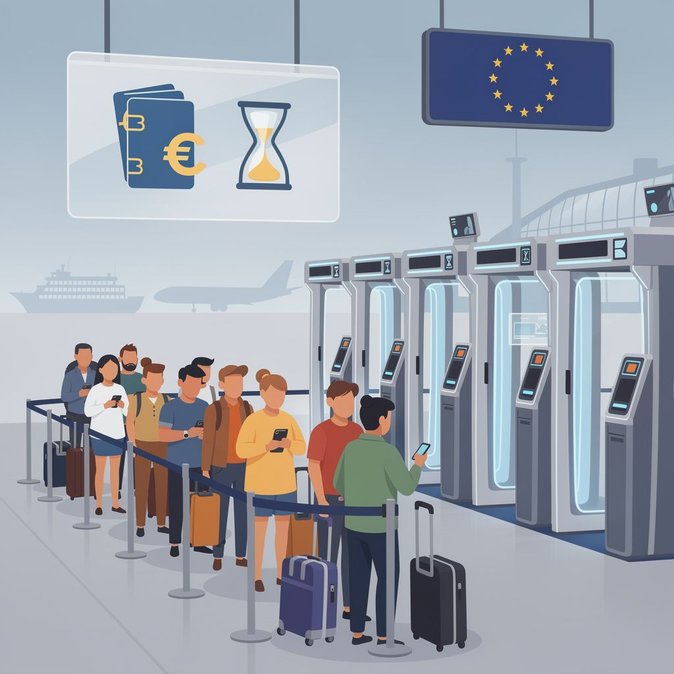
France’s travel sector woke up to another Brussels-induced curve-ball on 8 July when Euronews revealed that the European Travel Information and Authorisation System (ETIAS) – a €20 “e-visa” that non-EU nationals must obtain before visiting the Schengen area – is now expected to slip into 2027 rather than the last quarter of 2026. According to officials quoted by the Financial Times, EU-LISA conceded that rolling out the new pre-clearance programme this year is “illusory” while airports are still struggling with the biometric Entry/Exit System (EES), fully activated in April.
Companies and individual travellers anxious about staying compliant during this rolling transition might find it useful to work with VisaHQ, whose online platform tracks ETIAS developments in real time and streamlines related visa and passport services for France and the wider Schengen space. By integrating with corporate travel workflows and sending automated status alerts, VisaHQ can lighten the administrative load that ETIAS and EES will place on mobility managers.
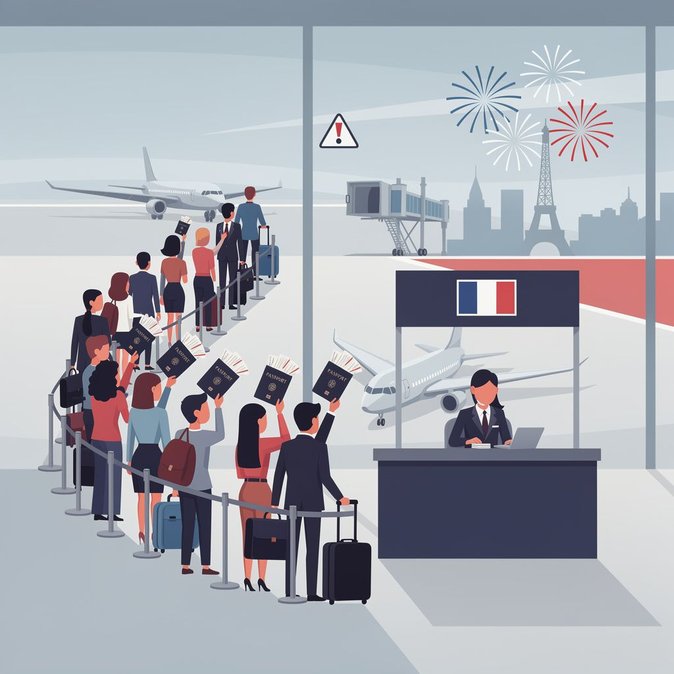
Airlines, ACI Europe and IATA warned Commission President von der Leyen on 1 July that EES queues have reached a “critical point”, especially at major French gateways such as Paris-CDG and the juxtaposed ports at Calais and Gare du Nord. Under the draft timeline, ETIAS would open for applications six months before becoming compulsory and include a grace period in which travellers without authorisation cannot be refused entry. For French corporates that depend on short-cycle visits from US, UK or Canadian staff, the delay buys breathing-space to adapt HR processes and travel-booking workflows. For the French state, the postponement eases immediate pressure on consular platforms already stretched by record visa demand (2.96 million visas issued in 2025) and on the border-police unions that have been vocal about staffing. But it also dims near-term revenue expectations from the €20 fee, part of which had been earmarked for upgrading border hardware ahead of the 2027 tourism season. Practical take-away for mobility managers: keep ETIAS in policy briefings but focus resources on helping travellers register their biometrics for EES and on realistic connection times at French airports, Eurotunnel and ferry ports through summer 2026.
Companies and individual travellers anxious about staying compliant during this rolling transition might find it useful to work with VisaHQ, whose online platform tracks ETIAS developments in real time and streamlines related visa and passport services for France and the wider Schengen space. By integrating with corporate travel workflows and sending automated status alerts, VisaHQ can lighten the administrative load that ETIAS and EES will place on mobility managers.
Airlines, ACI Europe and IATA warned Commission President von der Leyen on 1 July that EES queues have reached a “critical point”, especially at major French gateways such as Paris-CDG and the juxtaposed ports at Calais and Gare du Nord. Under the draft timeline, ETIAS would open for applications six months before becoming compulsory and include a grace period in which travellers without authorisation cannot be refused entry. For French corporates that depend on short-cycle visits from US, UK or Canadian staff, the delay buys breathing-space to adapt HR processes and travel-booking workflows. For the French state, the postponement eases immediate pressure on consular platforms already stretched by record visa demand (2.96 million visas issued in 2025) and on the border-police unions that have been vocal about staffing. But it also dims near-term revenue expectations from the €20 fee, part of which had been earmarked for upgrading border hardware ahead of the 2027 tourism season. Practical take-away for mobility managers: keep ETIAS in policy briefings but focus resources on helping travellers register their biometrics for EES and on realistic connection times at French airports, Eurotunnel and ferry ports through summer 2026.