Two draft decrees sent to the National Commission on Collective Bargaining (CNNCEFP) on 8 July aim to modernise the foreign-labour chapter of the Code de l’Entrée et du Séjour des Étrangers (CESEDA).
Facing these impending reforms, companies can lean on VisaHQ’s dedicated France team to handle filings, track application statuses, and coordinate consular appointments through a single online dashboard—making it easier to stay compliant as the rules evolve.
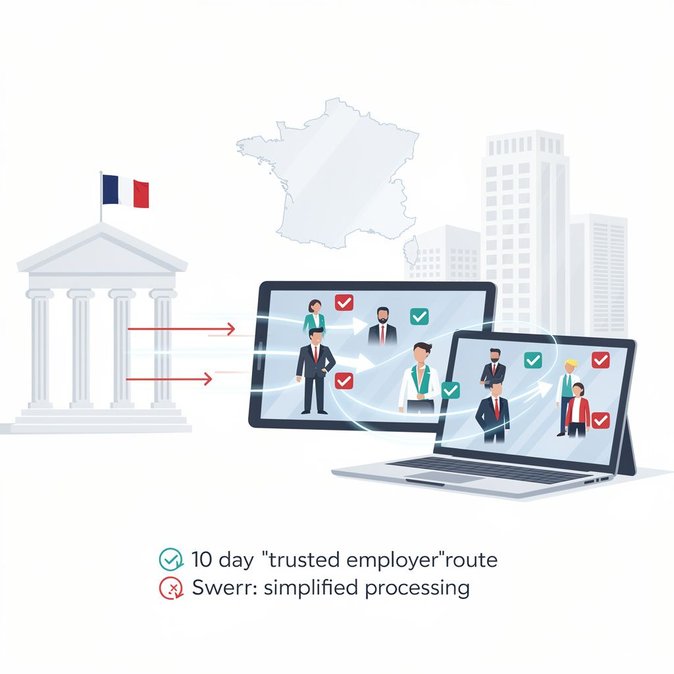
According to a legal note released by Paris-based immigration lawyer Hassan Kohen, the texts would: • Create a single, fully digital portal for work-permit requests, replacing the parallel OFII and DIRECCTE workflows; • Introduce a ‘trusted employer’ fast-track delivering decisions in ten days for companies that sign a compliance charter; • Shorten labour-market tests for shortage-occupation roles from three weeks to one; • Allow intra-company transferees to start work upon filing if their previous EU permit covers at least six months of the assignment. If adopted, the measures could cut lead-times for standard salarié visas from the current median of 52 days to under 25 days. The interior ministry hopes to publish the final decrees in the Journal Officiel by October so they enter into force on 1 January 2027. Global HR teams should start mapping which French entities could qualify for trusted-employer status and review posted-worker notification procedures, which remain unchanged.
Facing these impending reforms, companies can lean on VisaHQ’s dedicated France team to handle filings, track application statuses, and coordinate consular appointments through a single online dashboard—making it easier to stay compliant as the rules evolve.
According to a legal note released by Paris-based immigration lawyer Hassan Kohen, the texts would: • Create a single, fully digital portal for work-permit requests, replacing the parallel OFII and DIRECCTE workflows; • Introduce a ‘trusted employer’ fast-track delivering decisions in ten days for companies that sign a compliance charter; • Shorten labour-market tests for shortage-occupation roles from three weeks to one; • Allow intra-company transferees to start work upon filing if their previous EU permit covers at least six months of the assignment. If adopted, the measures could cut lead-times for standard salarié visas from the current median of 52 days to under 25 days. The interior ministry hopes to publish the final decrees in the Journal Officiel by October so they enter into force on 1 January 2027. Global HR teams should start mapping which French entities could qualify for trusted-employer status and review posted-worker notification procedures, which remain unchanged.