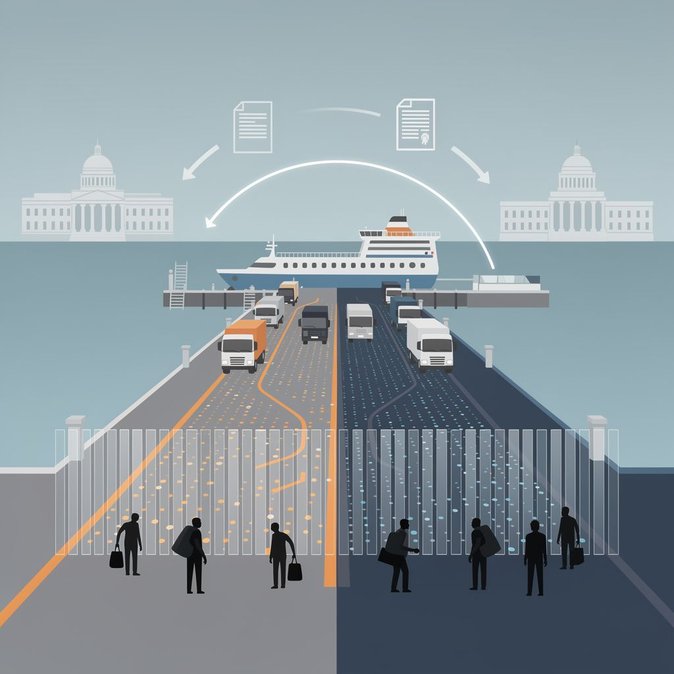
A scathing 120-page report released by the National Assembly’s fact-finding mission on July 8 paints a bleak picture of France’s management of the UK–France juxtaposed border around Calais and Dunkirk. MPs interviewed police, port authorities, NGOs and business federations and concluded that the current system—rooted in 34 bilateral agreements signed since 1986—no longer meets either security or economic needs. The rapporteurs describe a “permanent humanitarian and logistical crisis” in which thousands of people sleep rough near ferry terminals while haulage firms lose millions of euros every year to delays, cargo damage and higher insurance premiums. They accuse successive governments of allowing British funding (around €232 million since 2016) to dictate priorities, resulting in a security-only approach that has pushed migrants into ever-riskier routes. Among 17 recommendations, the MPs urge Paris to reopen negotiations with London to share asylum processing responsibilities, expand legal family-reunification channels and create a joint rapid-decision unit capable of issuing humanitarian visas within 72 hours. They also want the Interior Ministry to pilot a “smart freight corridor” using tamper-proof digital seals so lorries pre-cleared inland can bypass the port’s most congested checkpoints. For businesses, the committee calls for a compensation scheme for transport operators who can prove border delays caused financial loss, and for French Customs to open a dedicated Green Lane for time-sensitive perishable goods during peak summer weekends. Finally, lawmakers urge the government to publish an annual impact assessment so that Parliament, rather than Quai d’Orsay negotiators, steers future border policy. If the recommendations are acted upon, corporates moving staff or goods between France and the UK could see faster crossings and reduced compliance risk, but they may also face stricter due-diligence requirements as digital freight tracking becomes mandatory.
Source: Le Monde