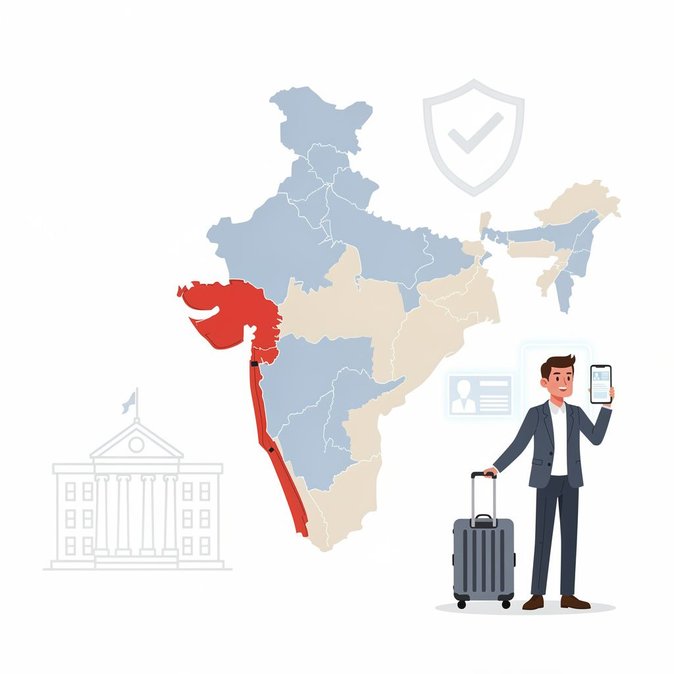
The UK Foreign, Commonwealth & Development Office (FCDO) updated its India travel advice on 9 July 2026, maintaining long-standing cautions while adding two mobility-relevant changes. First, the FCDO continues to advise against all travel within 10 km of the India-Pakistan border and to most of Jammu & Kashmir, noting that the Wagah-Attari crossing remains closed. Second, the advisory now references India’s newly introduced digital e-OCI card and reminds dual UK-OCI nationals to carry a digital or physical copy when entering India.
For travellers who need help securing or updating an OCI, tourist visa, or any other Indian entry document, VisaHQ provides streamlined online application tools and expert guidance. Their dedicated India page lets individuals and corporate travel managers upload documents, track status, and receive real-time updates—making it easier to stay compliant with the new e-OCI requirements and broader entry rules.
The notice also alerts travellers to possible flight disruptions linked to Middle-East airspace issues and recommends monitoring airline channels. Corporations routing employees through Gulf hubs should build contingency plans and ensure itineraries allow buffer time for missed connections. While the advisory has no direct legal force, many corporate travel-risk insurers use FCDO guidance to set coverage limits. Employers should review duty-of-care obligations: travel to red-flagged areas could void insurance unless specific dispensations are secured. Firms with operations in Punjab should brief staff that local movements near the frontier remain off-limits under corporate policy. HR teams should circulate the updated advisory, emphasise the e-OCI documentation requirement, and log the change in risk-management dashboards. Travellers who might transit land borders—for example, truck-drivers in the integrated check-post pilot—must verify whether special permits are available or postpone journeys.
For travellers who need help securing or updating an OCI, tourist visa, or any other Indian entry document, VisaHQ provides streamlined online application tools and expert guidance. Their dedicated India page lets individuals and corporate travel managers upload documents, track status, and receive real-time updates—making it easier to stay compliant with the new e-OCI requirements and broader entry rules.
The notice also alerts travellers to possible flight disruptions linked to Middle-East airspace issues and recommends monitoring airline channels. Corporations routing employees through Gulf hubs should build contingency plans and ensure itineraries allow buffer time for missed connections. While the advisory has no direct legal force, many corporate travel-risk insurers use FCDO guidance to set coverage limits. Employers should review duty-of-care obligations: travel to red-flagged areas could void insurance unless specific dispensations are secured. Firms with operations in Punjab should brief staff that local movements near the frontier remain off-limits under corporate policy. HR teams should circulate the updated advisory, emphasise the e-OCI documentation requirement, and log the change in risk-management dashboards. Travellers who might transit land borders—for example, truck-drivers in the integrated check-post pilot—must verify whether special permits are available or postpone journeys.