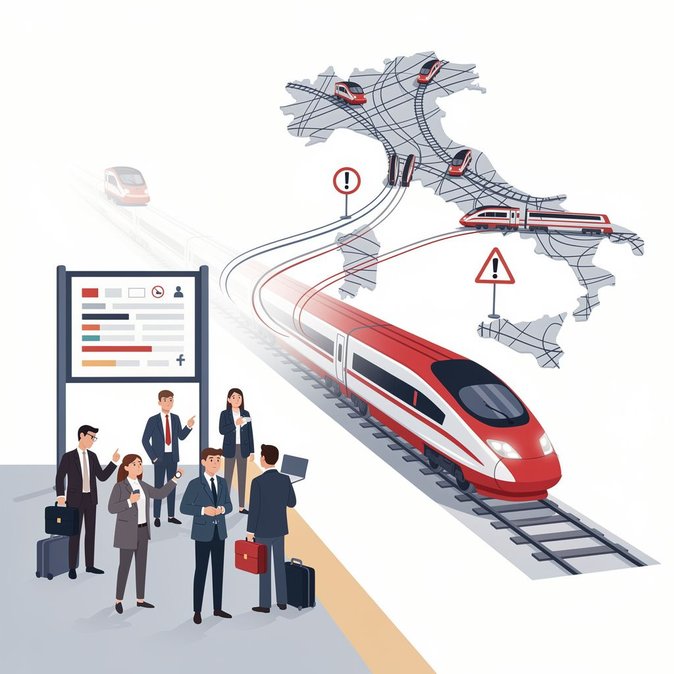
Passengers using Italy’s privately-run Italo NTV high-speed services face widespread disruption after the Uiltrasporti union called a nationwide 23-hour walk-out from 3:00 a.m. on 9 July until 2:00 a.m. on 10 July. The industrial action, announced only four days ago, involves on-board crew and threatens to cancel or severely delay dozens of Frecciarossa-equivalent services on the Milan–Rome–Naples backbone as well as cross-border connections to France. Uiltrasporti accuses the operator of breaching company-level agreements, understaffing trains and stalling contract renewals despite posting record 2025 profits. Management rejects the claims but has published a list of “treni garantiti” (guaranteed trains) that will run during statutory protection windows (06:00-09:00 and 18:00-21:00).
For international travelers caught up in the disruption, sorting out last-minute documentation can be another headache. VisaHQ’s Italy portal streamlines visa, passport and residence-permit applications online, offering expedited services and real-time status alerts that pair well with rapidly changing rail or flight plans. Even if your itinerary shifts because of the strike, the platform can update supporting travel dates instantly, reducing the risk of border hassles.
Italo is offering fee-free rebooking or full refunds for services cancelled because of the strike and says affected travellers will automatically receive EU-mandated compensation if delays exceed 60 minutes. Corporate mobility managers should alert employees to verify itineraries the day before travel, build extra buffers into meeting schedules and, where possible, shift to Trenitalia’s Frecciarossa services, which are not involved in the protest. Air connections between Milan Linate and Rome Fiumicino are already close to capacity; early booking is advised. Clients with interline rail-air tickets should note that airlines normally treat rail disruption as a passenger’s own risk, so missed flights may trigger change fees. Under Italian law, strikes must be communicated at least five days in advance and essential service windows must be maintained; nevertheless, cascade delays often continue for hours after the official end. Logistics firms planning same-day courier services that rely on Italo’s belly-cargo space should switch to road or Frecciarossa cargo-light offerings to avoid service-level penalties. While the walk-out is domestic, Italo carries a growing share of international tourists and business travellers arriving via the Paris–Lyon–Turin corridor. Travel managers should monitor Italo’s disruption page and the Ministry of Transport’s strike bulletin for late-night updates, as unions have hinted at further action in August if talks stall.
For international travelers caught up in the disruption, sorting out last-minute documentation can be another headache. VisaHQ’s Italy portal streamlines visa, passport and residence-permit applications online, offering expedited services and real-time status alerts that pair well with rapidly changing rail or flight plans. Even if your itinerary shifts because of the strike, the platform can update supporting travel dates instantly, reducing the risk of border hassles.
Italo is offering fee-free rebooking or full refunds for services cancelled because of the strike and says affected travellers will automatically receive EU-mandated compensation if delays exceed 60 minutes. Corporate mobility managers should alert employees to verify itineraries the day before travel, build extra buffers into meeting schedules and, where possible, shift to Trenitalia’s Frecciarossa services, which are not involved in the protest. Air connections between Milan Linate and Rome Fiumicino are already close to capacity; early booking is advised. Clients with interline rail-air tickets should note that airlines normally treat rail disruption as a passenger’s own risk, so missed flights may trigger change fees. Under Italian law, strikes must be communicated at least five days in advance and essential service windows must be maintained; nevertheless, cascade delays often continue for hours after the official end. Logistics firms planning same-day courier services that rely on Italo’s belly-cargo space should switch to road or Frecciarossa cargo-light offerings to avoid service-level penalties. While the walk-out is domestic, Italo carries a growing share of international tourists and business travellers arriving via the Paris–Lyon–Turin corridor. Travel managers should monitor Italo’s disruption page and the Ministry of Transport’s strike bulletin for late-night updates, as unions have hinted at further action in August if talks stall.