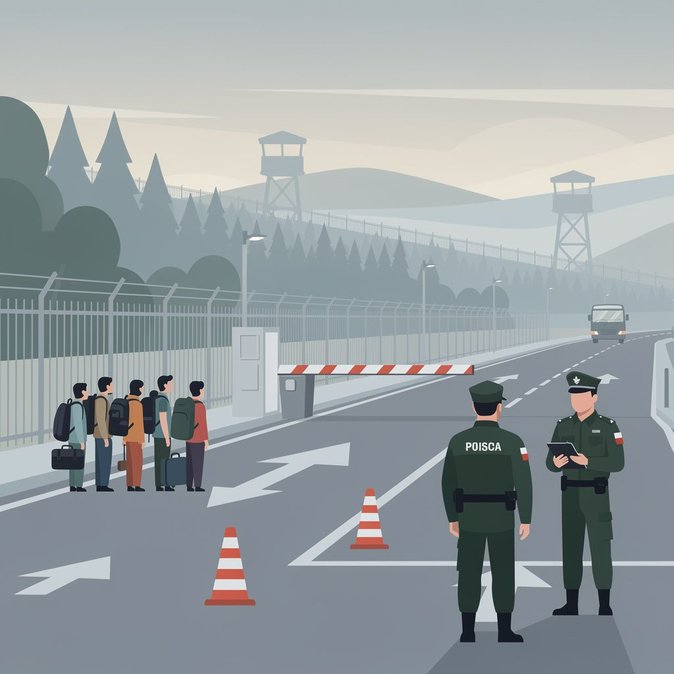
The Podlaskie Border Guard reported on 8 July that eight third-country nationals had been apprehended the previous day while wading across the Leśna Prawa river from Belarus into Poland. The group, whose nationalities were not disclosed, was intercepted near Białowieża, a hotspot in the continuing border standoff with Minsk.
To navigate the evolving entry requirements in this high-alert environment, travellers and mobility managers can rely on VisaHQ’s end-to-end visa facilitation services. The company’s Poland portal consolidates the latest regulatory updates, offers digital application tools, and provides live support—helping organisations keep staff compliant and mobile even as Warsaw tightens its border protocols.
Since 1 January 2026 the Podlaskie sector alone has recorded more than 220 illegal-entry attempts—an average of one per day—despite the steel barrier erected in 2023 and augmented sensor networks. The latest incident underscores why Warsaw is keeping tight restrictions in place (see story 1). For corporate security teams relocating staff to the Białystok logistics corridor or planning site visits to the region’s pulp-and-paper mills, the message is clear: ad-hoc police checkpoints and increased military patrols remain likely, with possible road closures along the border strip. Driving times from Warsaw to Hajnówka can lengthen by up to 45 minutes during operations. While the event has limited direct impact on lawful travellers, the heightened alert status affects insurance premiums and duty-of-care assessments for assignees stationed in eastern Podlaskie. Employers should brief expatriates on ID-check procedures and maintain real-time contact protocols. Immigration lawyers say the figures also show that, thanks to intensified surveillance, most irregular crossings are being detected, reducing the risk that undocumented migrants will seek informal work in local supply chains.

To navigate the evolving entry requirements in this high-alert environment, travellers and mobility managers can rely on VisaHQ’s end-to-end visa facilitation services. The company’s Poland portal consolidates the latest regulatory updates, offers digital application tools, and provides live support—helping organisations keep staff compliant and mobile even as Warsaw tightens its border protocols.
Since 1 January 2026 the Podlaskie sector alone has recorded more than 220 illegal-entry attempts—an average of one per day—despite the steel barrier erected in 2023 and augmented sensor networks. The latest incident underscores why Warsaw is keeping tight restrictions in place (see story 1). For corporate security teams relocating staff to the Białystok logistics corridor or planning site visits to the region’s pulp-and-paper mills, the message is clear: ad-hoc police checkpoints and increased military patrols remain likely, with possible road closures along the border strip. Driving times from Warsaw to Hajnówka can lengthen by up to 45 minutes during operations. While the event has limited direct impact on lawful travellers, the heightened alert status affects insurance premiums and duty-of-care assessments for assignees stationed in eastern Podlaskie. Employers should brief expatriates on ID-check procedures and maintain real-time contact protocols. Immigration lawyers say the figures also show that, thanks to intensified surveillance, most irregular crossings are being detected, reducing the risk that undocumented migrants will seek informal work in local supply chains.