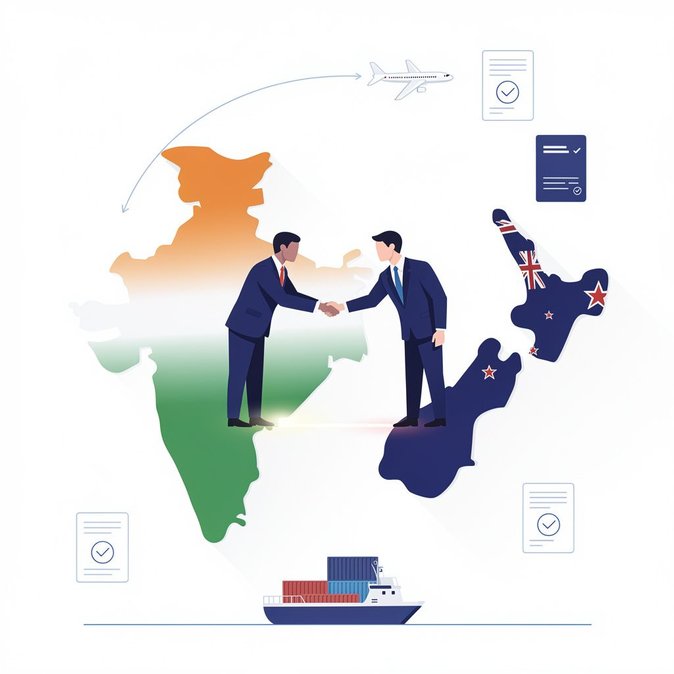
India’s Prime Minister Narendra Modi wrapped up a landmark two-day visit to Auckland on 10-11 July 2026 by signing a comprehensive Free Trade Agreement (FTA) with his New Zealand counterpart, Christopher Luxon. The pact – India’s first full bilateral FTA with a developed Pacific economy – eliminates tariffs on 96 percent of goods over ten years, introduces mutual recognition of professional qualifications, and creates fast-track visa lanes for executives, investors and accompanying family members. The two leaders also elevated the relationship to a “Strategic Partnership” and endorsed a Roadmap to 2030. Mobility featured heavily: a new Memorandum of Arrangement on Tourism commits both sides to push airlines to start direct nonstop flights, while a Maritime Cooperation Arrangement paves the way for mutual recognition of Indian and Kiwi seafarer competency certificates – a long-standing request from global shipping firms operating crew change hubs in the Indian Ocean. A dedicated “People, Culture and Sport” chapter promises streamlined student and researcher mobility, including multi-entry five-year research visas and co-funded doctoral scholarships. Corporate India is expected to capitalise quickly. Dairy technology company Fonterra confirmed it will treble headcount at its Bengaluru global capability centre, and Mumbai-based IT major TCS said it will open a Christchurch delivery centre focused on agritech solutions. Both firms cited the FTA’s services schedule and the forthcoming Business Mobility visa class, which will allow stays of up to 90 days per visit without Labour Market Tests, as game-changers for project deployment. Practically, Indian exporters should prepare for new Rules-of-Origin self-declaration procedures and an electronic Certificate of Origin platform that goes live three months after entry into force. Mobility teams are advised to budget for a transitional visa surcharge of NZ$ 75 per application that will fund biometric enrolment kiosks at Auckland and Christchurch airports. With bilateral trade targeted to double to NZ$ 7 billion by 2030, immigration advisers expect a surge in intra-company transfers, especially in IT services, dairy processing and renewable-energy engineering. For Indian travellers, the most visible change may be at the border: New Zealand’s Immigration (Asia-Pacific Partnerships) Amendment Bill, now before Parliament, will give Indian diplomatic passport-holders visa-free entry for up to 14 days, matching concessions already offered to Singapore and Japan. New Zealand officials say the measure could take effect as early as 1 October 2026 if enabling regulations pass on schedule.
How VisaHQ can help
VisaHQ simplifies the visa application process for individuals and businesses. Check current travel requirements, prepare the required documents and manage your application online through the VisaHQ India portal.More From India
View all
Modi courts New Zealand CEOs, touts FTA as gateway for ‘technology and talent mobility’
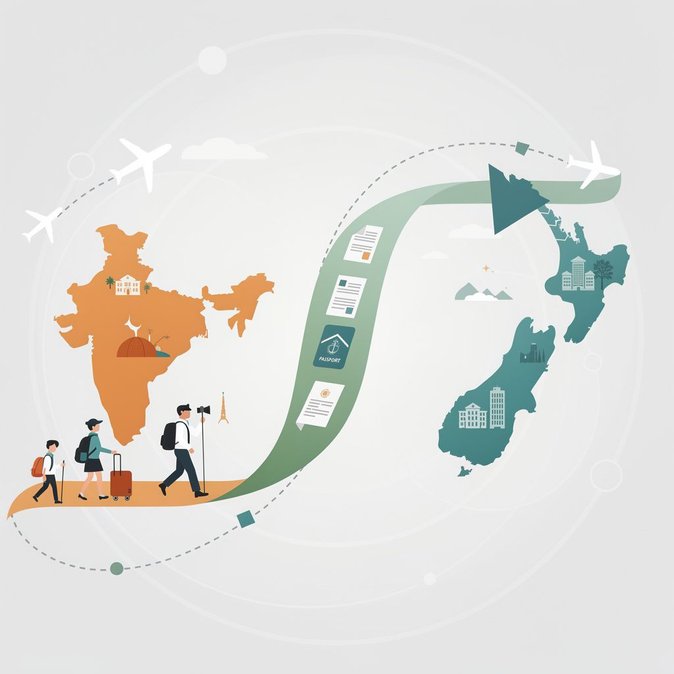
Roadmap 2030: India–New Zealand Strategic Partnership sets measurable targets for student, skills and tourism mobility