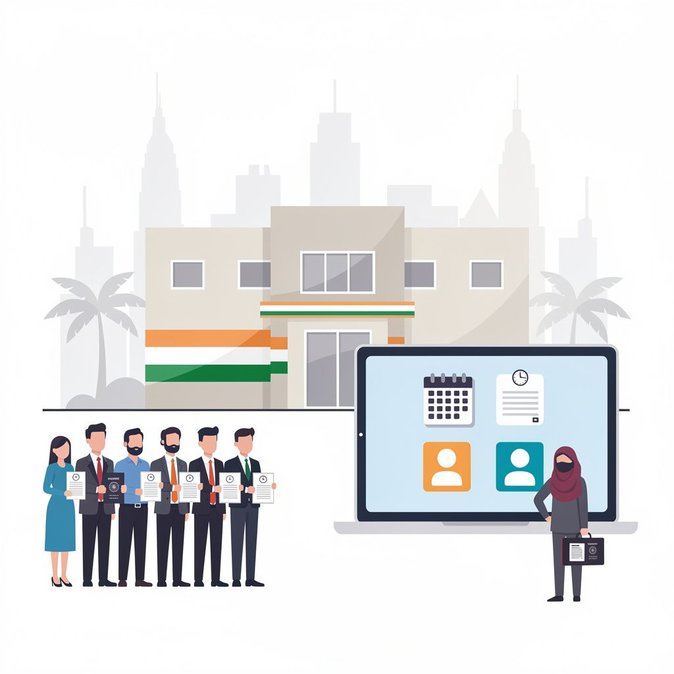
For the first time in 17 years, the Indian Embassy in Abu Dhabi and the Consulate in Dubai are directly handling passport, visa and attestation work after contracts with outsourcing partners expired on 30 June. The sudden change—triggered by legal challenges that delayed the hand-over to a new single-window provider—has created temporary bottlenecks but also slashed service-fees previously charged by intermediaries.
Since 1 July, walk-in applications have been curtailed; the Consulate now operates strictly by appointment via a new portal (book.passportindiauae.com), while the Embassy offers a two-hour walk-in window only for newborn passports and emergency certificates.
Daily processing volumes have stabilised at roughly 1,500 cases—close to the outsourced system’s capacity—yet queues form quickly when portal slots are released at 8 pm each evening.
Fees have meanwhile jumped: a standard passport renewal now costs Dh 450, up from Dh 285, marking the first major revision since 2012.
Travel planners looking for a smoother path can also turn to VisaHQ, whose UAE platform consolidates up-to-date requirements, appointment guidance and courier options for multiple nationalities. The service’s real-time notifications and document checks help individuals—and HR teams managing bulk renewals—stay ahead of shifting embassy rules without relying on third-party agents.
Payment is cash-only for now, and missions warn applicants against agents charging to ‘guarantee’ appointments.
The Embassy has set up a toll-free hotline (800 INDIA) and WhatsApp channel for complaints.
For the UAE’s 3.5 million Indian nationals—and employers sponsoring their travel—the transition means tighter planning.
HR teams should remind staff that only the applicant (or parents of minors) may enter the premises, and that all supporting documents must be carried in original and copy form.
With the future ICAC outsourcing model still tied up in court, the in-house arrangement could last months, so corporate mobility calendars should allocate extra lead-time for passport renewals and attestations.
Since 1 July, walk-in applications have been curtailed; the Consulate now operates strictly by appointment via a new portal (book.passportindiauae.com), while the Embassy offers a two-hour walk-in window only for newborn passports and emergency certificates.
Daily processing volumes have stabilised at roughly 1,500 cases—close to the outsourced system’s capacity—yet queues form quickly when portal slots are released at 8 pm each evening.
Fees have meanwhile jumped: a standard passport renewal now costs Dh 450, up from Dh 285, marking the first major revision since 2012.
Travel planners looking for a smoother path can also turn to VisaHQ, whose UAE platform consolidates up-to-date requirements, appointment guidance and courier options for multiple nationalities. The service’s real-time notifications and document checks help individuals—and HR teams managing bulk renewals—stay ahead of shifting embassy rules without relying on third-party agents.
Payment is cash-only for now, and missions warn applicants against agents charging to ‘guarantee’ appointments.
The Embassy has set up a toll-free hotline (800 INDIA) and WhatsApp channel for complaints.
For the UAE’s 3.5 million Indian nationals—and employers sponsoring their travel—the transition means tighter planning.
HR teams should remind staff that only the applicant (or parents of minors) may enter the premises, and that all supporting documents must be carried in original and copy form.
With the future ICAC outsourcing model still tied up in court, the in-house arrangement could last months, so corporate mobility calendars should allocate extra lead-time for passport renewals and attestations.