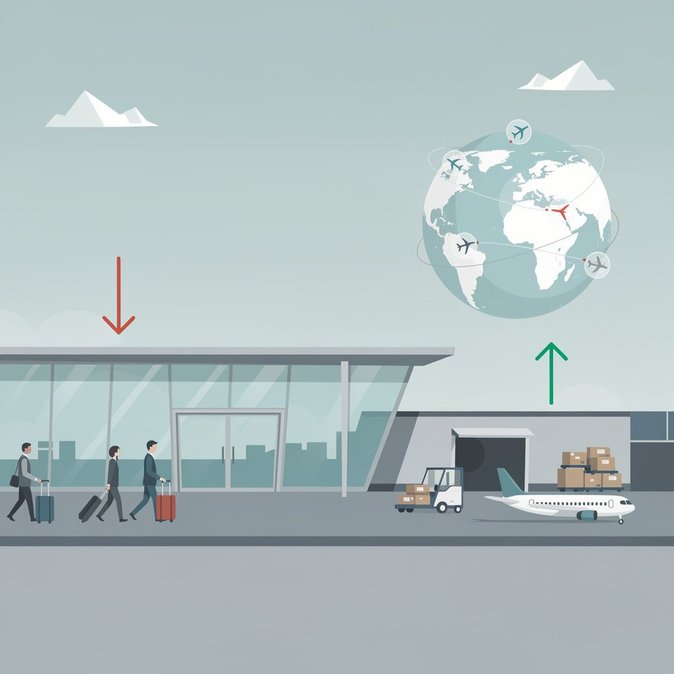
Fraport AG, operator of Germany’s largest aviation hub, reported a 1.7 % year-on-year dip to 5.7 million passengers at Frankfurt Airport in June. Long-haul demand was mixed: traffic to and from the Middle East remained 27 % below last year because of the conflict in Iran, while routes to Africa and the Far East grew 8 % and 6.4 % respectively. For the first half of 2026 the airport handled 28.9 million passengers (-0.8 %). Management blamed not only geopolitical turmoil but also the two-day Lufthansa pilots’ strike in March, which disrupted roughly 700 000 itineraries. Cargo held up better, rising 2 % in June to 177 676 tonnes. Despite softer domestic numbers, CEO Stefan Schulte told investors the group remains “on course” to meet its full-year financial targets thanks to stronger performance at its 30-plus overseas airports in Brazil, Greece, Slovenia and Peru. International divisions lifted total group traffic 1.0 % to 77.7 million pax in H1. Why it matters for mobility managers: Frankfurt is Europe’s primary gateway for German-bound assignees and corporate travellers. A flat growth scenario suggests aircraft seat supply should remain broadly stable, easing fears of capacity-driven fare hikes—even as Middle-East itineraries stay volatile. Freight forwarders moving high-value components may welcome the modest cargo uptick, which supports service frequencies on intercontinental freighters. Practical tip: With summer-holiday crowds returning, Fraport still advises arriving at least 2½ hours before departure. Operators planning time-critical crew rotations should monitor the airport’s slot-coordination updates, as runway utilisation is expected to stay below 2019 peaks, offering slightly more schedule flexibility than last year.