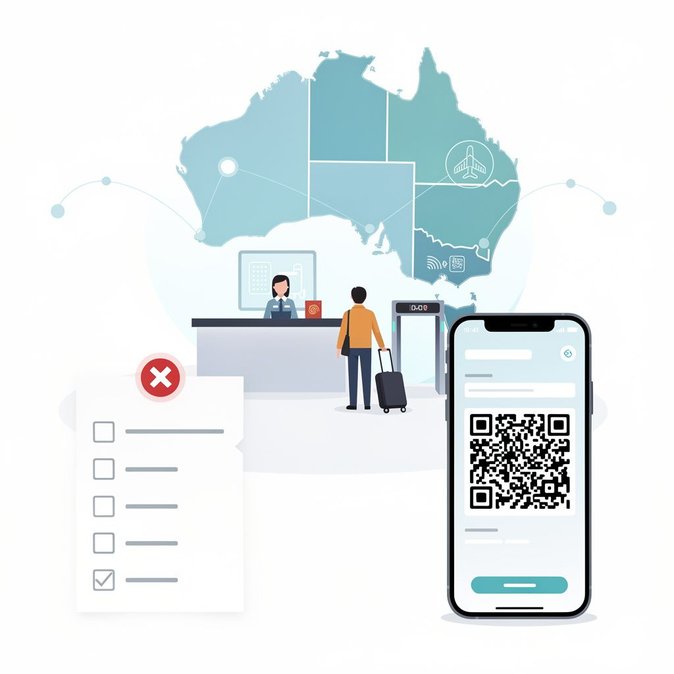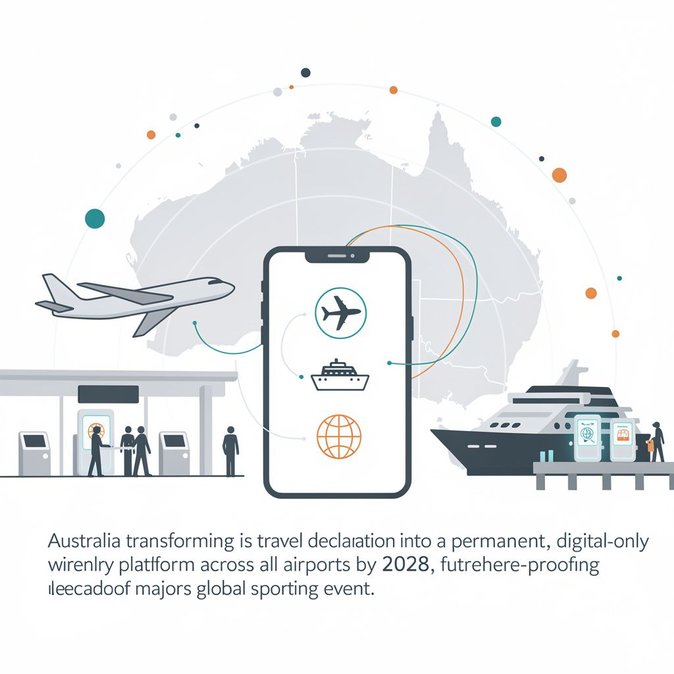
The Australian Border Force (ABF) has secured A$56.1 million over the next four years to convert the Australia Travel Declaration (ATD) pilot into a permanent, nation-wide system. Announced on 13 July 2026, the funding covers development of a universal webform, expansion of app capability and back-end upgrades that will eventually connect airlines, cruise lines and biosecurity systems to a single border platform. According to the ABF, the new budget will also explore contact-less arrivals clearance, co-located domestic/international terminals and streamlined baggage transfers—critical infrastructure as Australia prepares for passenger surges linked to the 2032 Brisbane Olympics. Commissioner Gavan Reynolds called the investment “a leap toward a 21st-century border,” stressing that collaboration with Qantas and other carriers will continue as the project scales to Perth, Adelaide and all regional gateways. For travel-intensive businesses, the ATD means employees can pre-populate customs and biosecurity answers, receive risk-based instructions before landing and avoid paper documentation altogether. The ABF emphasises that the system can be rapidly tweaked to add or amend health or security questions, giving authorities flexibility to respond to disease outbreaks or geopolitical events without redesigning paper forms. Trade and Tourism Minister Don Farrell said the upgrade is a “win for visitors and tourism operators alike,” while Home Affairs Minister Tony Burke framed it as essential national-security infrastructure. Funding also covers design of cruise-passenger clearance, a welcome development for Australia’s resurging conference-at-sea market. Project milestones include extending the current in-app pilot to every Qantas international flight by December 2026, launching the public webform in early 2027, and completing integration at all ports before 2028. Mobility managers should monitor technical specifications—especially data-format requirements—to ensure internal travel-management systems can push information directly to the ATD once APIs are available.
Source: Australian Border Force