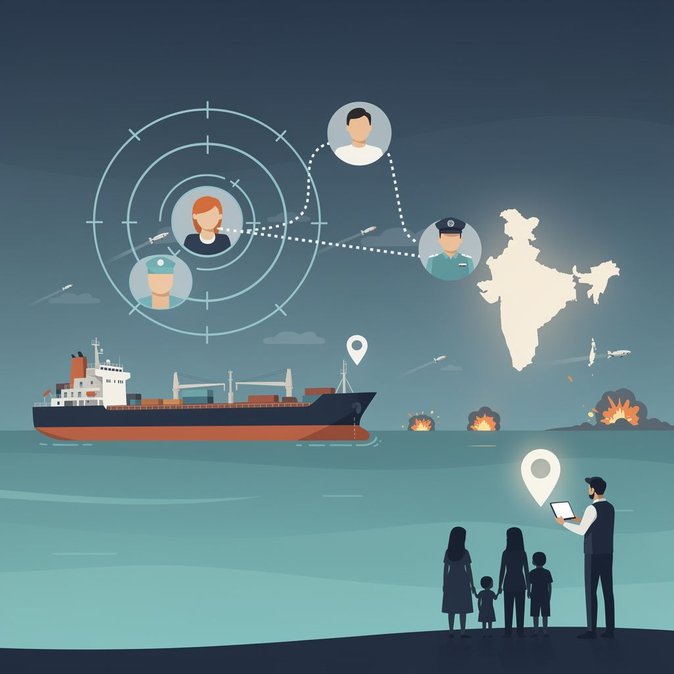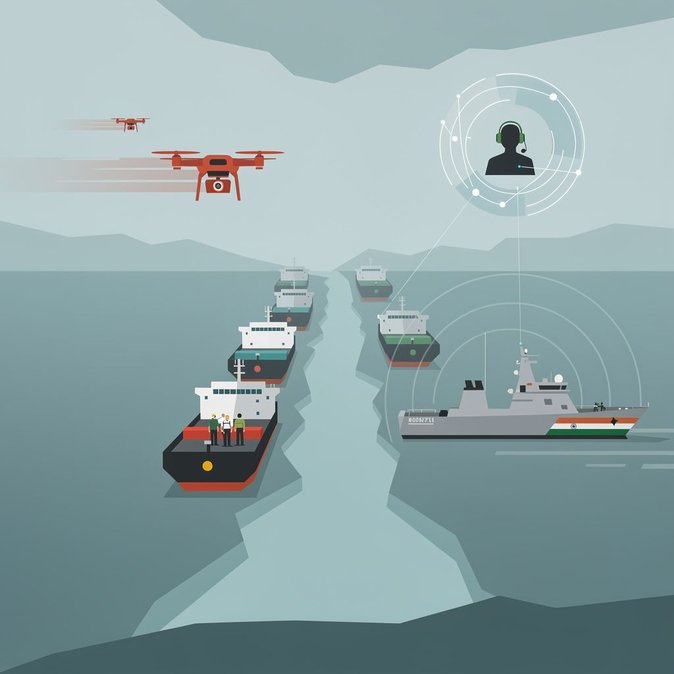
Responding to twin drone and missile strikes on merchant tankers in the Strait of Hormuz last weekend, India’s Ports, Shipping & Waterways Minister Sarbananda Sonowal on 14 July ordered a “Seafarer-First” action plan across government and industry. The directive sets up a 24×7 maritime-distress cell, an emergency WhatsApp helpline (+91 8655856830) and mandatory daily position reporting by Indian-flagged and Indian-crewed vessels transiting the Gulf. Shipping companies have been asked to assess war-risk insurance coverage and to rotate crews through lower-risk routes where possible. The Directorate-General of Shipping will fast-track medical evacuation clearances, while the Indian Navy has repositioned a guided-missile frigate near the entrance of the Strait to offer rapid assistance. About 8 % of global seafarers are Indian nationals, and nearly 30,000 are estimated to be working on ships that regularly cross the choke-point. Travel-risk consultants say corporates with project staff on jack-up rigs in the UAE and Oman should activate emergency-communication trees and audit life-insurance riders. Employers remain liable under India’s Merchant Shipping Act for repatriation costs if crew are injured in a conflict zone. Industry groups welcomed the coordinated approach, noting that fragmented responses during earlier Gulf crises left families scrambling for information. The Federation of Indian Seafarers called for a long-term contingency fund similar to schemes run by Japan and the Philippines.