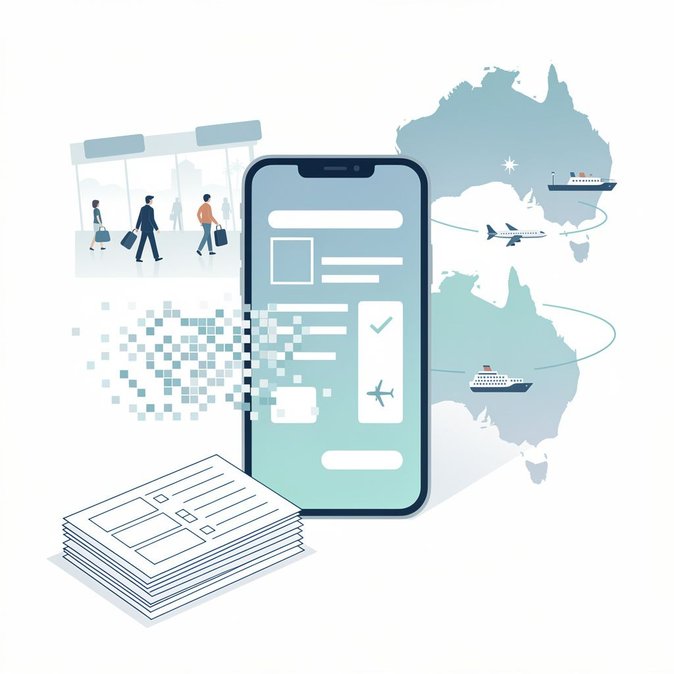
Scrambling for a pen at 30,000 feet will soon be a relic of the past. On 14 July 2026 the Federal Government confirmed that its successful Australia Travel Declaration pilot—first trialled on selected Qantas services in late 2024—will be scaled nationally, finally consigning the orange paper Incoming Passenger Card to history. More than 450,000 passengers have already used the web-based declaration on flights into Brisbane, Sydney and Melbourne; the next phase extends coverage to Perth and Adelaide before a full roll-out to all international airports and cruise ports over the next 12–18 months. Funding of AU $56.1 million has been allocated to modernise border technology and integrate the declaration with biometric gates and airline apps. The move answers long-standing industry pleas for a ‘contact-free’ border and is expected to shave minutes off arrival processing, improve data quality and give border agencies visibility of biosecurity and security risks up to 72 hours before a traveller lands. Tourism Minister Don Farrell framed the reform as a competitiveness measure, noting that rival hubs such as Singapore and New Zealand have been paper-free for years. Home Affairs Minister Tony Burke said passengers will receive a QR code after submitting the form online, enabling a straight-to-eGate experience on arrival. For corporate mobility teams the change promises faster transits for executives and easier extraction of travel data for duty-of-care and tax reporting, while airlines anticipate lower printing and distribution costs. The Australian Chamber of Commerce and Industry called the announcement “overdue but transformational”, predicting measurable productivity gains for business travel and freight crews. Practical tips: mobility managers should update pre-departure check-lists to include the digital declaration URL, brief travellers on QR-code storage (screenshots are acceptable) and review privacy settings for any third-party travel apps that will ingest declaration data. Travellers arriving before the national launch should still expect to complete the paper card if the digital option is not offered on their flight. Longer-term, officials hint the platform could host dynamic questions—think biosecurity or health alerts—giving Australia a flexible tool to adjust border settings without printing new forms, a lesson learnt during the pandemic.
Source: PS News