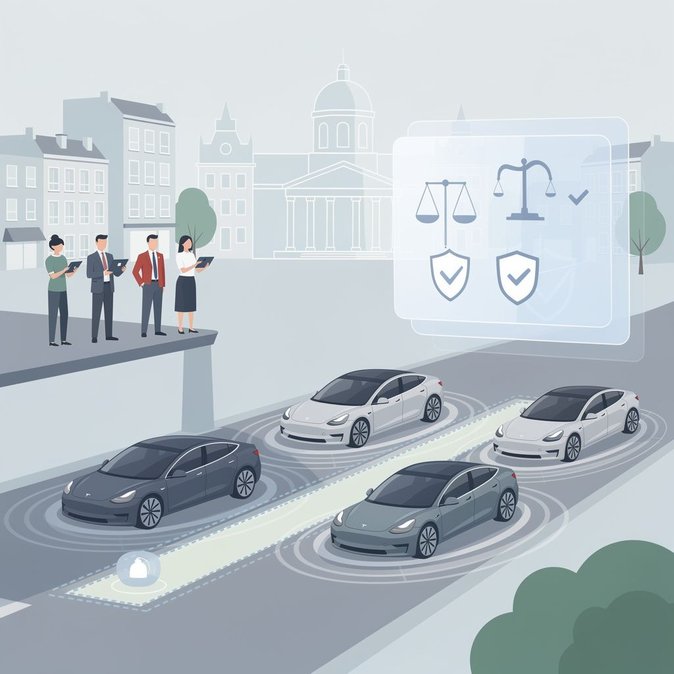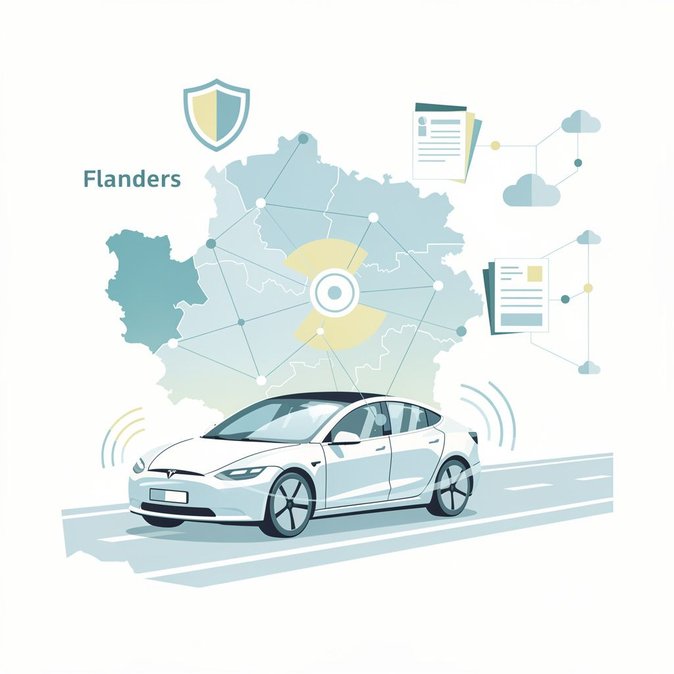
Flanders surprised many on 15 July by announcing that it has type-approved Tesla’s ‘Full Self-Driving (Supervised)’ software for use on the region’s roads. Because vehicle type-approval is a federal competence, the decision automatically extends to the whole of Belgium – including the Brussels-Capital Region, which was not consulted in advance. Brussels Mobility Minister Elke Van den Brandt welcomed the technology in principle but insists that the capital will apply its own conditions before any large-scale deployment. Brussels has tied its mobility strategy to “Vision Zero”, the goal of eliminating traffic deaths by 2030, and fears that partially automated cars could add congestion if they circulate empty between rides. The region therefore wants an “evidence-based regulatory sandbox” in which data are shared with public authorities before commercial roll-out. Federal Mobility Minister Jean-Luc Crucke confirmed that an inter-federal working group is drafting a two-phase legal framework. Phase 1 (by end-2026) will set rules for testing autonomous vehicles; Phase 2 (by end-2027, entering into force 1 October 2028) will cover fully homologated driverless services, including insurance, liability, cyber-security and data governance. Corporate mobility managers and fleet operators should keep a close eye on the forthcoming federal strategy. Early movers that can demonstrate safety and emissions benefits are likely to receive priority access to the Brussels sandbox and other regional pilot schemes. However, employers will need to update duty-of-care policies: the Tesla system approved in Flanders still requires a human driver ready to take over, meaning that standard company car guidelines continue to apply. For business travellers, the immediate impact is limited, but the medium-term implications are significant. If Belgium succeeds in harmonising regional rules, Brussels could become a key test market for Level-4 robo-taxis and autonomous shuttles serving the EU quarter and airport corridors, reducing reliance on rental cars and chauffeurs.
Source: The Brussels Times