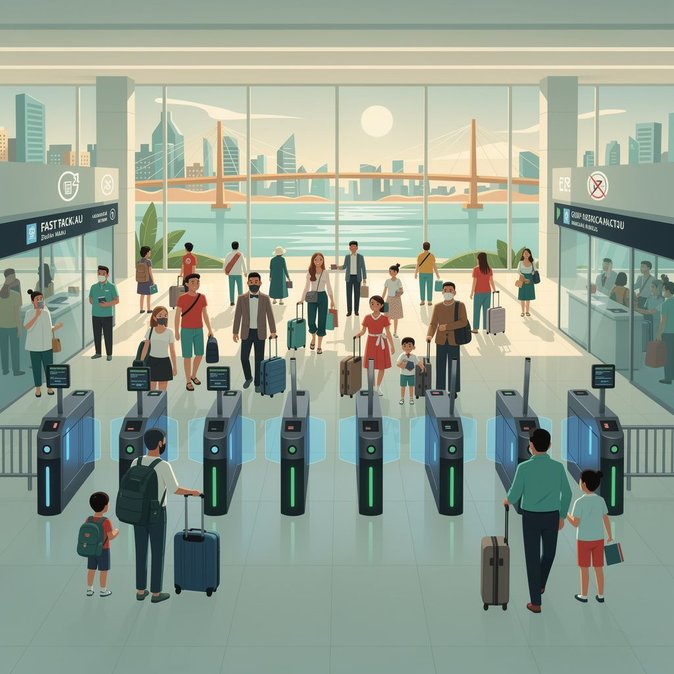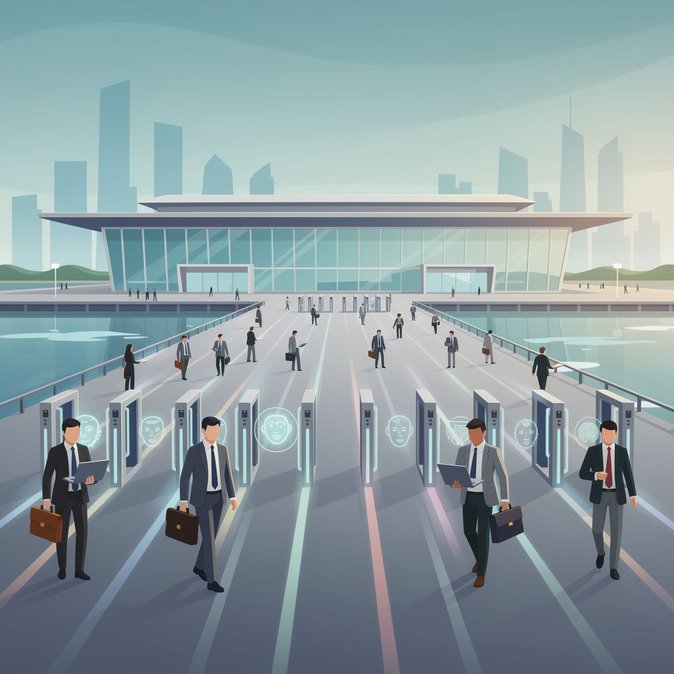
Reporters touring the rebuilt Huanggang Port on 14–15 July found the world’s largest single-building land-border facility in its final commissioning stage. The 689,700-square-metre joint-inspection hall features 134 automated cooperation-inspection lanes and 68 staffed counters designed for a new “co-located clearance, one-stop release” model that eliminates duplicate border checks by Shenzhen and Hong Kong officers. Travellers will pass three integrated gates that simultaneously capture documents, fingerprints and facial data for both jurisdictions. Vehicle traffic is separated from pedestrian flows on different levels, with 28 “five-in-one” car lanes testing unified biometric and licence-plate scanning. Authorities say average processing time could drop from 30 minutes to around five, matching the speed of the Hong Kong–Zhuhai–Macau Bridge. The complex is wired for 24-hour operation and links directly to five metro and intercity rail lines, bolstering the Pearl River Delta’s one-hour living circle. Universal design touches – 1.8-metre-wide escalators, 2.5-tonne elevators and multilingual signage – aim to improve accessibility for elderly passengers, wheelchair users and travellers with bulky samples or exhibition gear. For multinational companies with offices in both cities, the upgrade means employees can schedule same-day meetings without worrying about midnight closures. Mobility managers should, however, brief staff that Hong Kong Immigration still requires valid Return2HK QR codes for residents until the co-located system formally opens. Shenzhen officials expect the port to handle 20 million passengers daily, peaking at 30 million during major holidays, and to serve as a logistics and talent conduit for the neighbouring Hetao innovation zone.