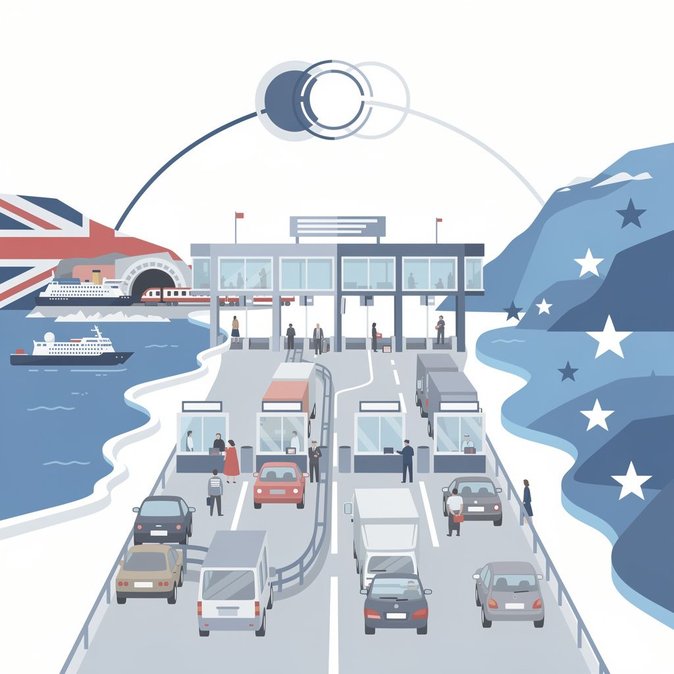
With the school holidays only days away, Transport Secretary Heidi Alexander held a video conference on 14 July with EU Commissioner for Sustainable Transport Apostolos Tzitzikostas to discuss implementation of the EU’s new Entry/Exit System (EES). The pair agreed joint actions—funded in part by an extra £20 million for Kent—to prevent the long tail-backs that blighted the Port of Dover at Easter 2025. EES, already live at most Schengen airports, records biometric data for all non-EU travellers. Because juxtaposed controls operate at Dover, Eurotunnel Folkestone and St Pancras, the UK must host the EU’s kiosks on its territory. Industry trials last month showed car-processing times could treble without mitigation. The Department for Transport will therefore finance additional French Police aux Frontières booths, faster Wi-Fi connectivity for fingerprint uploads and shaded holding areas for coaches. The Commissioner reportedly promised flexibility on kiosk numbers and signage in English, while Eurostar will pilot a remote-enrolment smartphone app for frequent business travellers. Logistics firms welcomed the measures but warned that staff rosters must be finalised by the end of July. For corporate mobility teams, the key takeaway is that passports will need at least two blank pages for EES stamps until the UK’s own Electronic Travel Authorisation (ETA) integrates with the EU database. Employers should also schedule extra dwell time of 45–60 minutes for Dover or Folkestone departures from 1 August until the system beds in. Kent County Council said the new funding would be channelled into temporary lorry-parking and digital signage on the M20. The Freight Transport Association, representing 20,000 hauliers, called the intervention “late but welcome”, noting lorries stuck in Operation Brock queues cost the economy an estimated £1 million per day in 2025.