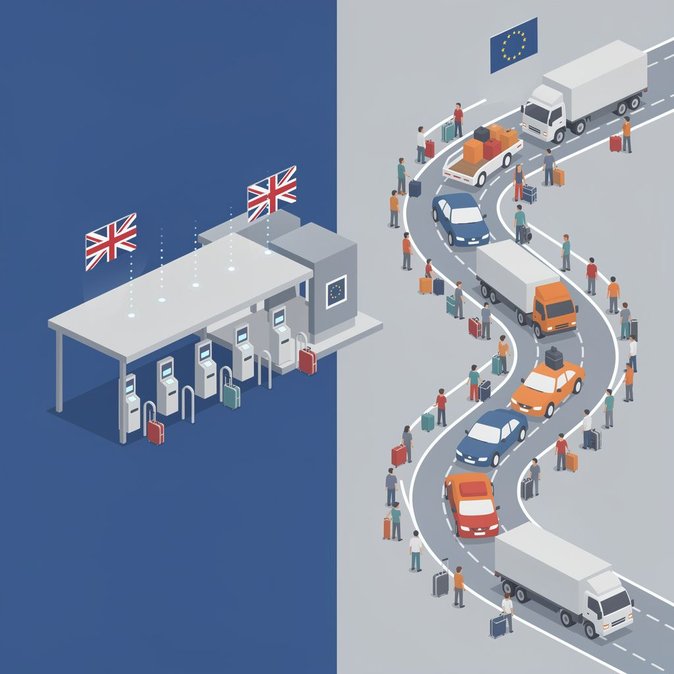
Transport Secretary Heidi Alexander held talks on 14 July with EU Transport Commissioner Apostolos Tzitzikostas after fresh reports of travellers missing flights and ferries because of biometric registration delays under the European Entry/Exit System (EES). The system became fully operational in April and requires non-EU citizens—including all Britons—to provide fingerprints and a facial image on first entry to Schengen. Alexander said both sides would work "to keep holidays on track" this summer and announced an additional £20 million for extra passport booths at the Port of Dover, supplementing the £10.5 million already spent at Dover, Eurotunnel Folkestone and Eurostar St Pancras. Under juxtaposed controls, French officers conduct Schengen checks before passengers leave the UK, meaning any upstream congestion quickly creates tailbacks on British soil and disrupts freight supply chains. Budget airline Ryanair has warned of “queue chaos” and urged the EU to postpone enforcement until infrastructure is ready. Industry bodies estimate that first-time EES enrolment can take up to two minutes per passenger—an unacceptable delay for high-volume shuttle services. Corporate mobility managers should advise staff to allow additional time for UK-to-EU crossings and to ensure children under 12, who cannot yet use eGates, have the correct documentation. Logistics operators may need to re-sequence just-in-time deliveries during peak holiday weekends. The government has hinted that a pilot of remote pre-registration kiosks for frequent travellers could be rolled out later this year if EU partners agree.
Source: Reuters via London South-East