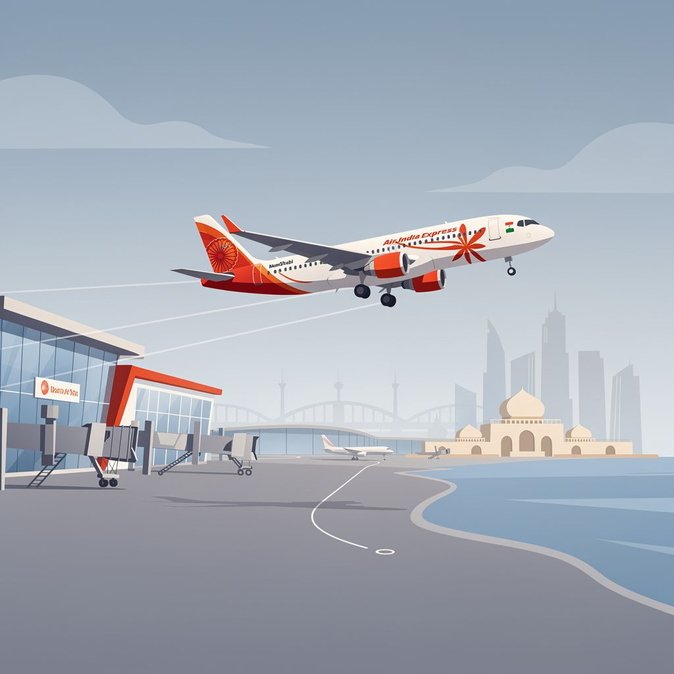
Just seven months after handling its first domestic flight, Navi Mumbai International Airport (NMIA) has gone global. At 10:20 a.m. on 15 July 2026, Air India Express flight IX208 from Abu Dhabi touched down and taxied through a water-cannon salute, officially launching scheduled international operations at India’s newest green-field hub. The inaugural service, reported by Hindustan Times on 16 July, will run three times a week and carries not only passengers but also NMIA’s first perishable cargo exports. Airport operator Adani Airport Holdings said further Gulf and Southeast-Asian routes are awaiting slot approvals, while IndiGo has applied to begin Dubai and Singapore rotations before Diwali. NMIA already handles around 150 domestic aircraft movements daily and has processed 2.3 million passengers since opening on Christmas Day 2025. Designed for 20 million annual passengers in phase one—scaling to 90 million by 2032—the twin-airfield complex relieves capacity pressure on Mumbai’s Chhatrapati Shivaji Maharaj International Airport, which operates close to saturation during peak hours. For business travellers, the new airport shortens surface travel times for firms based in Navi Mumbai, Panvel and Pune corridor industrial parks. Adani has synchronised a dedicated rapid-bus link to the upcoming Navi Mumbai Metro Line 1 extension and is finalising through-check agreements so that international passengers connecting to Air India’s domestic network at NMIA can tag bags through to tier-2 cities. Travel managers should note that NMIA levies a User Development Fee of ₹1,225 on departing international passengers—higher than Mumbai’s current ₹469—so premium cabins out of Navi Mumbai may price higher than identical services from CSMIA until concessions expire in March 2027.
Source: Hindustan Times