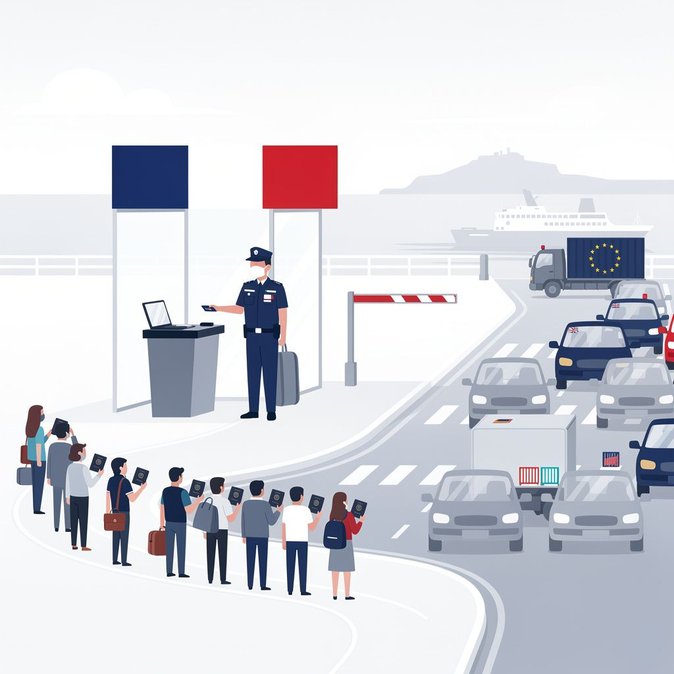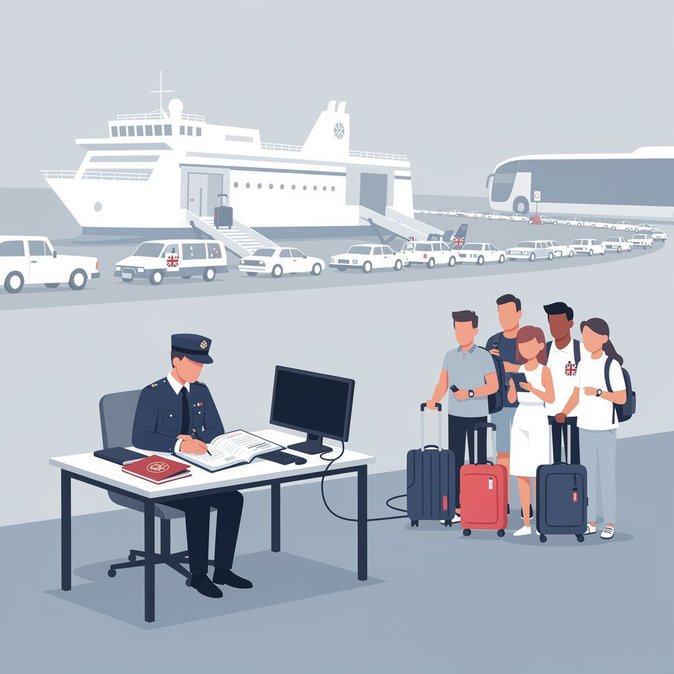
Holidaymakers heading to France this weekend face another bout of uncertainty at Britain’s busiest Channel crossing. On Friday, 17 July, the Port of Dover expects more than 7,500 tourist cars and thousands of lorries to converge on its check-in booths just as schools break up for summer. Under normal circumstances that volume is manageable, but 2026 is the first big test of the European Union’s new Entry-Exit System (EES) – the biometric border database that will eventually log every non-EU traveller. Although Dover and French police have jointly built a £40 million hi-tech processing hall, the French-supplied software needed to capture fingerprints and facial images is still malfunctioning. Until it is fixed, officers stationed on UK soil must fall back on a slower, manual registration process. French Police aux Frontières will have to create a file for every British passport-holder by hand, adding several minutes per car. Port chiefs warned that even this “half-measure” could result in tailbacks spilling onto the M20 if motorists arrive too early for their sailings. Ferry operators DFDS, P&O and Irish Ferries have each issued travel alerts urging passengers not to show up more than two hours before departure and to use only the signed diversion routes. Eurotunnel, which has installed similar EES kiosks at Folkestone and in Calais, says it does not expect delays on its vehicle shuttles but concedes its multimillion-pound equipment is also lying idle until the French IT fix is delivered. Motoring organisations predict the knock-on effect will be felt far beyond Kent. Traffic analysts at INRIX forecast severe congestion on the M25, M3 and M5 as 14 million leisure journeys get under way. Airlines are braced for a surge in last-minute domestic bookings from travellers put off by potential border queues, while car-hire firms from Cornwall to the Highlands report record demand for “staycation” vehicles. For global mobility managers, the episode is another reminder that compliance projects such as EES – originally scheduled for 2022 – can slip, creating operational headaches for relocating staff and business travellers. Companies are being advised to brief UK-based assignees on possible port delays, arrange flexible check-in times for cross-Channel ferries, and keep proof of outbound bookings on hand in case manual checks require additional documentation.
Source: The Guardian