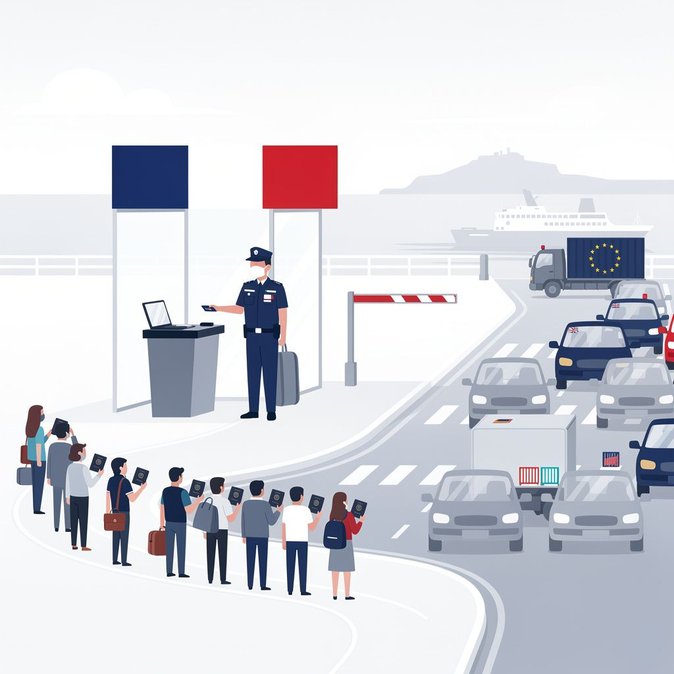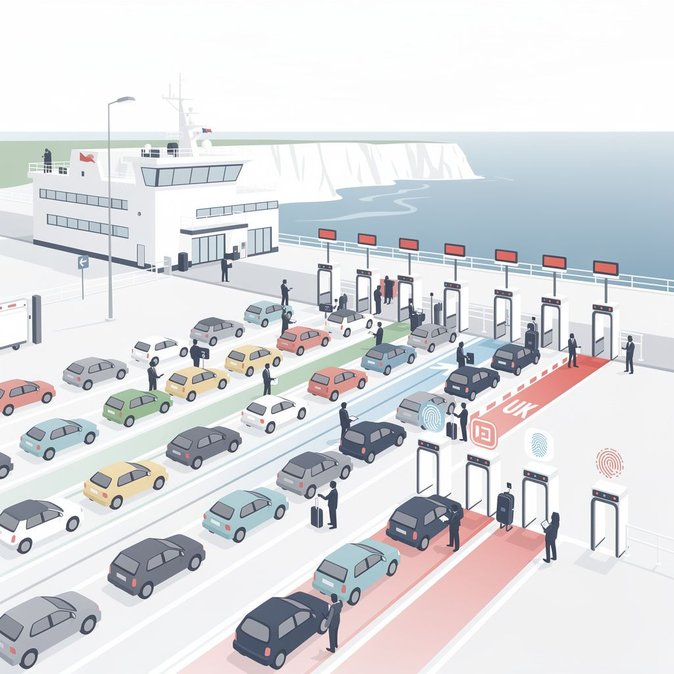
Port of Dover managers have issued an early-morning warning that motorists could face multi-hour tailbacks this weekend after fresh technical problems hit the EU’s new Entry-Exit System (EES). The electronic border scheme – which fingerprints and photographs non-EU travellers on first departure and again on re-entry – has been only partially functional at Dover since a phased roll-out began last October. Port chief executive Doug Bannister told reporters on Friday that the £40 million processing facility built on the Kent seafront "cannot be switched on for cars because the EU software still isn’t ready". With most English and Welsh schools breaking up today, the port expects 7,500 outbound cars on Friday and almost 10,000 on Saturday. Freight volumes remain high and, unlike airports, Dover must handle biometric checks before vehicles board ferries. Ryanair warned this week that UK passengers risk becoming "beta-testers for unfinished border infrastructure" and advised families to arrive early or consider alternative routes. The government has spent £3.5 million on extra kiosks at Dover, Eurotunnel Folkestone and St Pancras, yet carriers say throughput is still 30 - 40 % slower than under passport stamping. Industry body ABTA fears that delays could deter last-minute outbound bookings and further boost the domestic "staycation" boom. Coach operators are pressing ministers to negotiate a grace period so that group biometric registration can be completed on the Continent rather than on UK soil. For business travellers the immediate concern is schedule certainty. Logistics firms report that just one hour’s congestion at Dover can ripple through supply chains for 36 hours. Corporates with time-critical shipments are already diverting freight to east-coast ports or switching to unaccompanied trailer services to avoid the juxtaposed controles. Multinationals have been advised to brief assignees about likely delays and to factor additional driving time into duty-of-care plans. In the longer term, the episode underlines the strategic importance of technology readiness inside juxtaposed French controls. Unless the software stabilises, next year’s full launch of the companion ETIAS travel authorisation could compound disruption for the UK’s 14 million annual business and leisure trips to Schengen states.
Source: The Guardian