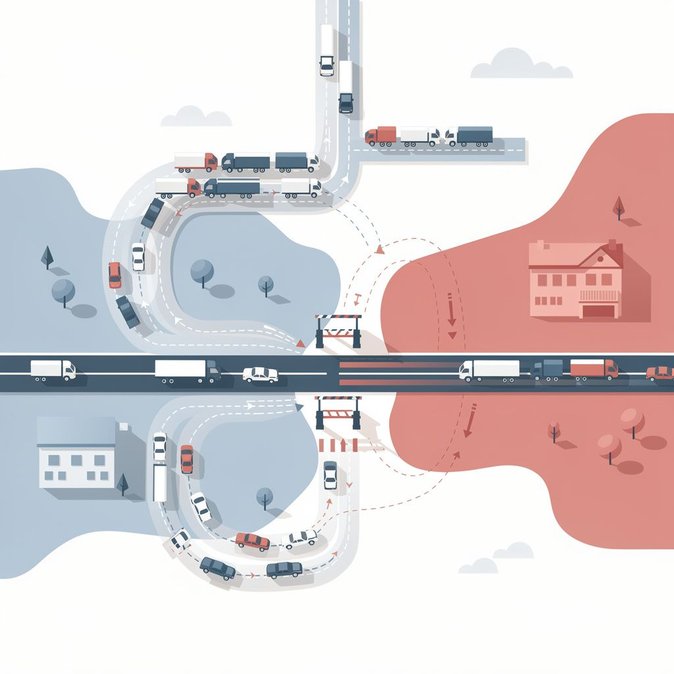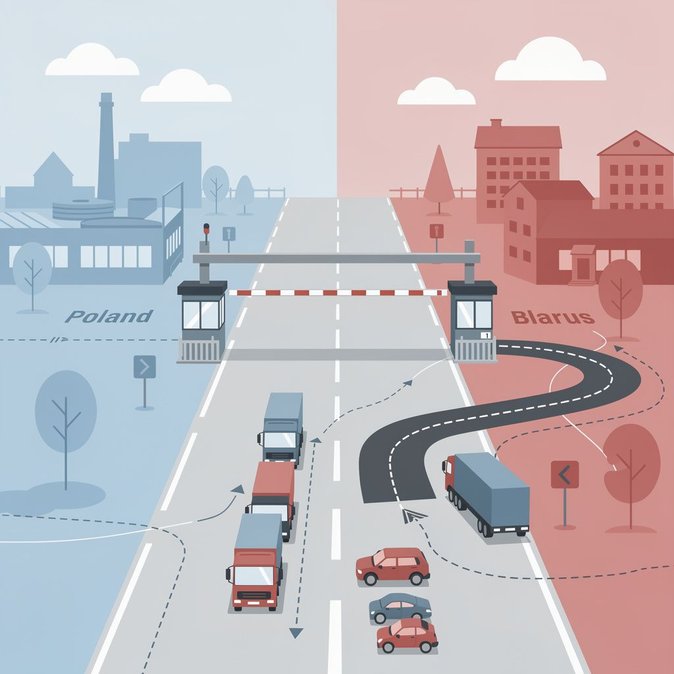
The Polish Border Guard announced on Sunday, 19 July 2026, that all traffic remains “temporarily suspended” at the Połowce and Sławatycze road crossings on the frontier with Belarus. The notice, published on the official granica.gov.pl portal at 11:12 a.m. local time, extends a series of rolling closures first introduced in 2025, when Minsk was accused of orchestrating irregular migration toward the European Union. Although freight and passenger flows through the larger Koroszczyn (Kukuryki) and Terespol terminals continue, the shutting of Połowce (Podlaskie voivodeship) and Sławatycze (Lubelskie) removes two secondary routes used primarily by regional logistics firms and cross-border commuters. Forwarders moving just-in-time components between the Białystok industrial cluster and Belarusian suppliers now face detours of up to 120 km, adding costs and potentially jeopardising delivery windows. Warsaw says the closures are part of an “adaptive security posture” while construction of a 187-km electronic barrier and the EU Entry–Exit System (EES) integration reach their final phase. Truckers entering Belarus must therefore re-route via Kuźnica or Bobrowniki, where peak waiting times on Sunday were reported at two hours for HGVs—manageable but already generating weekend backlogs. Business travel managers are advised to: 1) reroute drivers through Kuźnica/Koroszczyn and build in extra buffer time; 2) monitor the granica.gov.pl feed, which is updated eight times daily; and 3) verify whether staff require additional authorisations, as the EES biometric capture booths are operating intermittently during the installation. Companies with posted workers in Belarus should also confirm contingency evacuation options: charter operators report that charter buses are being redirected through the Lithuanian corridor (Via Augustów) in case of sudden full closure. The government has not provided a timeline for re-opening Połowce and Sławatycze. Officials stress that the measure is “temporary”, but security analysts note it could last through the autumn military exercise cycle, when hybrid-migration pressure historically spikes. Multinationals with dual-country production lines should therefore treat the suspension as semi-permanent for Q3 and update their supply-chain risk registers accordingly.