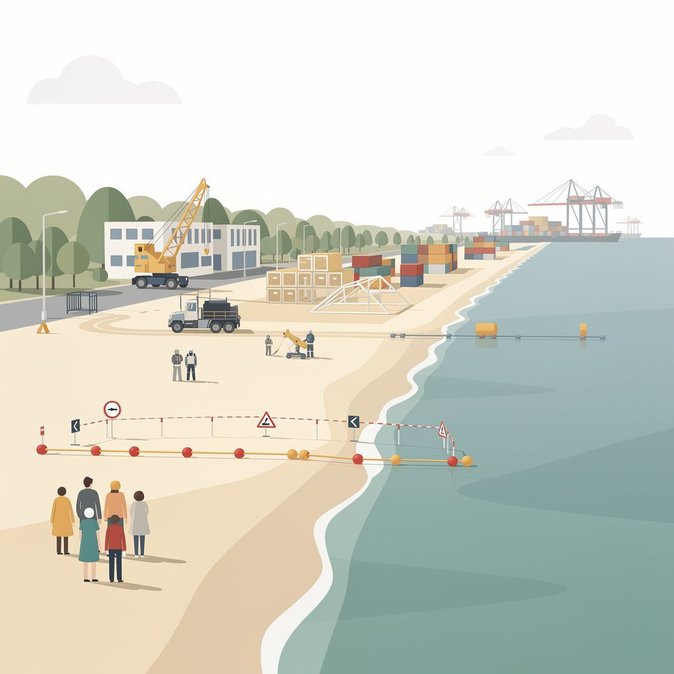
Local authorities in the Baltic port of Świnoujście erected a temporary fence and warning signs on 18 July 2026, blocking public access to a 1.2-kilometre stretch of beach between the popular Przytór bathing area and the LNG terminal. The closure is part of a safety operation to remove World War II munitions from the seabed, a prerequisite for dredging works linked to the Pomerania Cape container-terminal project. While the adjacent swim zone remains open, walkers can no longer continue along the shoreline toward the gas terminal. The Maritime Office in Szczecin estimates the restriction will last six to eight weeks, but depends on weather windows for controlled detonations at sea. Tour operators running coastal excursions have rerouted their walking tours inland, and hotels are advising guests to use alternative beach entrances. The €1.3 billion Pomerania Cape facility, co-financed by the EU’s Connecting Europe Facility, will expand Świnoujście’s annual container capacity by 2 million TEU and generate up to 2,000 jobs. Project managers argue the short-term inconvenience is outweighed by long-term economic gains, but local businesses fear a drop-off in tourist footfall at the height of the summer season. For mobility planners, the key issue is access. City buses on lines 3 and 6 will revert to their regular routes from Monday following earlier detours, but cyclists must dismount near the fenced zone. The port authority urges visitors to respect the no-entry signs; fines for trespassing in the work area start at PLN 500 (about €110). Employers relocating expats to the fast-growing West Pomeranian logistics hub should brief staff on the closure and advise weekend visitors to drive an extra 15 minutes to open beaches at Międzyzdroje. The operation is another reminder that infrastructure mega-projects can generate sudden mobility constraints, even in established EU markets like Poland.
Source: Świnoujście.info