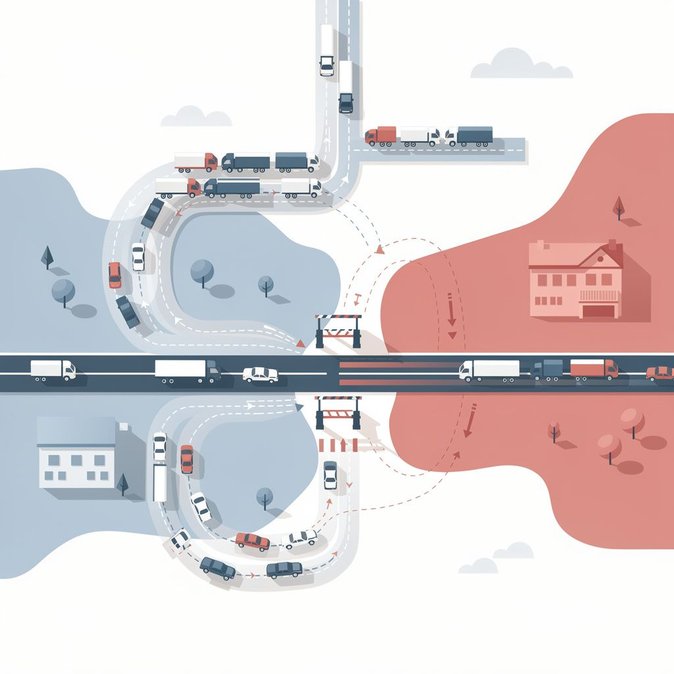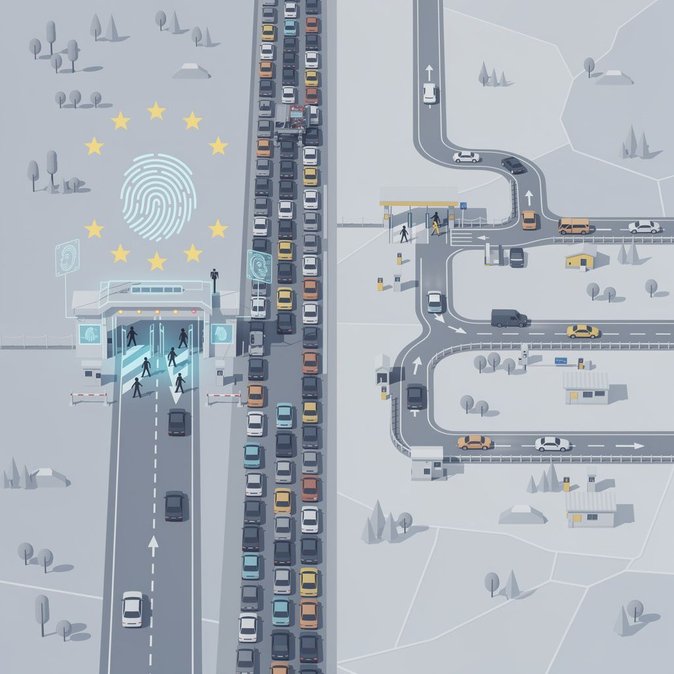
The crowd-sourced border-monitoring website Nakordoni.eu recorded a 615-minute (just over 10 hours) maximum wait for passenger cars at the Medyka–Szeginie crossing at 20:14 on 19 July 2026. In contrast, Dorohusk–Jagodzin saw the shortest delay of 30 minutes, highlighting the huge variability across the nine open road terminals linking Poland and Ukraine. July is traditionally the busiest month for family visits and seasonal workers returning home. This year traffic is amplified by Ukrainians living in EU countries who are driving through Poland to avoid higher airfares. The Entry/Exit System (EES) introduced in 2025 — now fully operational — adds two to five minutes per first-time traveller as officers collect fingerprints and a facial image, contributing to bottlenecks at the manual lanes. Polish Border Guard officials recommend that motorists detour via Hrebenne–Rava Ruska or the newly expanded Korczowa truck plaza, where average waits stayed below two hours on Saturday. They also advise downloading the e-Cherha reservation app for trucks, although the service remains optional for private vehicles. For companies managing cross-border project teams or driver rotations, real-time queue insight can shave hours off transit schedules. Logistics providers are increasingly integrating the Nakordoni API into dispatch systems to reroute freight dynamically. HR managers organising “home-leave” trips for Ukrainian staff should schedule departures mid-week (Tuesday–Thursday) before 07:00 to avoid the worst congestion. The data underline the importance of Poland’s planned 2027 rollout of separate “fast-track” passenger lanes for residents with biometric EES records. Until then, the advice is simple: choose less-popular crossings, travel off-peak and keep fuel and water supplies on board.