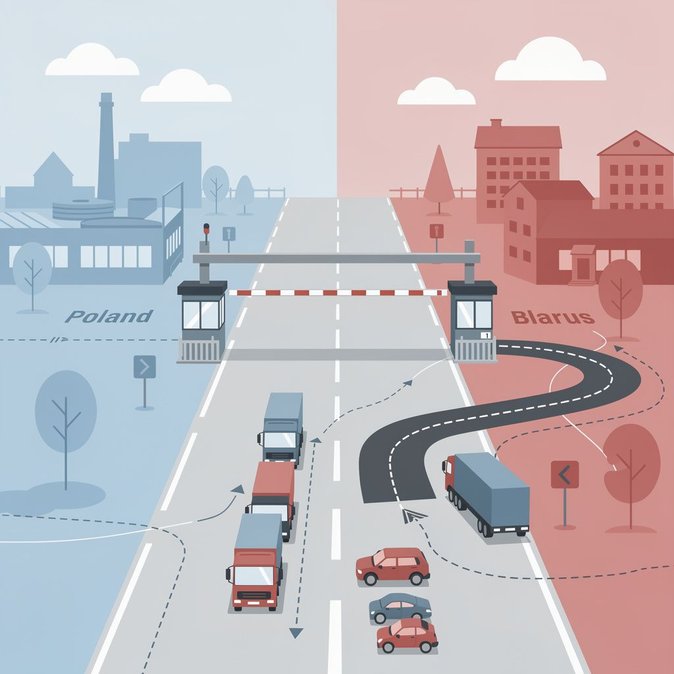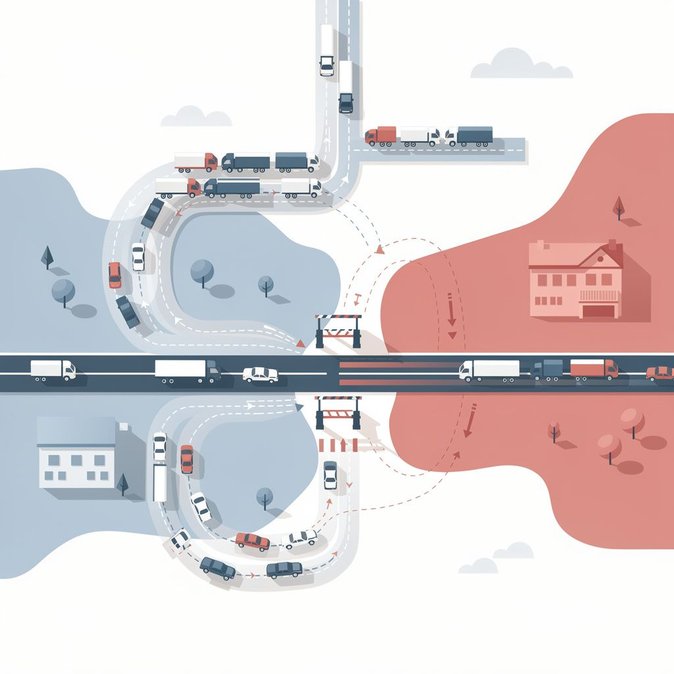
Poland’s National Revenue Administration (KAS) and Border Guard confirmed in their morning update of 19 July 2026 that two road crossings on the Belarus frontier — Połowce in Podlaskie and Sławatycze in Lubelskie — remain formally suspended for all traffic. The measure, in force since February, was prolonged on security grounds after a series of attempted irregular-border entries and state-sponsored migration incidents. Although commercial drivers can still exit through nearby terminals such as Koroszczyn (Kukuryki) or Terespol, the diversion is stretching capacity. As of the 11:00 update, Koroszczyn reported queues of up to two hours for trucks, while car lines exceeded two hours at Terespol. Officials warn that delays typically double after 16:00 on Sundays when weekend traffic leaving the EU peaks. Forwarders moving time-sensitive goods between Poland and Belarus — notably automotive parts and foodstuffs headed to the Moscow market via the Brest logistics hub — have already begun rerouting through Latvia’s Silene crossing despite higher fuel costs. Polish customs brokers say exporters should pre-register cargo in the SOC-T e-queue system and allocate at least half a day of buffer time until the suspension is lifted. The closures also affect private motorists and cross-border workers from the Podlasie region. Local authorities have increased weekend rail capacity on the Białystok–Kuźnica line to give commuters an alternative, but seats sell out quickly. Travel advisers recommend using bus services via the open Bobrowniki crossing, though passengers still undergo full vehicle inspections on the Belarusian side. For multinationals moving personnel into Poland, the key take-away is that the Belarus land route remains unpredictable. Companies bringing specialists from Russia or Central Asia on Polish national visas should schedule arrival through Warsaw or Katowice airports rather than overland, and verify that contractors are not planning to transit via the suspended posts.