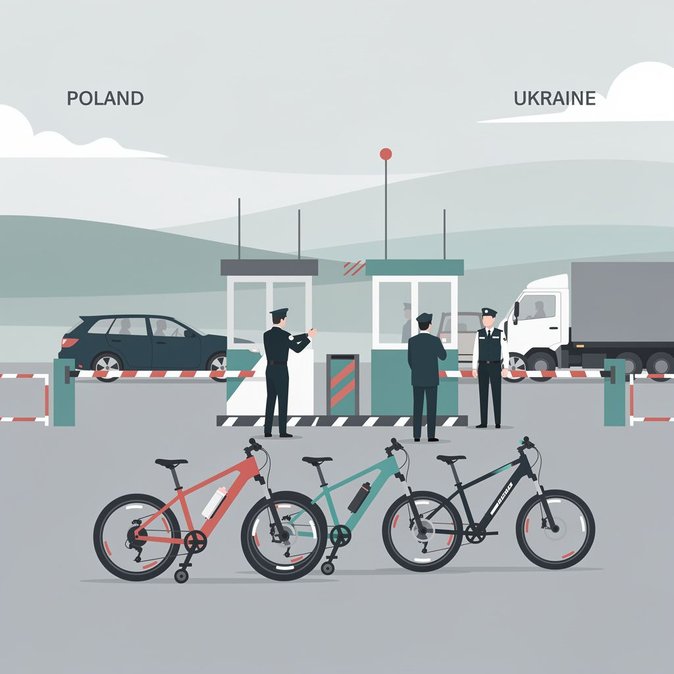
Exit-controls on Poland’s south-eastern frontier are usually overshadowed by the focus on inbound migration, yet a 20 July communiqué from the Bieszczady Border Guard shows why Polish officers scrutinise traffic leaving the country as closely as arrivals. In three separate incidents at the Korczowa and Medyka crossings, officials seized high-end e-bikes reported stolen in Germany—worth a combined PLN 21,000 (€4,800). The first interception involved a 41-year-old Ukrainian driver who attempted to take a CUBE e-bike out of the EU on 11 July. Three days later another Ukrainian traveller tried to export a similar model, while on 19 July officers in Medyka found an €8,500 Scott bike concealed in the boot of a private car. All three bikes had active alerts in Germany’s Schengen Information System. The cases were made public only after the owners were contacted and German police confirmed the theft data. Although the objects were bicycles, the episode illustrates a wider trend that affects corporate mobility: organised rings exploit the high traffic volume of personal vehicles on the PL–UA border to move stolen goods east, taking advantage of the fact that export controls are less stringent than import checks. Companies operating company-car fleets near the border—or whose mobile employees travel with valuable equipment—should review parking security and cross-border insurance clauses. The seizures also reflect Poland’s broader strategy of transforming border guards into multi-agency law-enforcement officers able to handle customs fraud, environmental crime and stolen-property recovery. For travellers the practical implication is that exit lanes may see more secondary inspections, so journey-planning apps should allow for queues that can easily exceed 60 minutes during peak holiday periods. Customs brokers note that commercial trucks are occasionally pulled into the same inspection sheds, delaying just-in-time deliveries. All three Ukrainian nationals were released pending investigation but face charges of receiving stolen goods. The bikes will be returned to German owners under EU mutual assistance rules. Border officials say they have recovered 26 stolen bikes so far in 2026—more than the whole of 2025—suggesting the clampdown is beginning to bite.