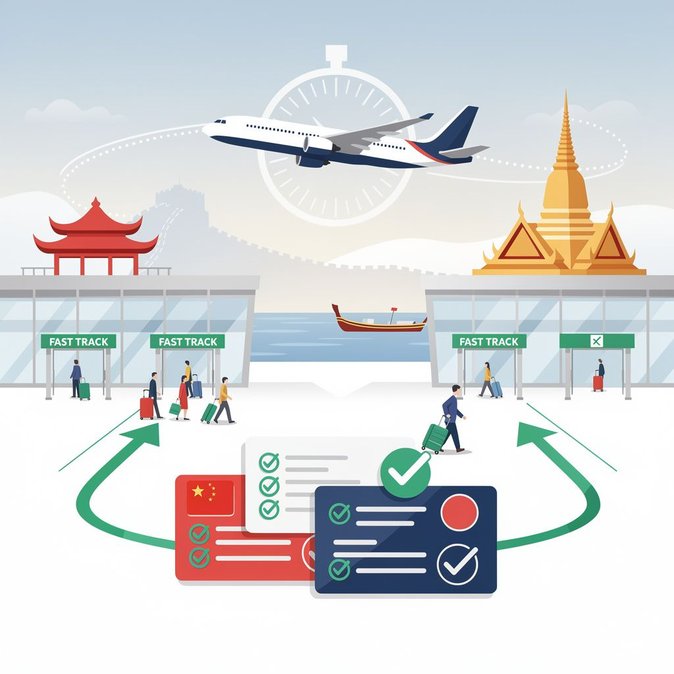
Wrapping up a five-day visit to China on 20 July, Thai Prime Minister Anutin Charnvirakul and Chinese leaders issued a joint statement pledging to "optimise exit-entry, customs and quarantine procedures" to facilitate the flow of people and goods as part of their plan to build a “China–Thailand community with a shared future.” Specific measures under discussion include extending the existing bilateral visa-free arrangement—currently capped at 30 days—to 60 days for holders of ordinary passports, establishing joint fast-track channels at key land crossings in Yunnan and Guangxi, and mutual recognition of digital health certificates. Officials also proposed adding Bangkok and Phuket to China’s 144-hour transit-visa-exemption network, pending feasibility studies by the National Immigration Administration. Business stakeholders welcomed news that a dedicated “green lane” for perishable agri-food products will open at the Mohan–Boten rail link once the China–Laos–Thailand railway is fully operational next year, potentially shaving 48 hours off end-to-end delivery times for Thai fruit exporters. For Chinese enterprises, an upgraded visa regime would make it easier to rotate engineers working on the high-speed railway and renewable-energy projects financed under the Belt and Road Initiative. Although timelines were not finalised, both governments tasked their foreign ministries and immigration agencies with launching pilot projects by Q4 2026, signalling tangible progress that corporates should monitor when scheduling 2027 assignments.
Source: PRC Ministry of Foreign Affairs