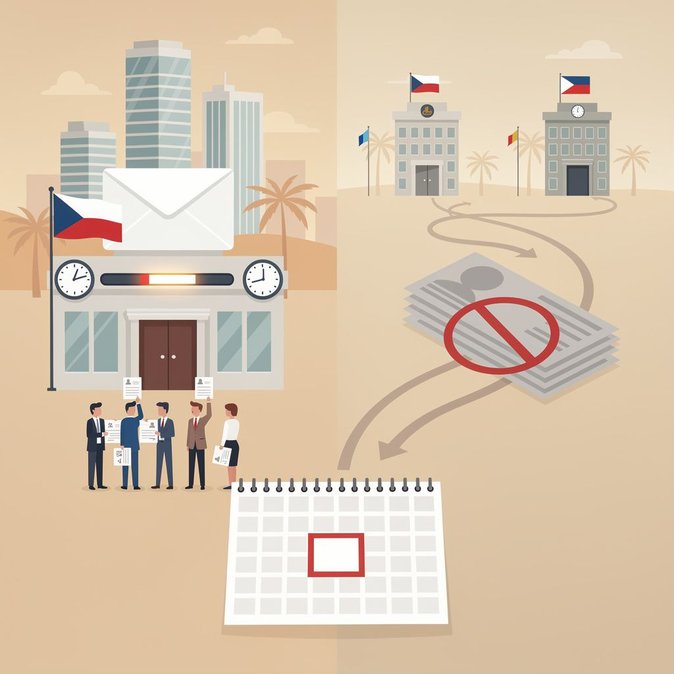
Czech companies woke up on 22 July 2026 to a barrage of error messages and rejected filings after the first statutory deadline for the new Single Monthly Employer Report (Jednotné měsíční hlášení zaměstnavatele, JMHZ). The digital form—touted by the Ministries of Labour, Finance and Interior as a cornerstone of the 2026 labour-migration reforms—must now be submitted for every employee, Czech or foreign, by the 20th of each month. In practice, payroll clerks and HR teams spent hours re-entering data when the state gateway failed to validate birth dates, foreign passport numbers or Schengen residence-permit codes. “In this shape JMHZ is an uncompensated burden, especially for SMEs,” said Gabriela Hrbáčková, vice-chair of the Small Business Association. She noted that government help-lines were unreachable for most of the morning. Payroll software vendors rushed out emergency patches, but tax adviser Simona Fialová from Ecovis warned that many multinationals with regional service centres in Prague “will divert HR work to neighbouring countries if the Czech e-gate keeps crashing.” Under the law, a late or incorrect report can trigger fines of up to CZK 50,000 and, for non-EU staff, a freeze on work-permit extensions—an especially painful prospect for tech firms that rely on Ukrainian, Indian and Philippine developers. The Czech Social Security Administration acknowledged sporadic outages and promised to expand server capacity before the 20 August cycle. The JMHZ replaces four legacy notifications that employers previously sent to separate agencies. Supporters say it will give the state an instant overview of labour-market demand and help inspectors combat unregistered work. Critics counter that the rollout was rushed: legislation was finalised only in March, beta testing began in May and technical specifications for third-party software were frozen just three weeks before go-live. Unlike Poland’s Praca.gov.pl portal, the Czech system still lacks an English interface, creating bottlenecks for foreign HR service providers. From a global-mobility perspective, the stakes are high. Employers sponsoring Employee Cards, Intra-Corporate Transfers or the new Digital-Nomad visa must attach proof of timely JMHZ filings when renewing permits. “If one CSV column is wrong, your Filipino engineer may be unable to pick up his re-issued residence card,” warned migration lawyer Jana Malíková. She advises multinationals to audit July data now and keep screenshots of successful submissions as evidence for future visa checks. Looking ahead, the Labour Ministry says an API for bulk uploads will open in September, while penalties will remain “educational” until the end of the year. Business associations, however, are already lobbying for a formal grace period and for the portal to pre-populate data from the Social Security register. Until then, global-mobility managers with staff in the Czech Republic are urged to double-check that every local payroll provider is JMHZ-ready before the next filing window closes on 20 August 2026.
Source: e15