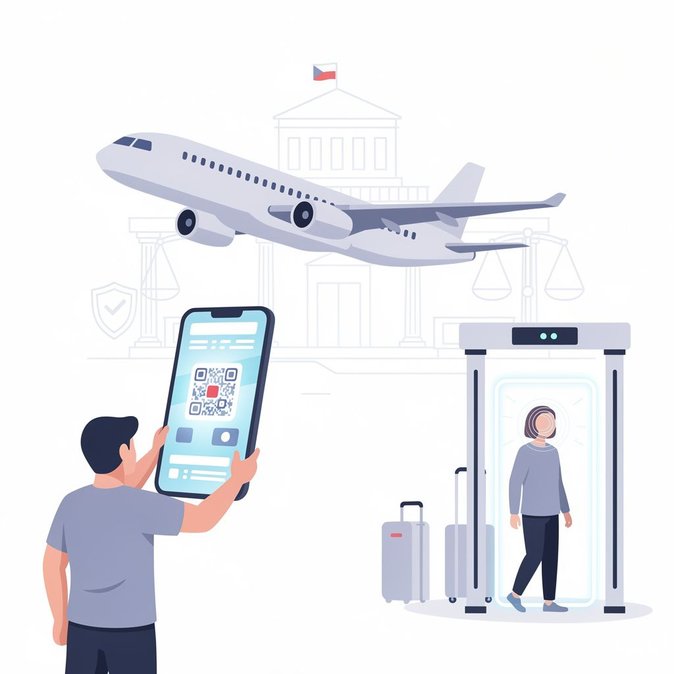
At its meeting on 20 July 2026, the Czech cabinet gave the green light to a long-awaited amendment to Act No. 49/1997 Coll. on Civil Aviation and the related schedule-of-fees law. Although the technical text still has to clear Parliament, government approval is the decisive political step that normally guarantees passage. The 58-page amendment transposes two major EU initiatives that will reshape air travel for anyone flying into, out of or within Czechia. First, it aligns national law with the overhauled EU Air Passenger Rights Regulation adopted last week, increasing cash compensation for lengthy delays (up to €700 on long-haul itineraries), cutting refund deadlines from 30 to 10 days, and introducing automatic re-routing if a flight is cancelled. Second, it authorises Czech airports to recognise fully digital boarding passes and biometric travel documents, allowing airlines to phase out paper passes and paving the way for Prague’s fast-track e-gates to be opened to third-country nationals when the EU Entry/Exit System (EES) is switched on in October. For business-travel and mobility managers the implications are twofold. Compliance costs will rise for carriers—Smartwings estimates an extra CZK 120 million a year in potential compensation—so some fare increases are likely. On the upside, the digital-identity provisions will shorten dwell times at Václav Havel Airport, an important hub for Central-European corporate travellers. The Civil Aviation Authority gains new fining powers of up to CZK 25 million per offence, meaning airlines will need to upgrade claims-handling systems quickly. Because the bill also amends the fees statute, airport security and passenger-service charges will shift from a flat fee to a distance-based formula, a change applauded by low-cost carriers operating short-haul EU services from Brno and Ostrava. Officials confirmed that diplomatic and state flights remain exempt. If the Chamber of Deputies follows its usual timetable for transport bills, the amendment should be enacted by November and take effect 30 days after publication, giving companies around six months to update travel policies before the 2027 summer season.
Source: Vláda České republiky