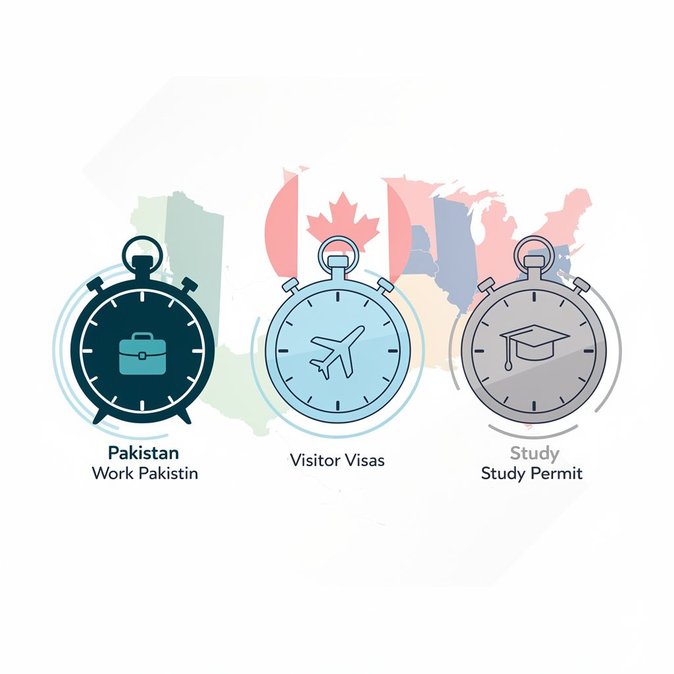
Immigration, Refugees and Citizenship Canada (IRCC) has posted its latest snapshot of temporary-residence processing times, covering applications received up to 22 July 2026. The weekly update—published on 23 July by CIC News—shows modest but telling shifts that global-mobility planners will want to factor into travel and assignment timelines. Work-permit applicants in Pakistan saw the largest change: an average wait of 10 weeks, up from seven a week earlier. Processing for in-Canada work-permit extensions improved slightly to 122 days, edging closer to the 120-day service standard. Wait times for the Philippines lengthened by one week to seven, while India, Nigeria and the United States remained unchanged at nine, six and three weeks respectively. Study-permit estimates were flat across the board, but visitor-visa figures moved in both directions. Applicants filing inside Canada now face a 29-day turnaround—five days faster than last week—while U.S.-based applicants also gained a one-day improvement to 27 days. By contrast, India and Pakistan ticked upward by one and two days respectively. Super-visa processing eased for most countries except Pakistan, where the estimate jumped by seven days to 194. IRCC reminds users that these figures are indicators only: an individual file can move faster or slower depending on completeness, program capacity and admissibility reviews. Nevertheless, large employers use the weekly data as an early-warning system for project planning. A three-week spike in Pakistan’s work-permit queue, for example, may justify expediting labour-market impact assessments or relocating onboarding to a lower-risk jurisdiction. The next update is scheduled for 29 July. In practical terms, HR teams should build an extra cushion for Pakistani assignees seeking employer-specific permits, while Canadian and U.S. tourist-visa applicants can tighten lead times for executive visits. Stakeholders are also watching to see whether the mid-summer surge in super-visa demand stabilises now that IRCC has paused new parent-and-grandparent sponsorships.
Source: CIC News