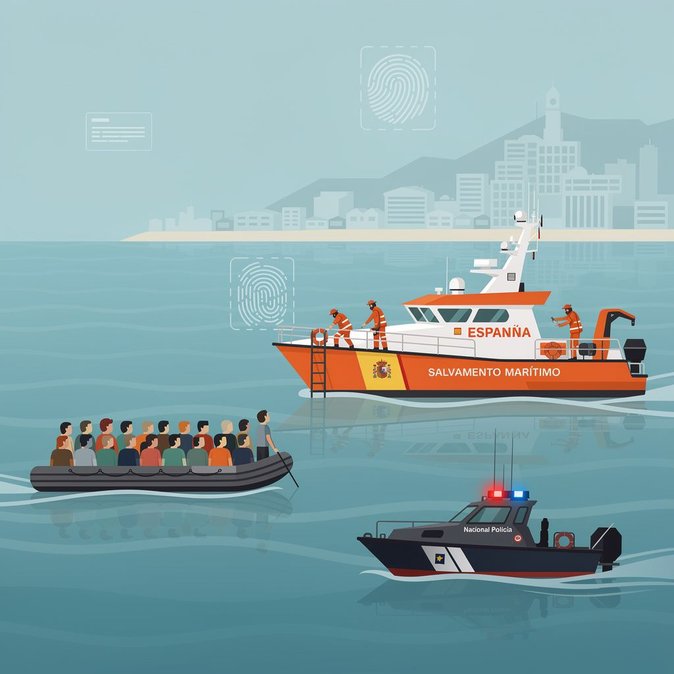
Spanish maritime-rescue and police units intercepted two overcrowded inflatable boats on 23 July, one 30 miles off Calpe and a second 25 miles south-east of Tabarca. A total of 43 people—including eight minors—were taken to the Port of Alicante, where Red Cross teams provided initial medical screening. Police from the UCRIF (Human-Trafficking & Document Fraud Unit) detained three adult men—two Nigeriens and one Algerian—on suspicion of piloting the craft and charging passengers up to €2,500 each for the crossing from the Algerian coast. The detainees face up to eight years’ imprisonment for facilitating irregular immigration under article 318-bis of Spain’s Penal Code. The rescues form part of a wider uptick on the so-called “Algerian route”: Interior Ministry data show arrivals in the Valencia Region are up 27 % year-on-year, partly because tighter surveillance around the Canary Islands has displaced smuggling networks to the western Mediterranean. Alicante’s port authority has re-activated its “Contingency Pier”—first used in 2021—to separate medical triage from police identification and to speed up transfers to humanitarian reception centres. For companies that post staff to the Costa Blanca or run shore-based operations, the episode underscores continuing humanitarian and security pressures along Spain’s eastern seaboard. Employers should brief expatriates on possible police checkpoints on the AP-7 and N-332 and monitor any demonstrations that might follow large arrivals. The rescues also test Spain’s new EU Entry/Exit System infrastructure: biometric enrolment kiosks installed at Alicante–Elche airport are now being replicated at seaports so that intercepted third-country nationals can be registered digitally, replacing manual fingerprint cards and accelerating asylum or return procedures.
Source: Diario de Alicante