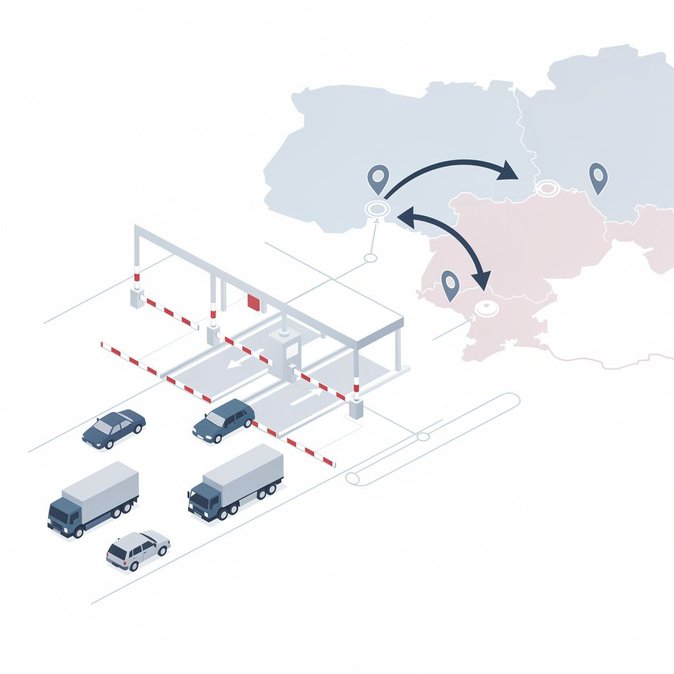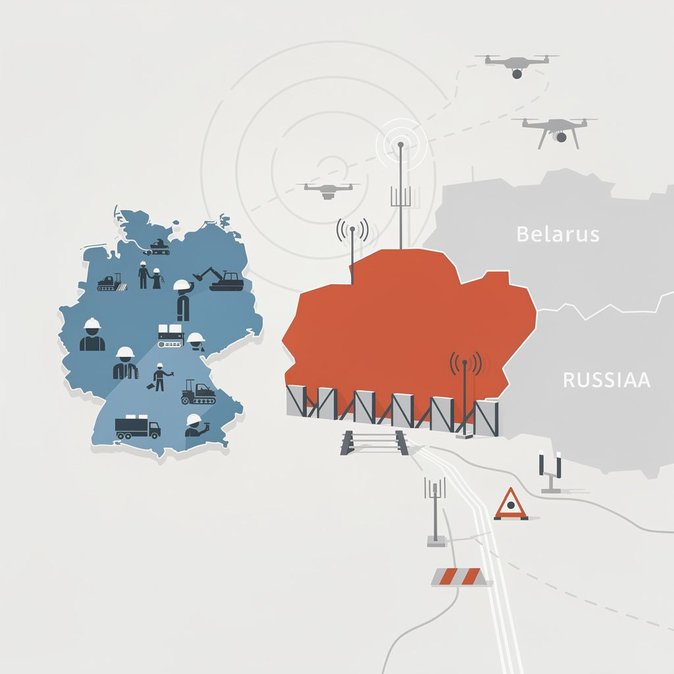
On 22 July the German Operational Command announced the start of a Bundeswehr mission in Poland under which combat-engineer troops will assist in constructing anti-access obstacles along the Suwałki Gap and other sensitive sectors of the Polish frontier with Belarus and Russia’s Kaliningrad exclave. The deployment follows Warsaw’s invitation under the multi-agency ‘Eastern Shield’ initiative, designed to deter hybrid incursions and large-scale irregular migration. Lieutenant-General Alexander Sollfrank, head of Germany’s operational command, said the joint work “strengthens NATO’s collective defence and Poland’s national resilience”. German pioneers will dig anti-tank ditches, install barbed-wire fences and harden field positions alongside Polish sappers in a project scheduled to run through October 2026. For the mobility sector the build-up may translate into temporary road closures on minor border routes and stricter ID checks in the north-east, particularly near military staging areas. Companies operating shuttle buses for expatriate staff between Polish and Lithuanian sites should monitor NOTAMs and SG advisories for air-space or land-route restrictions. Strategically, the German assistance signals deeper regional coordination on border security, potentially paving the way for integrated surveillance drones and shared biometric-data platforms that could later feed into Schengen-wide systems such as EES. While primarily a defence story, the project’s by-products – from new patrol roads to upgraded sensor networks – will inevitably shape the daily experience of cross-border travellers.