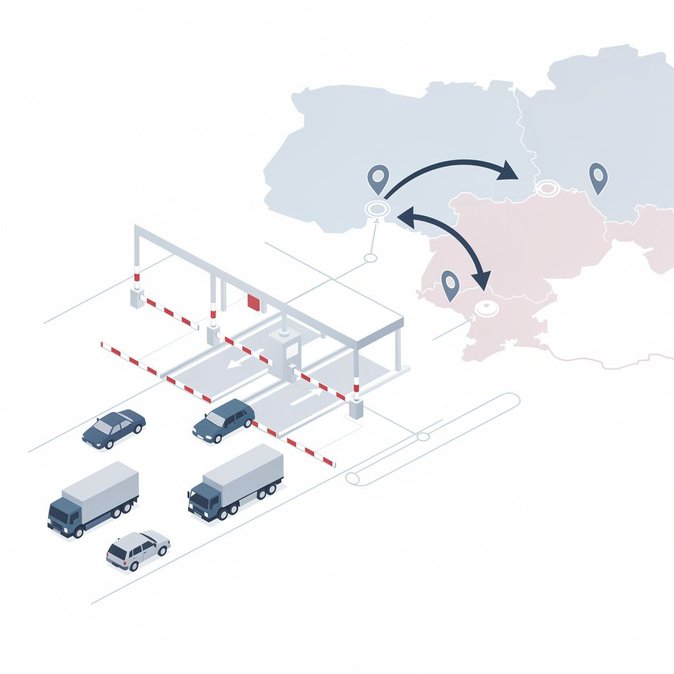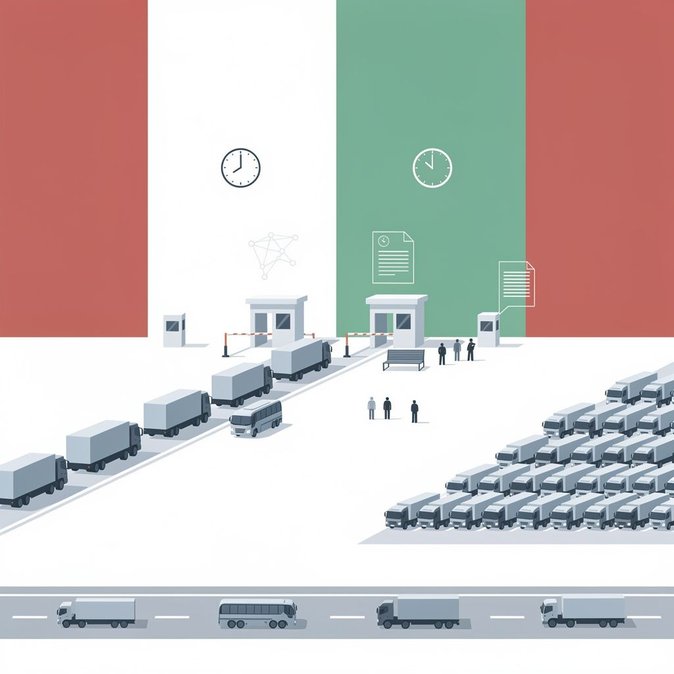
Live data published by the Border Guard’s portal Granica.gov.pl at 13:00 CEST on 23 July show estimated waiting times of up to three hours for buses and two hours for articulated lorries exiting Poland at the Koroszczyn (Kukuryki) and Bobrowniki road crossings toward Belarus. Smaller passenger-car lines were also forming, with Tax-Free shoppers facing a one-hour delay. The bottleneck coincides with the high-season spike in agri-food and electronics exports moving east. Two factors are fuelling congestion: first, the continued closure of the Połowce and Sławatycze posts under the interior-ministry order that suspended traffic after hybrid-migration incidents; second, new Belarusian veterinary document checks introduced last week, which extend inspection times per truck by an average of 12 minutes. Logistics analysts at the Polish Road Transport Institute warn that even a two-hour queue costs hauliers roughly PLN 600 (€137) in driver time, fuel and spoilage risk. Export-oriented SMEs in Mazovia and Podlaskie provinces have already reported delayed deliveries to Minsk and Smolensk, triggering penalty clauses in just-in-time contracts. Freight forwarders are advising clients to reroute via Lithuania (Budzisko – Kalvarija), although that adds 170 km and higher tolls. Companies with temperature-sensitive cargo are urged to book priority clearance slots now available under a pilot fast-lane scheme in Kuźnica. While the immediate outlook depends on Belarusian staffing levels, Poland’s General Directorate for National Roads and Motorways says a new parking-buffer zone at Koroszczyn will open in August, providing space for 250 trucks and reducing tailbacks on the A2 motorway. In the longer term, digital pre-lodgement of manifests through the EU’s Electronic Customs Interchange System (E-CIS) is expected to cut border dwell time by 40 % once bilateral protocols are finalised.