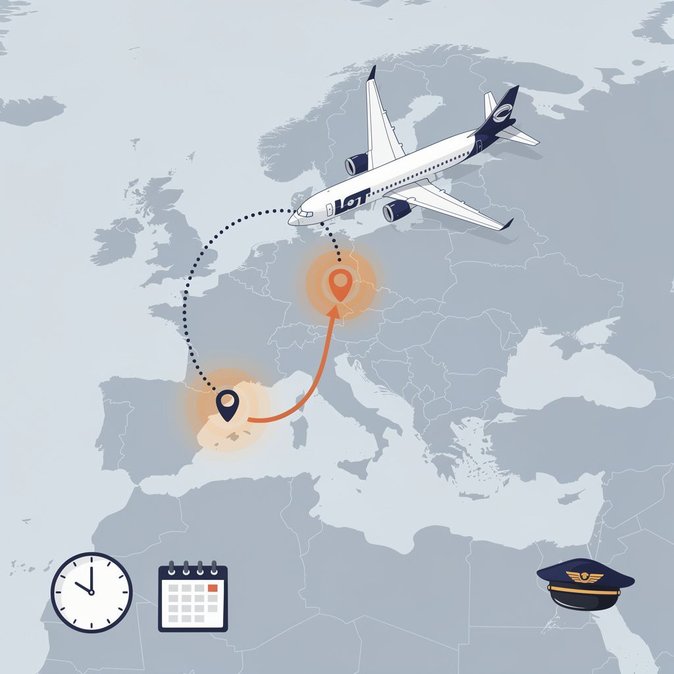
Business travellers heading from the Balearic Islands to Warsaw faced an unexpected nine-hour detour on 23 July when LOT Polish Airlines flight LO 6524 (Palma de Mallorca – Warsaw) diverted to Milan-Malpensa. According to the airline’s spokesperson Krzysztof Moczulski, one of the pilots lost consciousness shortly after take-off. Following standard EU-OPS procedures the operating captain declared a medical emergency and requested priority landing; the aircraft — a 176-seat Boeing 737 MAX-8 delivered to LOT in 2024 — touched down safely in Milan at 04:17 CEST, where medical teams were already on standby. All 162 passengers remained on board while the airline rushed a reserve cockpit crew from Warsaw using a positioning flight. After refuelling and crew change the service eventually left Malpensa at 10:55 and landed in Warsaw shortly after 13:00 local time, resulting in a total delay of roughly seven hours. Passengers were provided with refreshments and reimbursement forms under EU261 rules; no injuries were reported. LOT says the incident will not affect its tight summer schedule but acknowledges that a shortage of standby pilots in southern Europe extended the on-ground time. The carrier has wet-leased additional capacity this season to meet record demand — corporate bookings to and from Poland are running 18 % above 2025 levels, according to industry tracker ForwardKeys. For travel-managers the event is a reminder that contingency planning is essential during the peak season. Polish corporates increasingly require duty-of-care tools that can re-book staff automatically when disruptions such as medical diversions, industrial action or weather closures occur. Travel risk consultants advise inserting buffer time into same-day meeting itineraries that connect through Warsaw in July–August. From a regulatory perspective, the Italian civil-aviation authority (ENAC) and Poland’s State Commission for Aircraft Accident Investigation (PKBWL) have opened a routine fact-finding inquiry focused on crew medical certification and rest limits. No immediate safety directive is expected, but the MAX-8 involved will undergo a precautionary maintenance inspection before returning to revenue service.
Source: Euronews