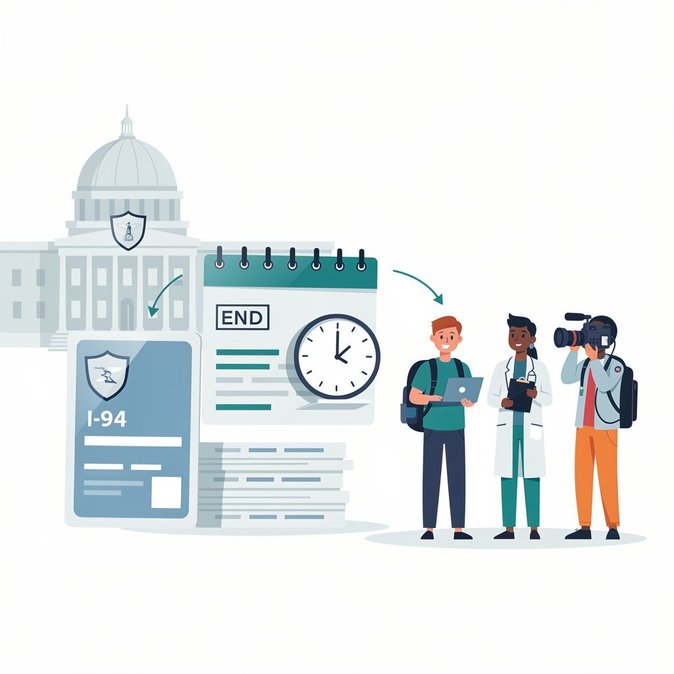
After years of debate, the Department of Homeland Security on July 23 published a final regulation that will fundamentally change how most international students, exchange visitors and foreign journalists maintain lawful presence in the United States. Effective 15 September 2026, U.S. Customs and Border Protection will cease stamping F-1, J-1 and I visa entrants with the open-ended annotation “D/S.” Instead, every arrival will receive a specific “Admit-Until” date—generally four years or the program end date, whichever is sooner. Those who need additional time must file a Form I-539 extension with USCIS and, in many cases, submit biometrics and updated financial proof. The rule also slashes the post-completion grace period for F-1 students from 60 to 30 days, restricts school transfers and changes of major, and caps English-language programs at 24 months. DHS argues the overhaul will curb overstays and enhance national-security tracking; higher-education groups counter that it adds cost, paperwork and uncertainty to an already fragile international-enrolment pipeline. Institutions now have less than eight weeks to audit program lengths, update admissions letters and retrain Designated School Officials. Advisers must prepare hundreds of thousands of continuing students—many admitted under the old D/S framework—for transition rules that tie lawful status to the I-20 or DS-2019 program end date or, for long PhD tracks, four years after the rule takes effect. Corporate mobility teams that sponsor OPT and J-1 trainees will also feel the impact. Any international hire whose I-94 date expires mid-assignment will need an approved extension or face work-authorization lapses. Immigration attorneys recommend building “buffer months” into assignment timelines and budgeting the $470 I-539 filing fee (plus a likely biometrics charge) per foreign national. Litigation is expected, but unless a court issues an injunction, the fixed-date regime will become the law of the land on 15 September. Universities, research labs and newsrooms should begin scenario-planning now to avoid enrolment gaps, SEVIS violations and downstream payroll problems.
Source: NAFSA Regulatory Analysis