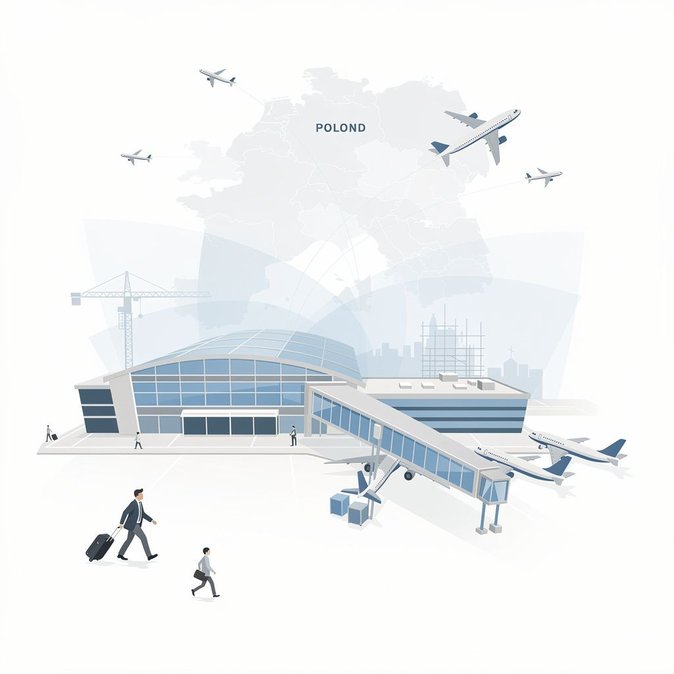
The long-awaited modernisation of Warsaw Chopin Airport moved from planning to execution on 24 July after the Regional Director for Environmental Protection (RDOS) granted an environmental decision with immediate enforceability. The state-owned airports operator Polskie Porty Lotnicze (PPL) can now begin upgrading the passenger terminal, extending the southern pier and adding new aircraft stands—all designed to raise annual capacity from the current 21–24 million passengers to more than 30 million. The expansion is critical for corporate mobility. Warsaw Chopin handles roughly half of Poland’s international business-travel market and serves as Central Europe’s key transfer hub. Congestion has become routine during morning and late-afternoon peaks; airlines have warned that slot scarcity could soon cap further growth just as Poland positions itself as a regional logistics and technology centre. By enlarging the terminal footprint and re-configuring security and Schengen/non-Schengen flows, PPL expects to cut minimum connection times and eliminate the “temporary” check-in tents that have dotted the forecourt since 2024. The environmental permit also settles community concerns over noise and emissions. PPL has pledged to introduce continuous-descent operations, procure quieter ground-handling equipment and install additional green roofs and photovoltaic panels. The works—budgeted at PLN 3.8 billion (about EUR 815 million)—will be phased so that all 28 contact gates remain usable throughout the busy summer seasons of 2027-2028. For multinationals with Polish headquarters or regional shared-service centres, the upgrade promises more flight options, larger premium-service areas and faster inbound immigration processing once the EU Entry/Exit System kiosks are fully integrated. Travel-management companies should, however, anticipate several years of construction-related detours and recommend longer air-side transfer buffers until the southern pier re-opens in 2029. Ultimately, the project strengthens Poland’s pitch as a business gateway between Western Europe and the Baltics, Ukraine and the broader Three Seas region, anchoring corporate relocation strategies for the next decade.
Source: Polska Agencja Prasowa (PAP)