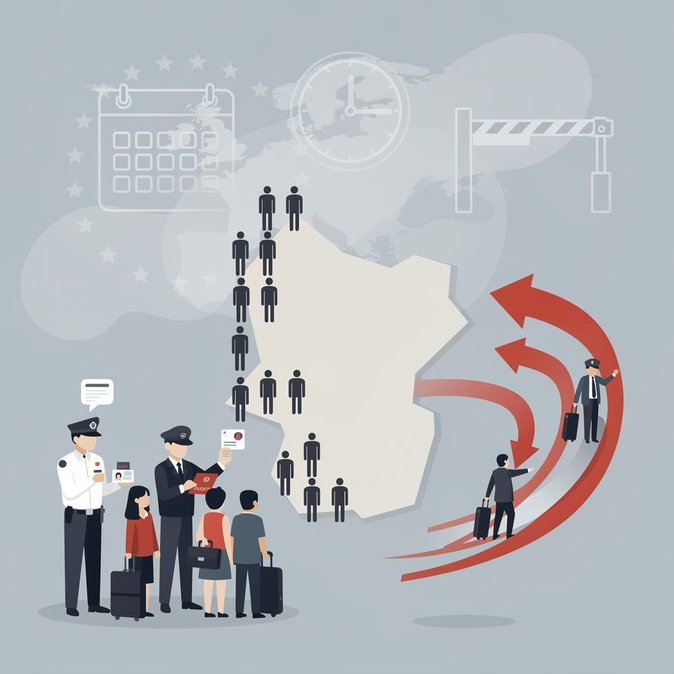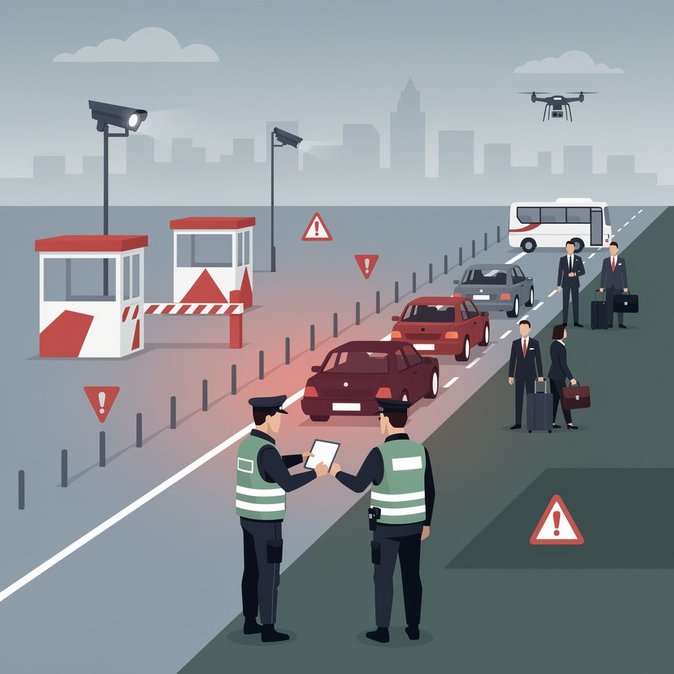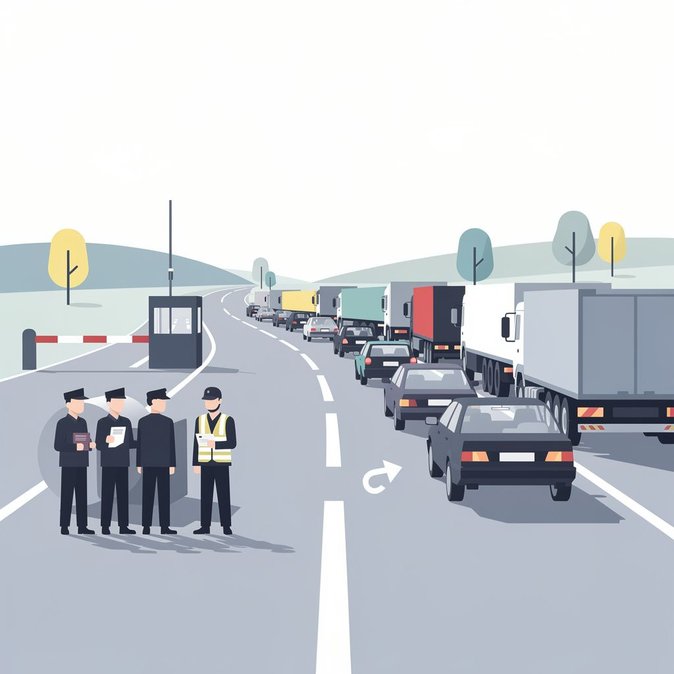
The Polish Border Guard’s daily bulletin for 23 July revealed that officers inspected more than 9,000 people and 4,000 vehicles in a single day at the country’s land borders with Germany and Lithuania. One traveller was refused entry from Germany and six were detained on the Lithuanian frontier, while no illegal crossings were recorded on the Belarus line. These figures highlight the operational impact of Poland’s decision—first enacted on 5 April 2026 and recently prolonged until 1 October 2026—to re-impose temporary controls on what are normally open Schengen borders. Warsaw argues that the measure is necessary to stem irregular migration routes perceived to be orchestrated by Belarus and Russia. The European Commission has so far tolerated the derogation under Article 25 of the Schengen Borders Code, but business groups are increasingly voicing concern about supply-chain friction and driver shortages. Logistics operators report that inspections add 20–40 minutes per truck, with peak disruptions around the Świecko – Frankfurt (Oder) and Budzisko – Kalvarija crossings. For time-critical consignments—pharmaceuticals, just-in-time components, and e-commerce parcels—the delays translate directly into higher costs and contractual penalties. Passenger traffic is less affected, yet corporate travellers should still budget extra buffer time, particularly when using long-distance coaches or cross-border rail services. Employers moving personnel between Polish and German plants may also need to adjust posted-worker notifications: although the legal framework for free movement remains unchanged, officials can now demand on-the-spot proof of employment and accommodation. With the controls now set to run through the critical autumn trade-fair season, stakeholders from the automotive, tech and retail sectors are lobbying Warsaw and Berlin for dedicated “green lanes” for authorised traders. Until such relief is forthcoming, mobility managers should schedule shipments outside morning peaks and ensure drivers have complete documentation, including load manifests and proof of social-security coverage.
Source: Tygodnik Solidarność