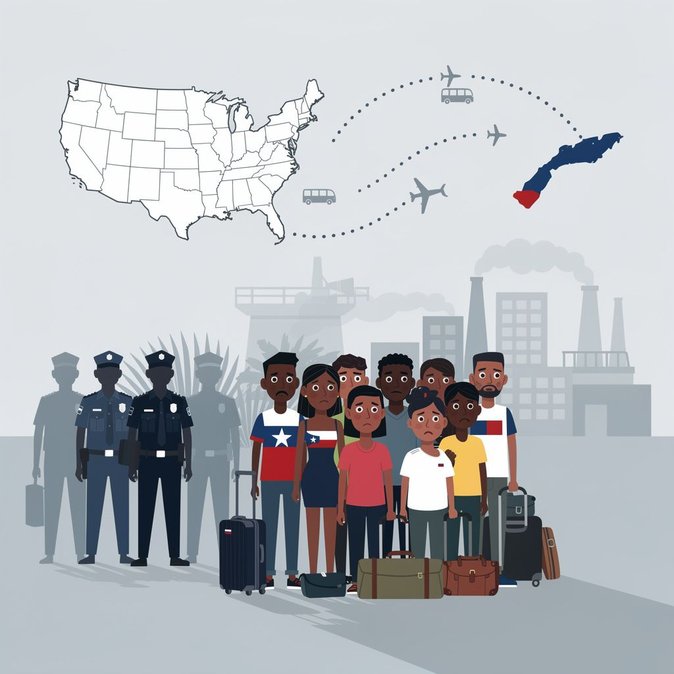
U.S. Immigration and Customs Enforcement (ICE) has quietly drawn up plans for a nationwide enforcement surge aimed at Haitian nationals whose Temporary Protected Status (TPS) is set to terminate next week. Internal documents obtained by CBS News describe targeted arrests in Mid-western cities such as Springfield, Ohio—home to one of the country’s fastest-growing Haitian communities—and a schedule of charter flights to Cap-Haïtien, Haiti’s only airport deemed secure enough for deportation flights. The strategy follows the Supreme Court’s June ruling that found federal courts lack jurisdiction to review executive decisions on TPS, effectively clearing the way for the Trump administration to sunset protections for more than 300,000 Haitians and Syrians. When the binding mandate issues on Monday, TPS beneficiaries who have not obtained another status will become immediately removable and will also lose work authorization. ICE leadership has reportedly instructed field offices to achieve a daily arrest target of 2,000 people, a level not seen since the agency’s post-pandemic surge in 2024. Human-rights advocates say large-scale removals to Haiti will place migrants in grave danger as armed gangs control key parts of Port-au-Prince and international agencies warn of a worsening humanitarian crisis. Guerline Jozef of the Haitian Bridge Alliance called the looming deportations “a tsunami of fear,” noting that many TPS holders have U.S.-born children and deep economic ties to American employers. For U.S. businesses, the end of Haitian TPS means the sudden loss of legally authorized workers in health care, manufacturing, food processing and logistics—sectors already facing severe labor shortages. Employers should verify employees’ work-authorization documents immediately and prepare for potential I-9 reverification. Companies that depend heavily on TPS workers may need to revisit staffing plans or explore alternative visa categories such as H-2B seasonal labor. Immigration attorneys advise Haitian nationals to file last-minute applications for other forms of relief—such as family-based adjustment, asylum, or humanitarian parole—before the effective date. They also warn that ICE has resumed workplace enforcement audits, so failure to maintain accurate I-9 records could trigger hefty fines. The Department of Homeland Security has said only that “those with no lawful basis to remain should arrange their departure voluntarily,” leaving little doubt that enforcement is imminent.
Source: CBS News